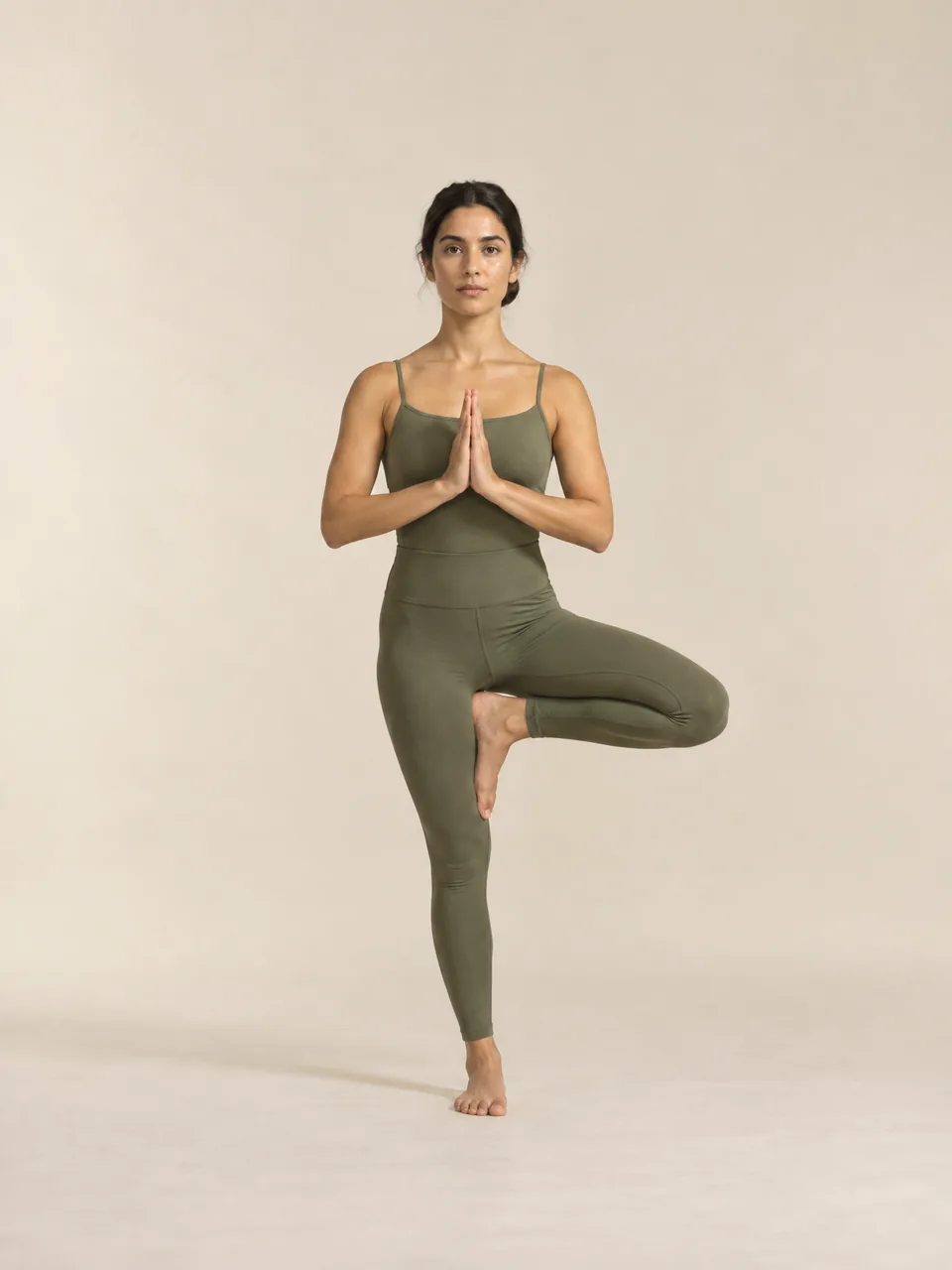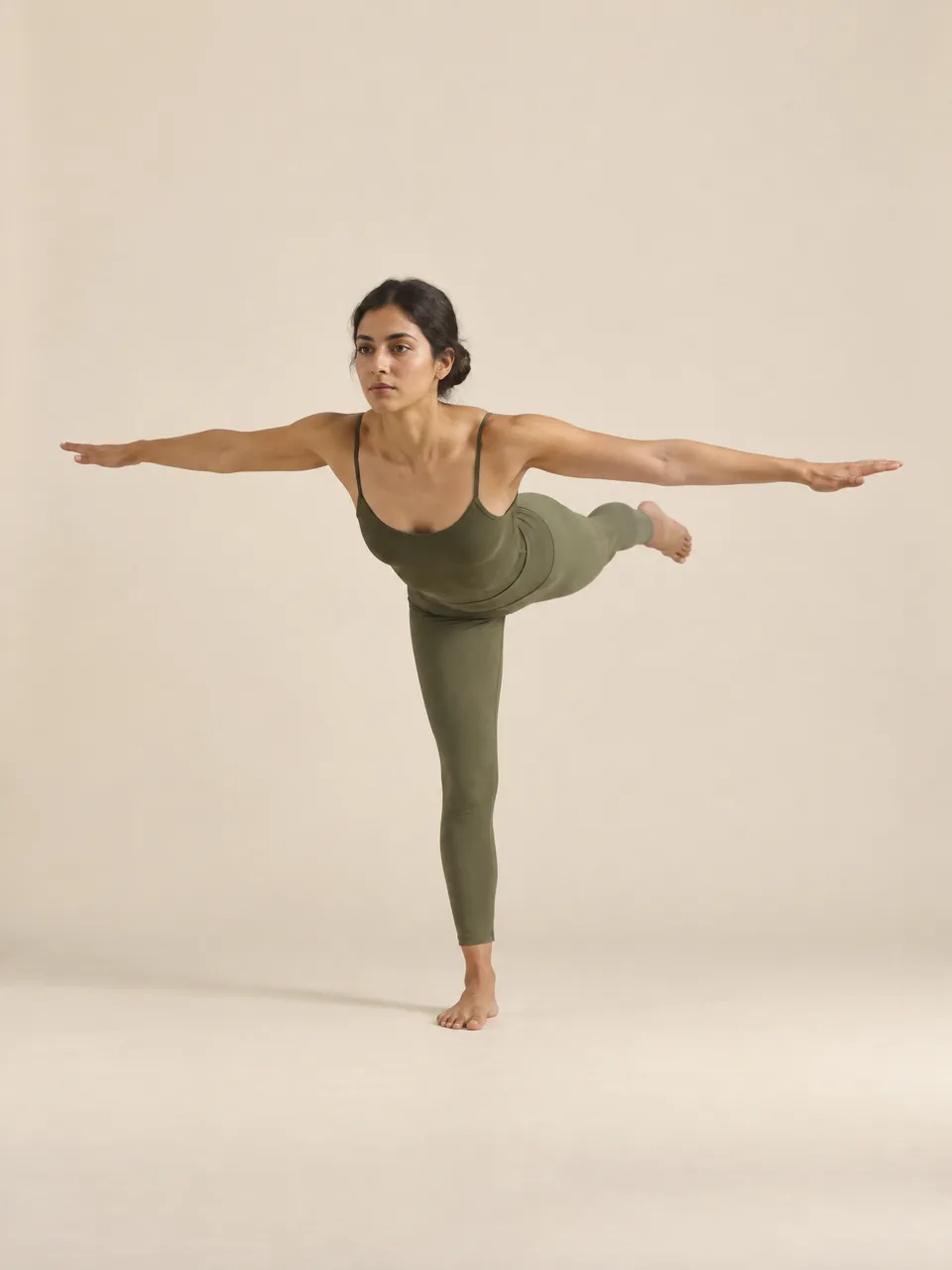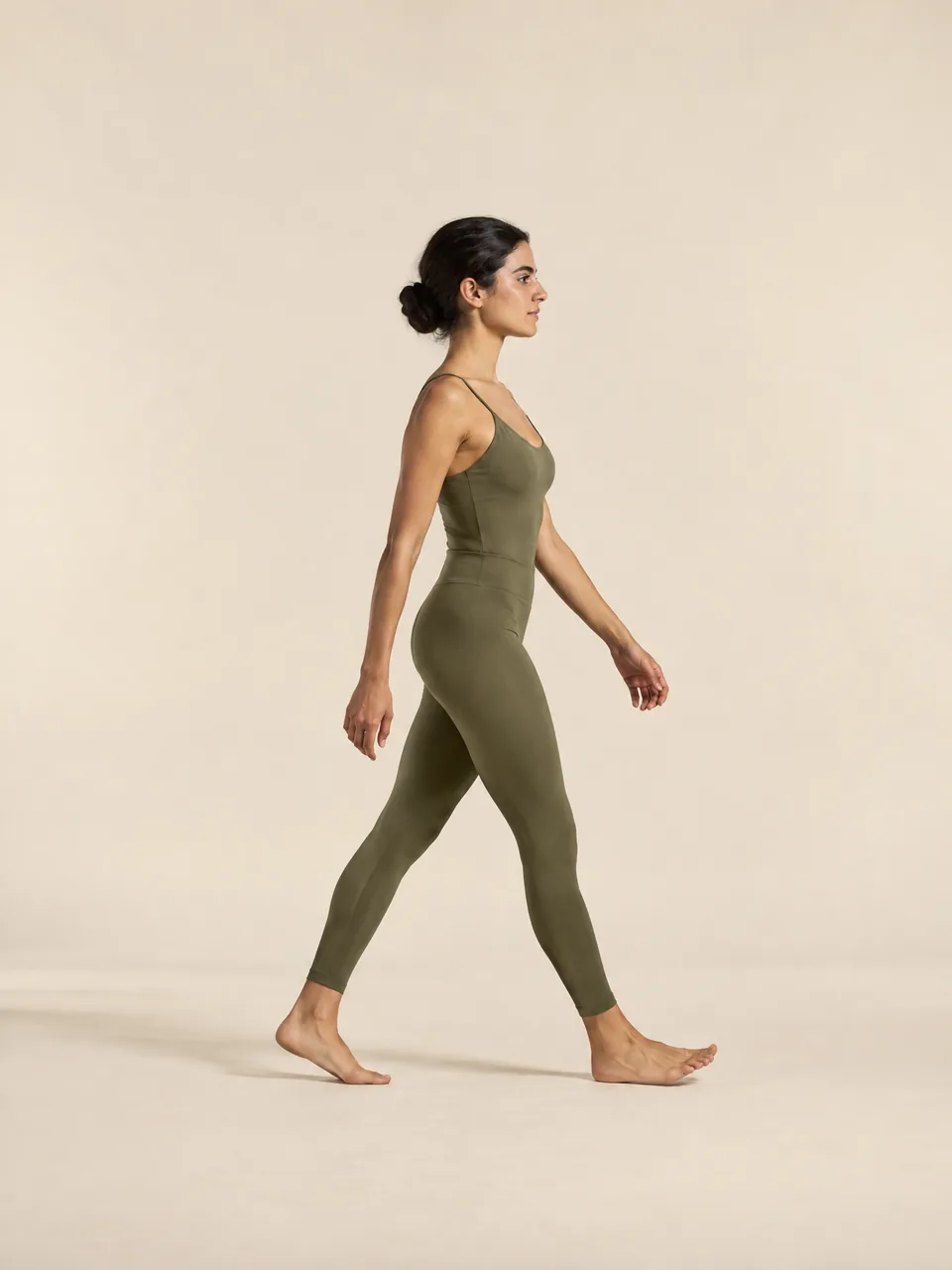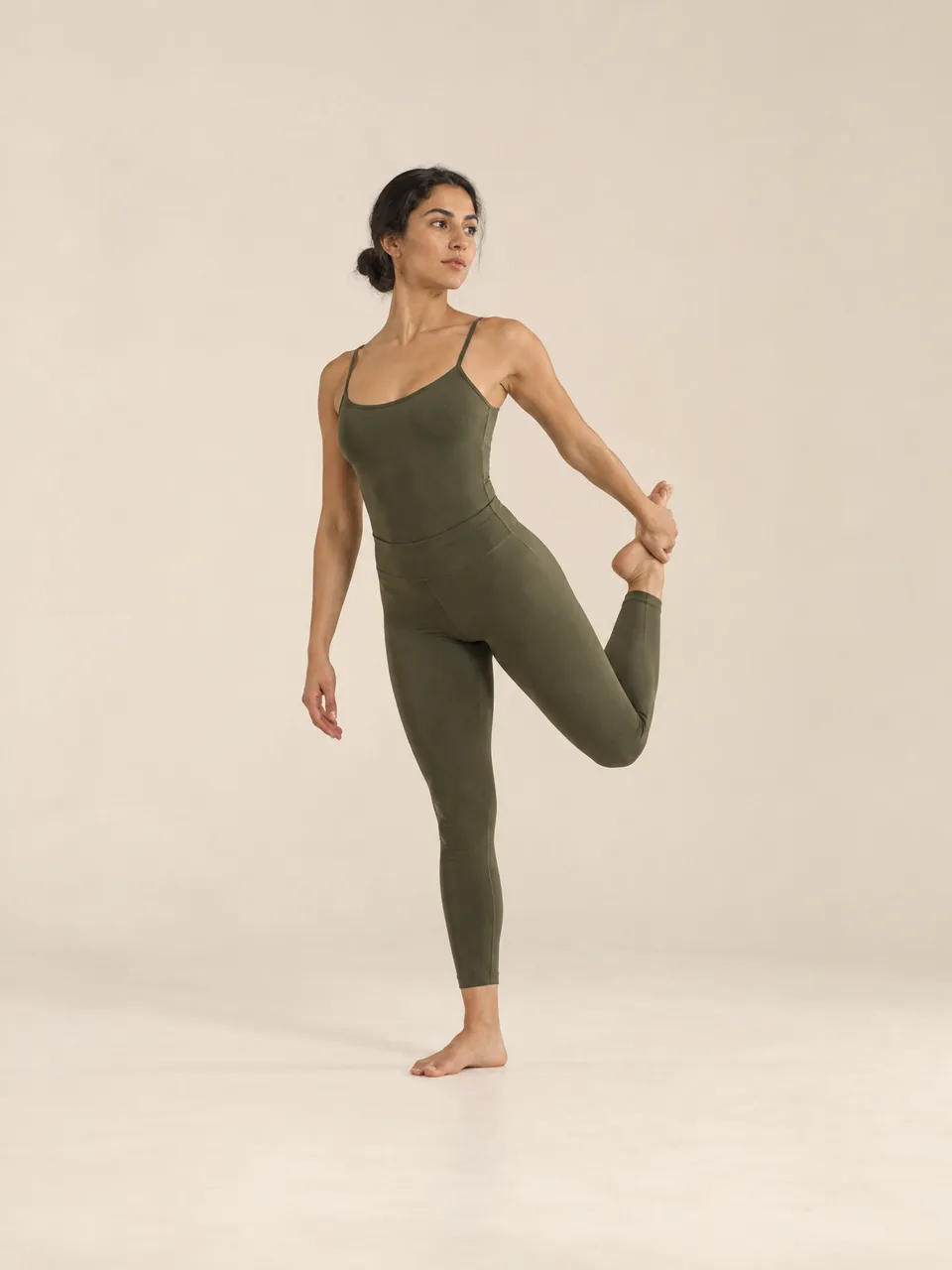
Raised knee balance
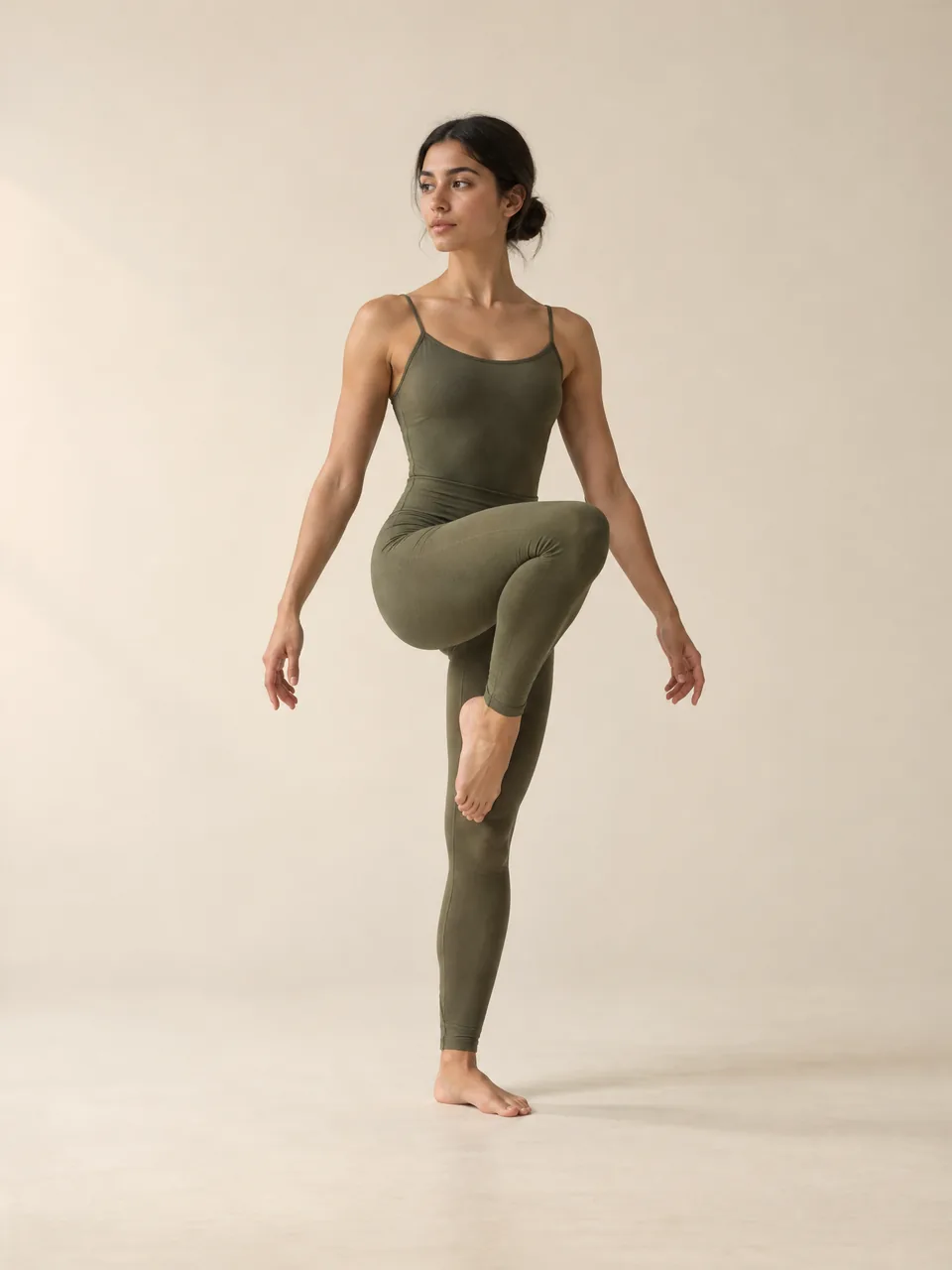
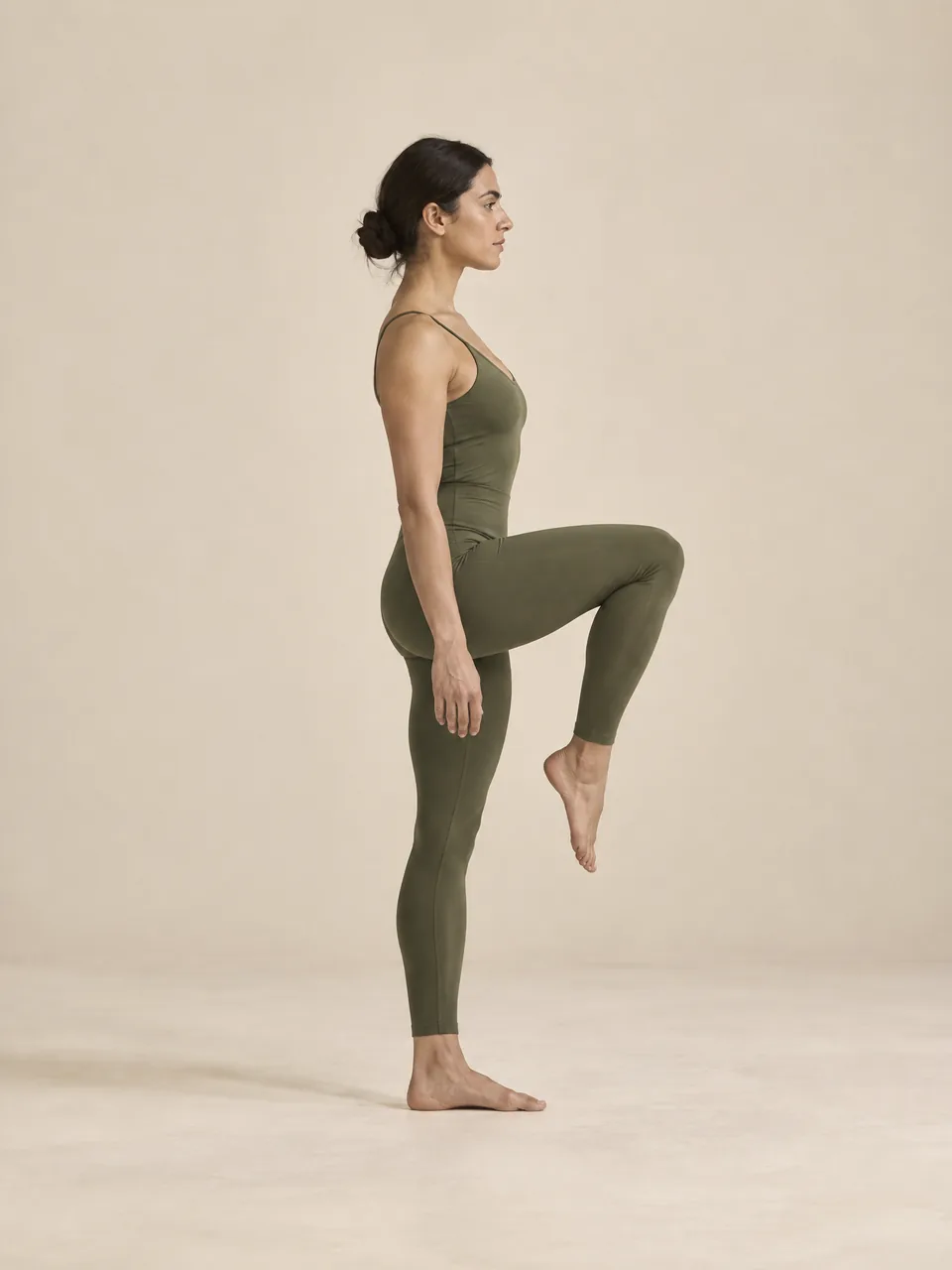
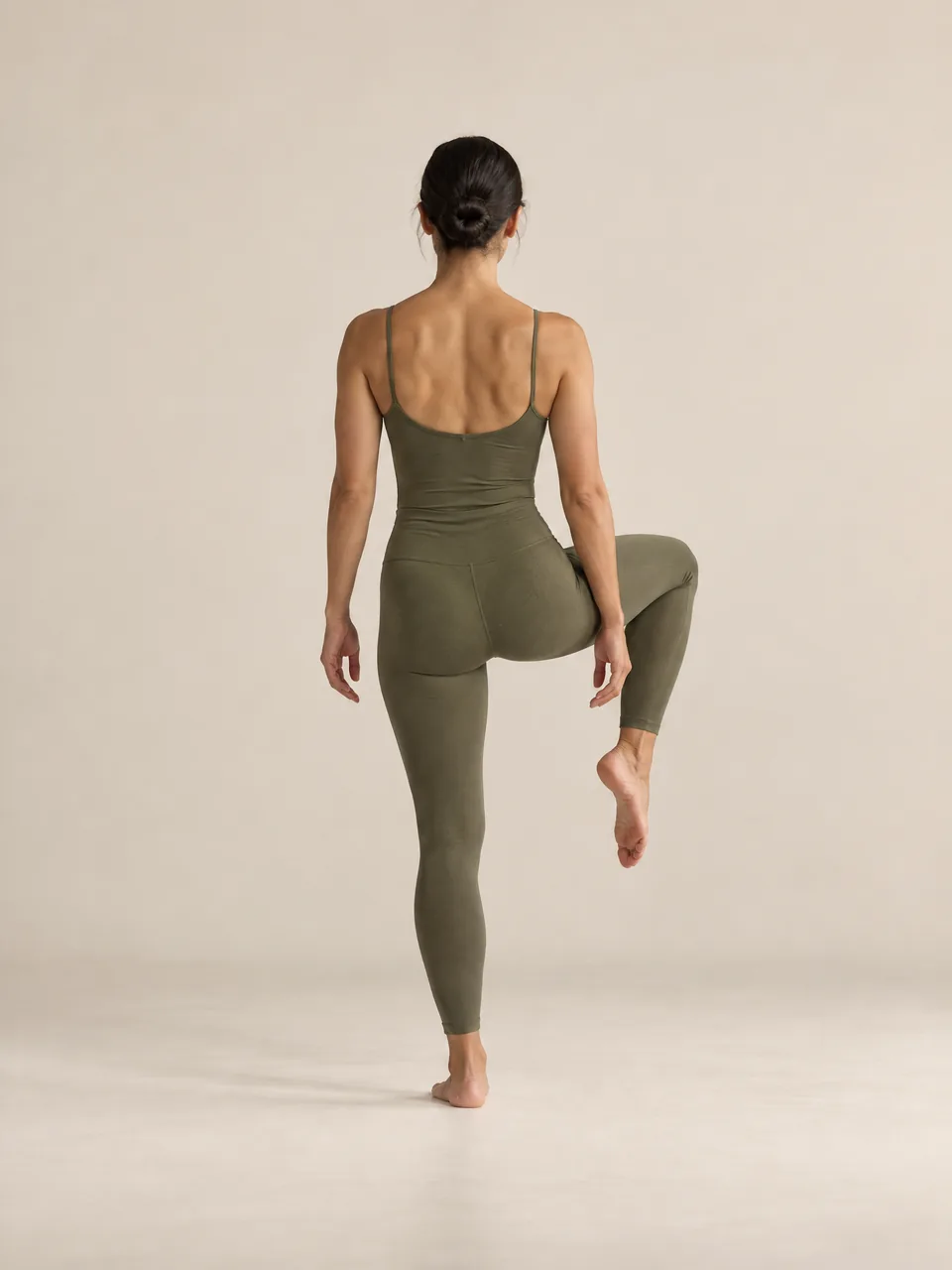
A standing balance with one knee lifted high in front, body upright and weight fully on the support foot.
Lifting one knee to hip height removes half the base and hands the entire job of balance to the standing ankle. The lifted thigh comes forward, the shin hangs down from it, and the standing leg works as a straight, slightly compressed post. The pelvis tilts up on the lifted side, and the torso shifts very slightly back to keep the mass over the support foot.
In three-quarter view the raised knee foreshortens and points toward the viewer while the standing leg drops straight down. That crossing of a forward depth axis with a vertical is a good exercise, because you are drawing one leg coming at you and the other going away, from the same pelvis.
Artists usually draw the raised thigh too low and too far out. The thigh should be close to horizontal before the shin drops, so the knee sits high and the foot hangs below it. Another easy mistake is a locked and perfectly vertical support leg; let the knee soften slightly and shift the pelvis a centimetre or two toward the support side. If the lifted foot turns in toward the standing leg, keep that in the drawing, because it tells the viewer the leg is relaxed.
Drawing notes
- Lift the thigh close to horizontal so the shin can hang straight down.
- Soften the support knee instead of locking it into a post.
- Foreshorten the raised knee toward the viewer while the support leg drops away.
Pose prompt
The description used to generate this study. Copy it into your own workflow, or hand it to the studio with your photo.
Adult woman balancing on one leg with the other knee raised, full body, three-quarter view.
Working notes
- A standing balance with one knee lifted high in front, body upright and weight fully on the support foot.
- A raised thigh near horizontal is what separates this from a low march step.
Put this pose on your own reference
Take this study to the studio and generate a new image in the same pose, or browse the rest of the balancing studies first.