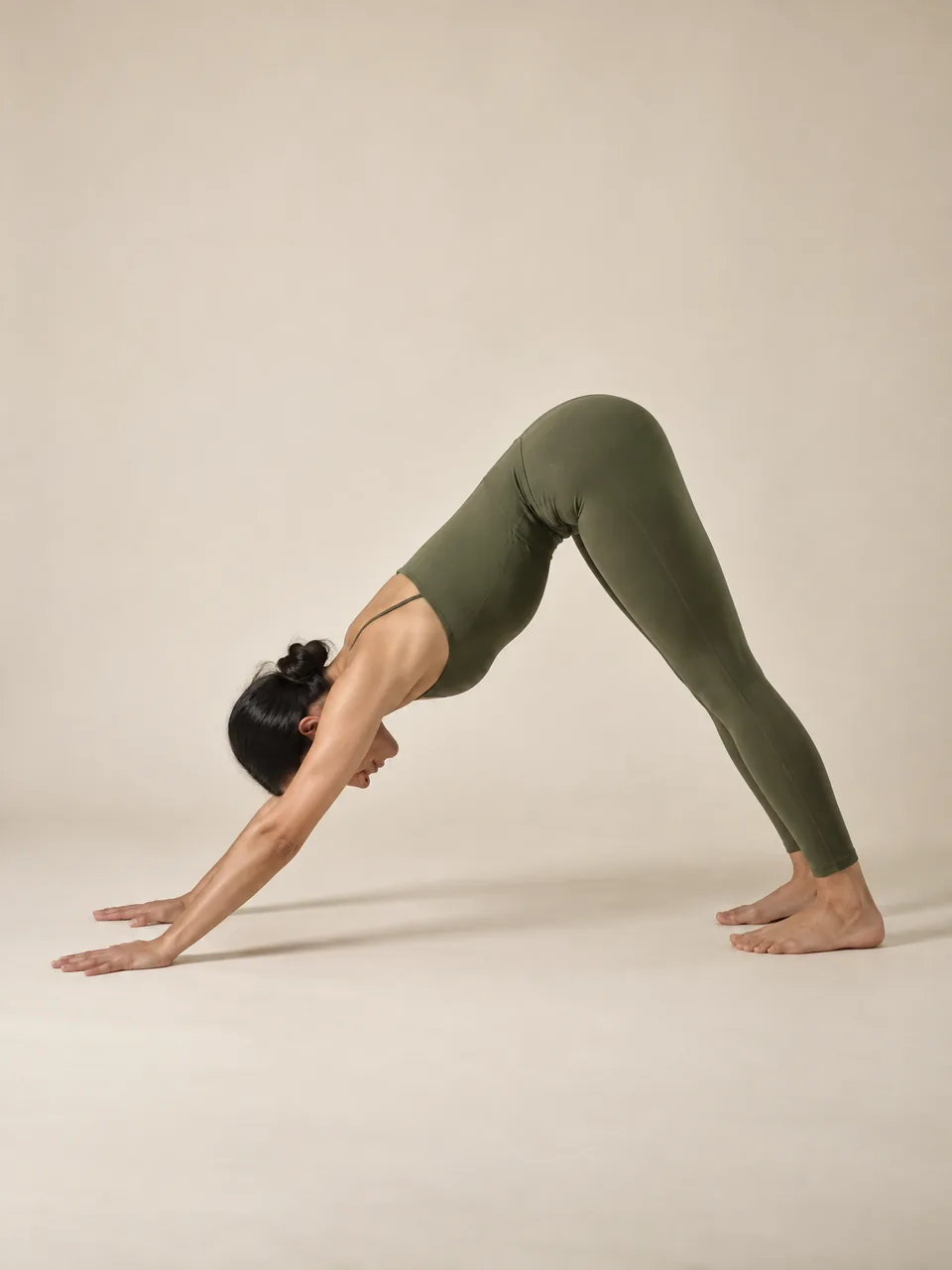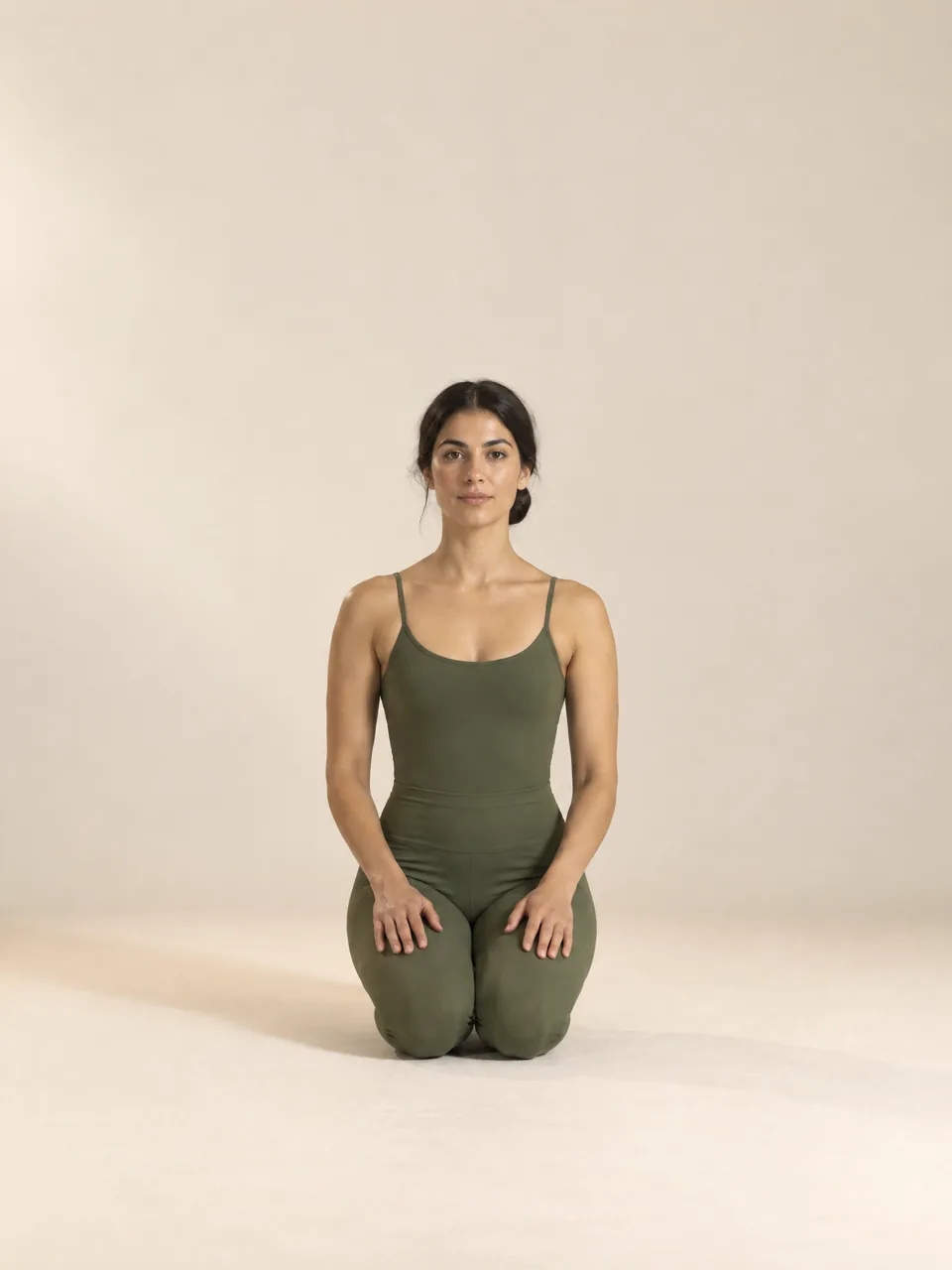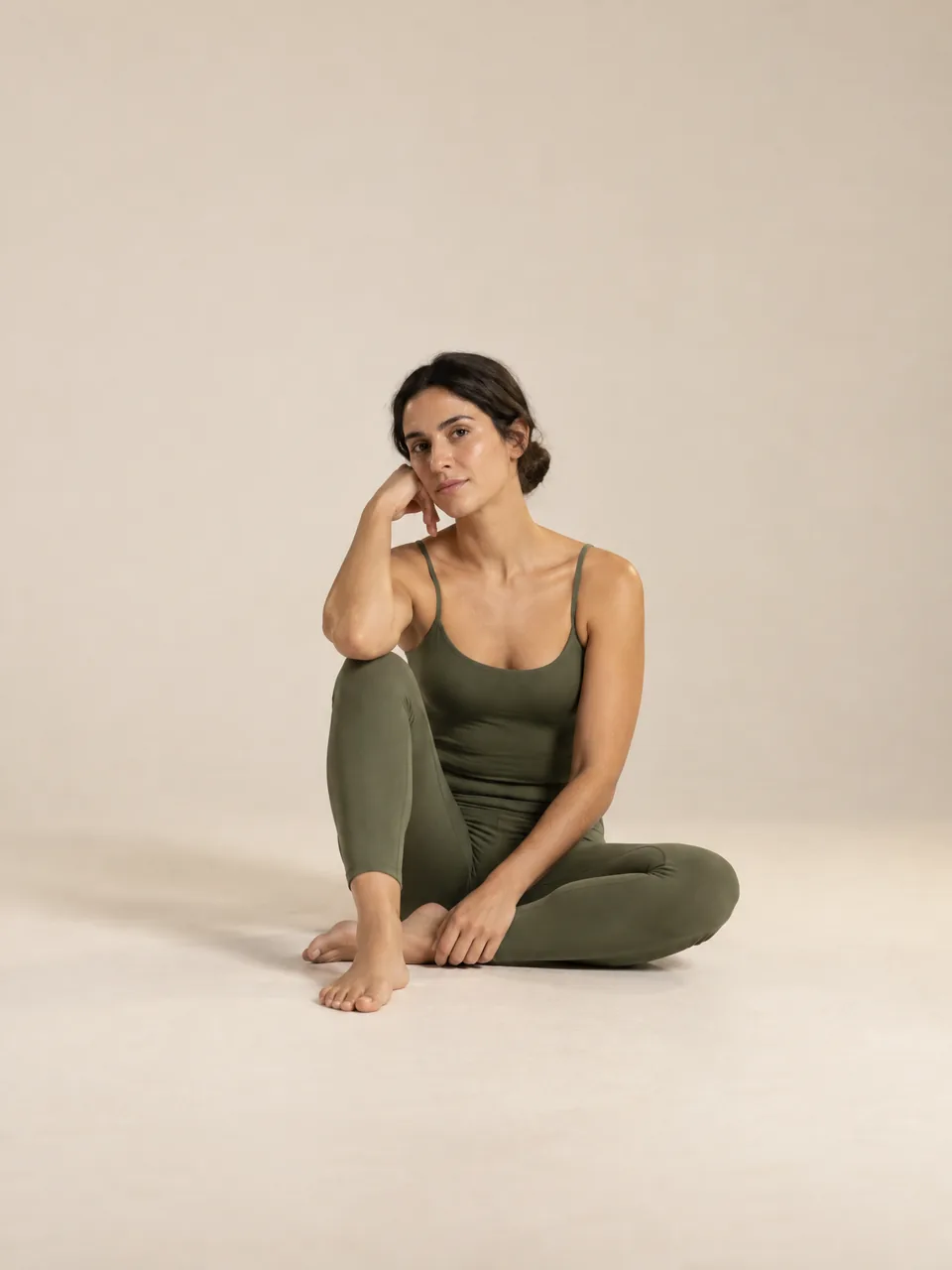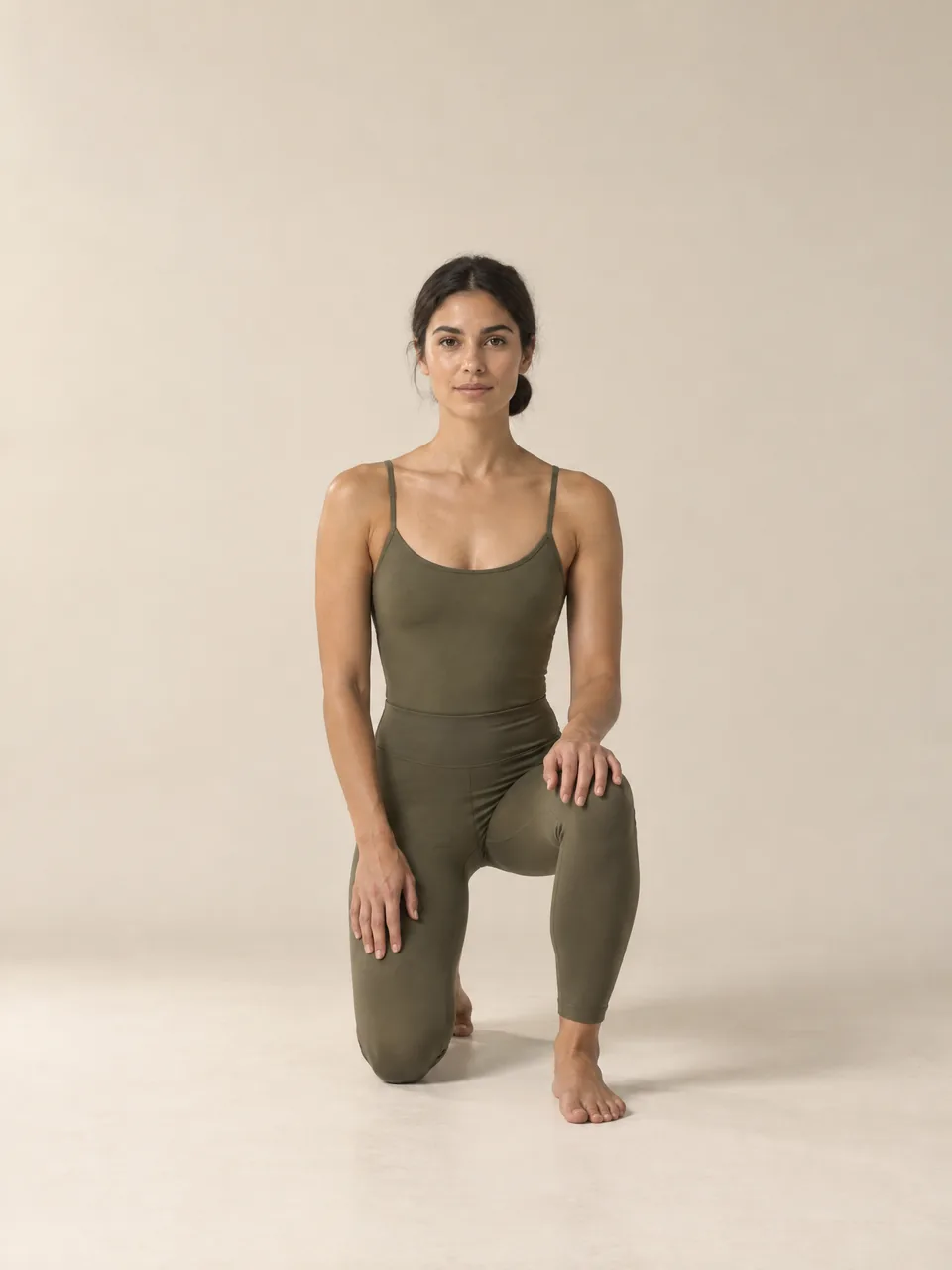
Crouching
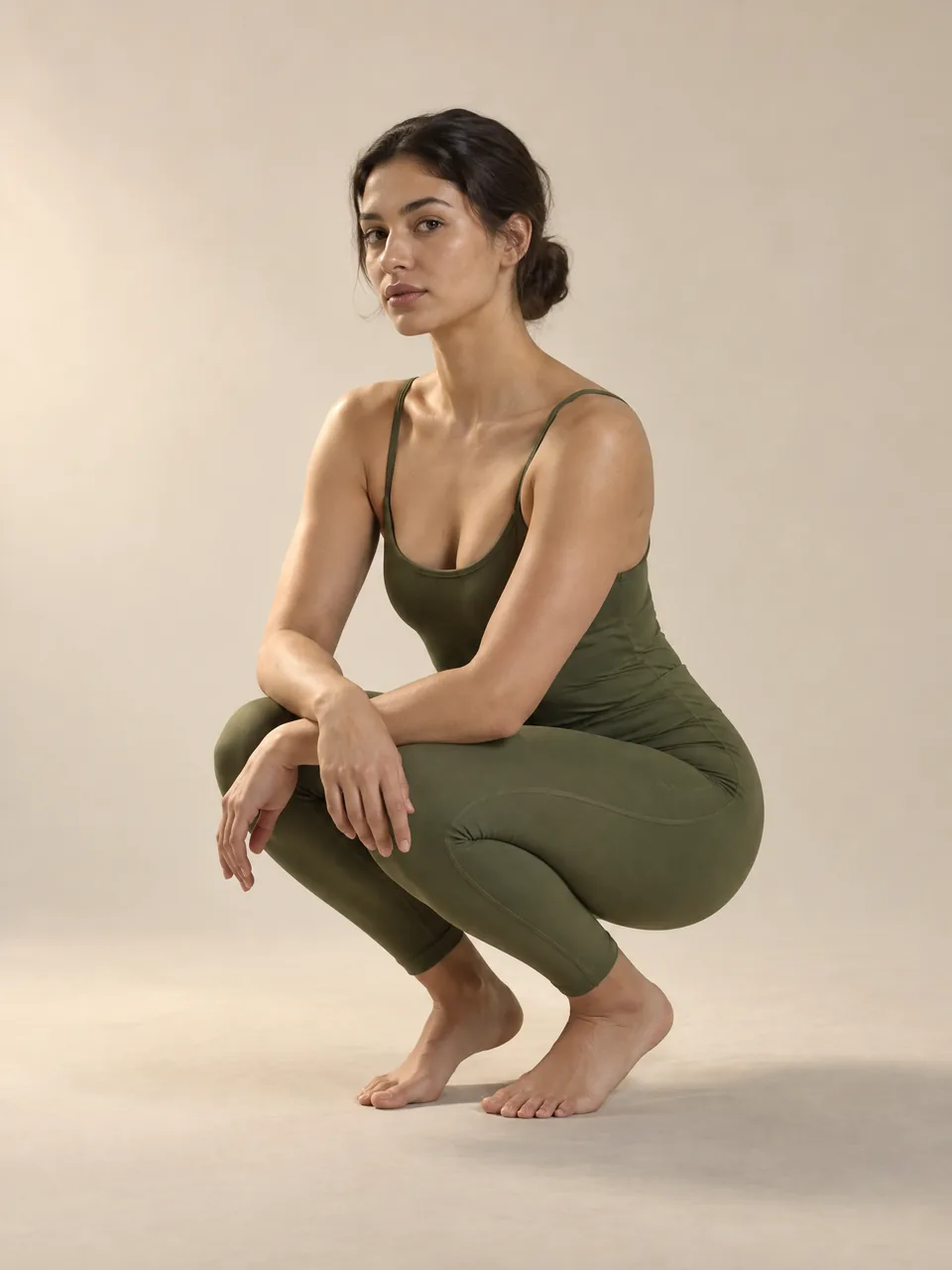
A compact crouched figure with knees folded fully and the arms brought in front of the torso.
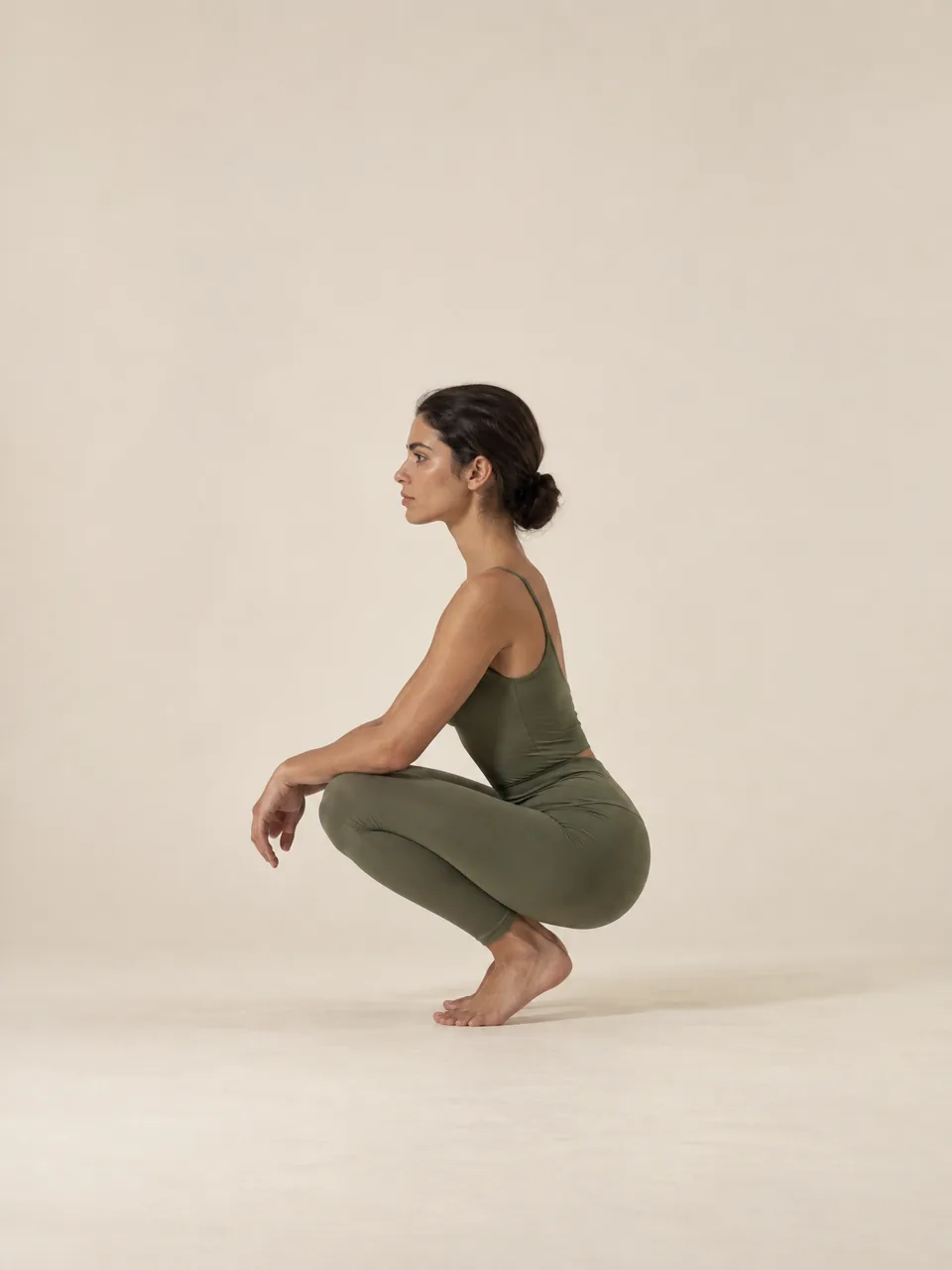
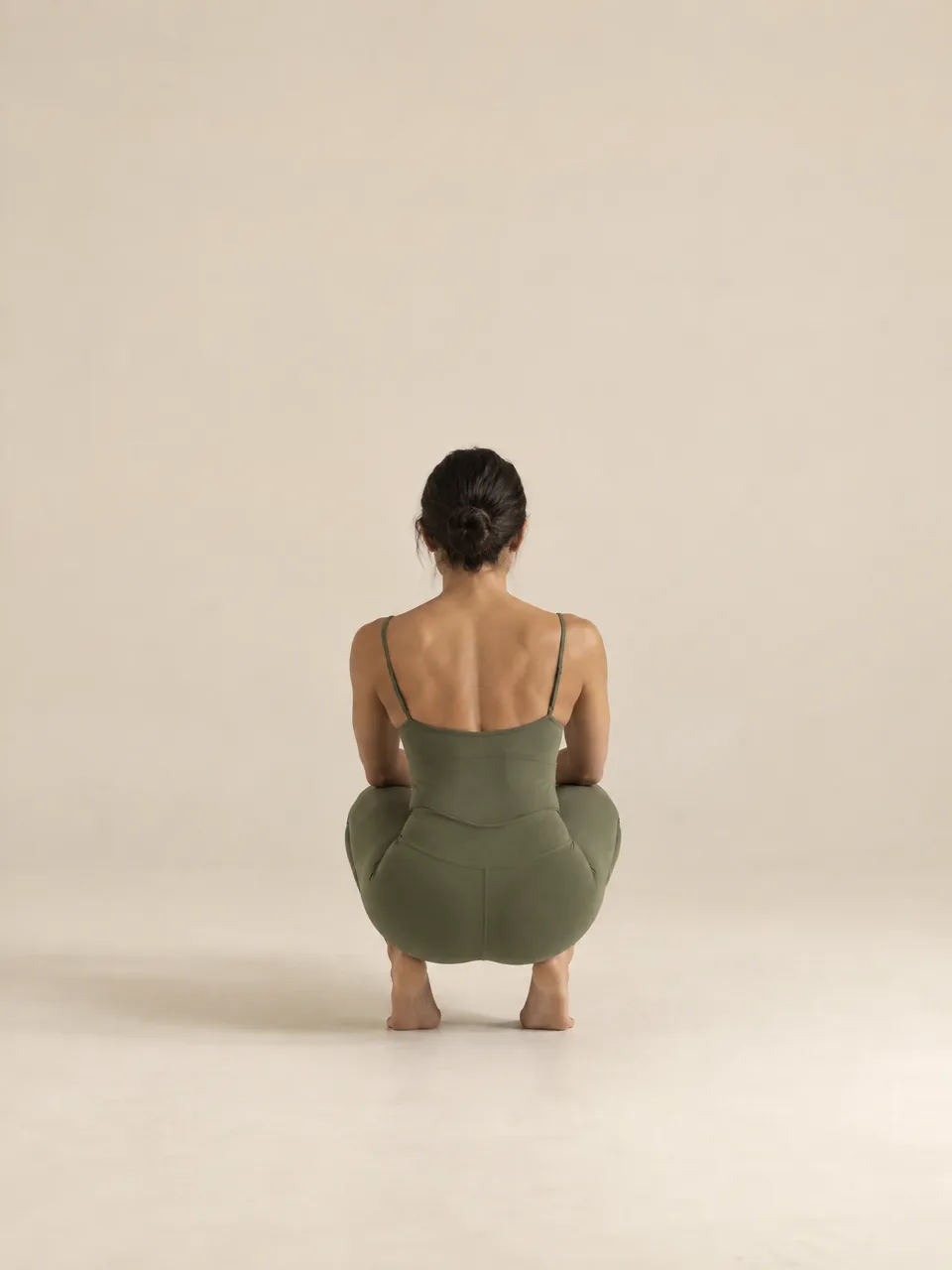
A crouch compresses the figure more than any other supported pose. The knees fold past ninety degrees, the hips drop until they are close to the heels, and the torso pitches forward to keep the mass over the feet. The arms come forward, sometimes resting near the knees, which closes the front of the silhouette.
Studying it teaches you how little depth survives when a body folds. The ribcage and pelvis crowd together, the belly is compressed, and the head sits low, roughly level with the shoulders. That tightness makes it a useful reference for tense or furtive characters, for a figure fitting into a low space, and for close-quarter composition where a standing body would not fit.
The drawing mistake is a crouch built from a standing figure with shortened shins. The thigh must run nearly horizontal from knee to hip, the calf must fold back under it, and the pelvis has to sit behind the knees with the heels lifted or flat. Watch the ankle: a deep crouch usually lifts the heels, and hiding that will flatten the pose. Also check the arms, which should hang from the shoulders rather than start at the waist.
Drawing notes
- Run the thigh nearly horizontal and fold the calf back beneath it.
- Sit the pelvis behind the knees rather than stacking it over them.
- Decide whether the heels lift, and draw that lift honestly.
Pose prompt
The description used to generate this study. Copy it into your own workflow, or hand it to the studio with your photo.
Full-body mannequin crouching with arms resting in front, three-quarter view.
Working notes
- A compact crouched figure with knees folded fully and the arms brought in front of the torso.
- If the knees read shallow, describe them as folded deeply so the hips drop below the knees.
Put this pose on your own reference
Take this study to the studio and generate a new image in the same pose, or browse the rest of the floor poses studies first.