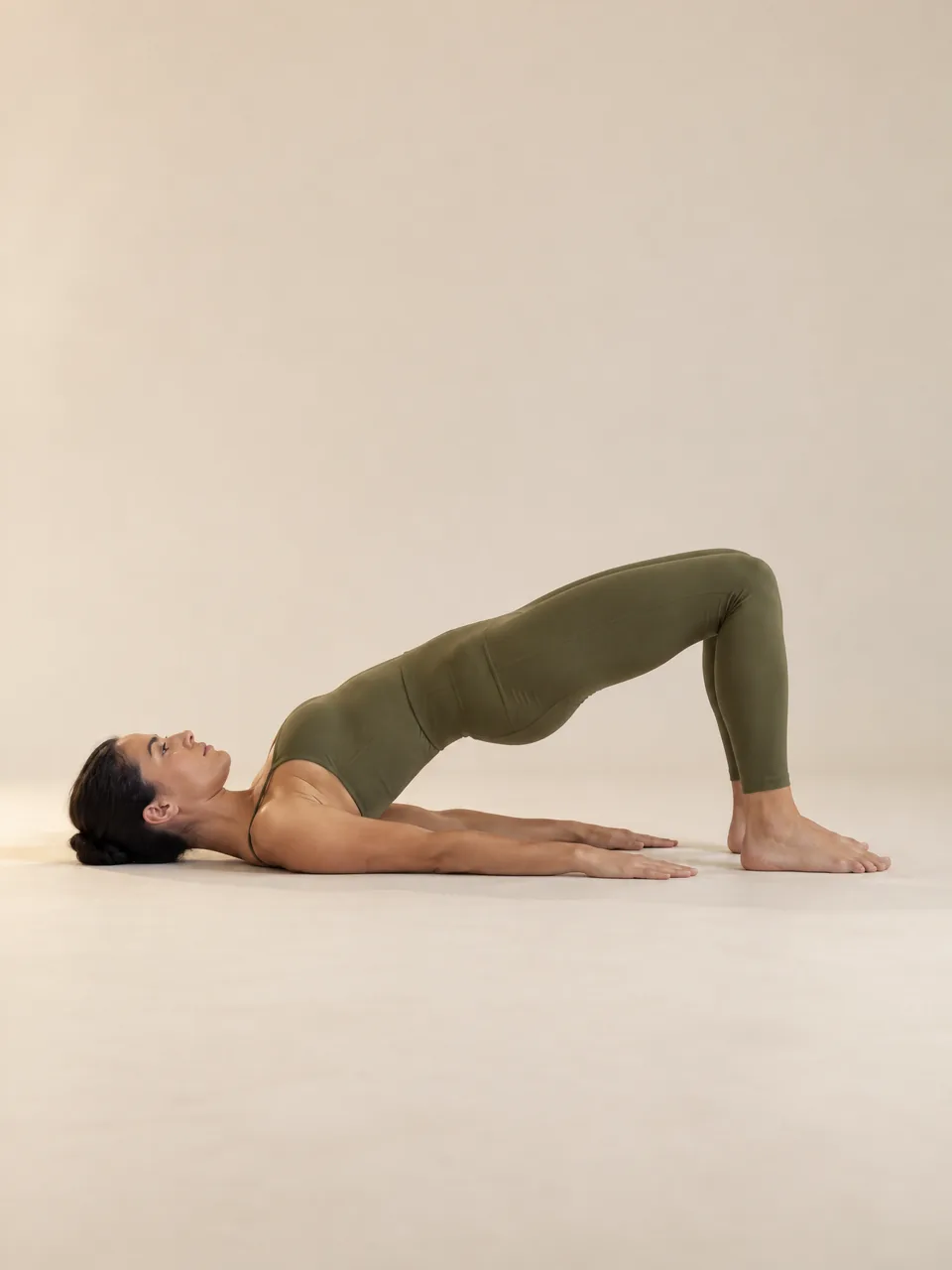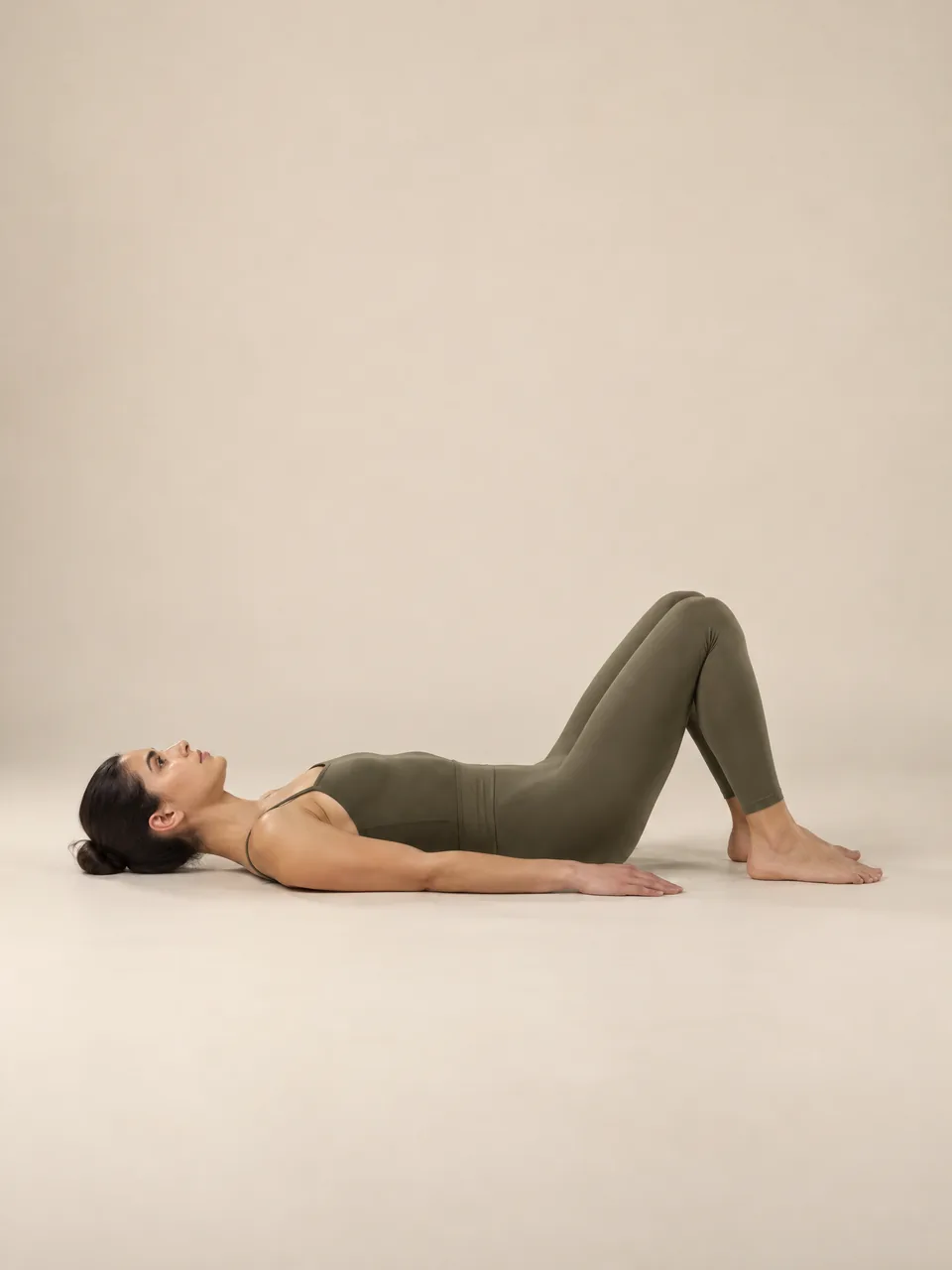
Downward-facing dog
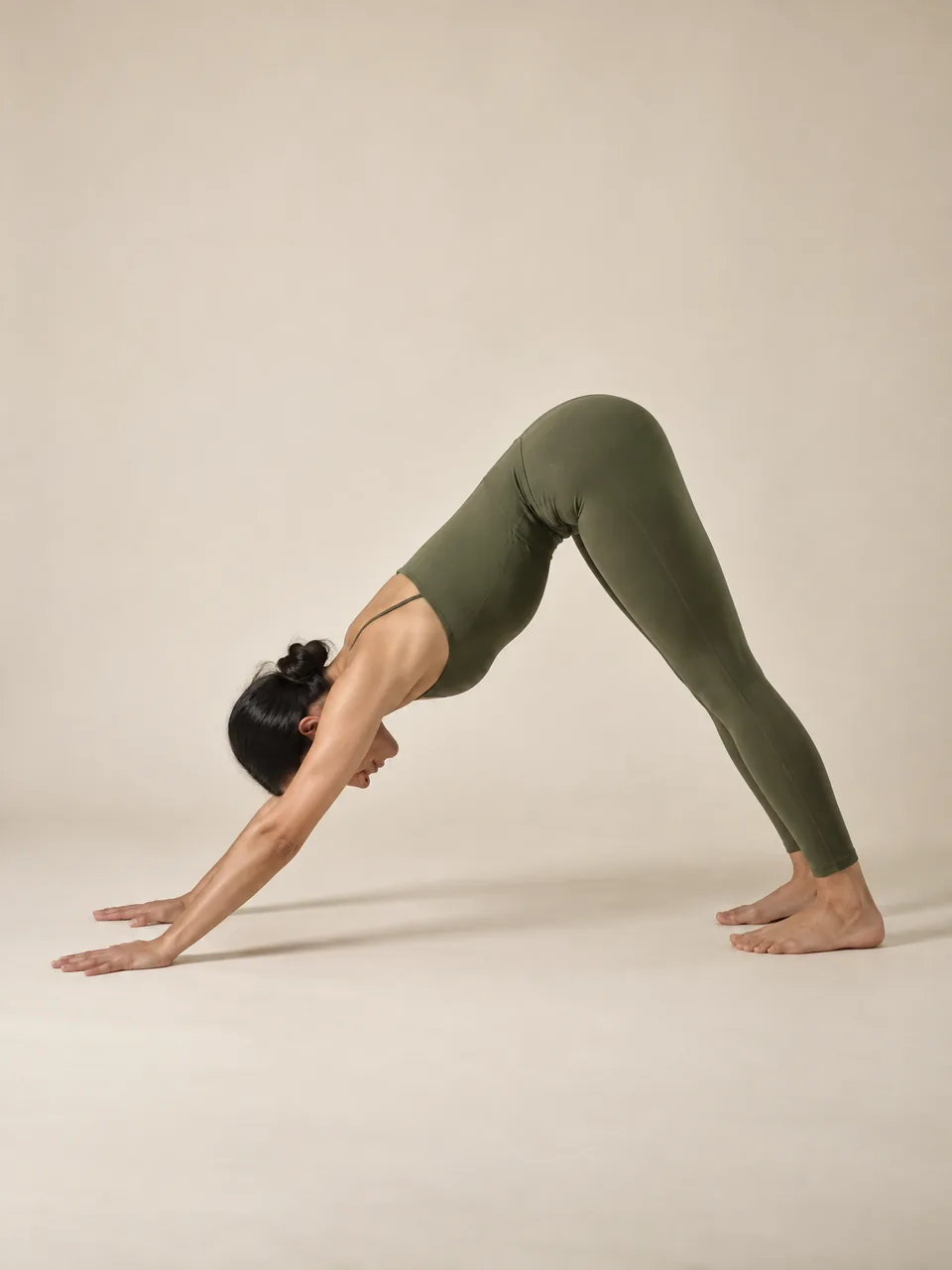
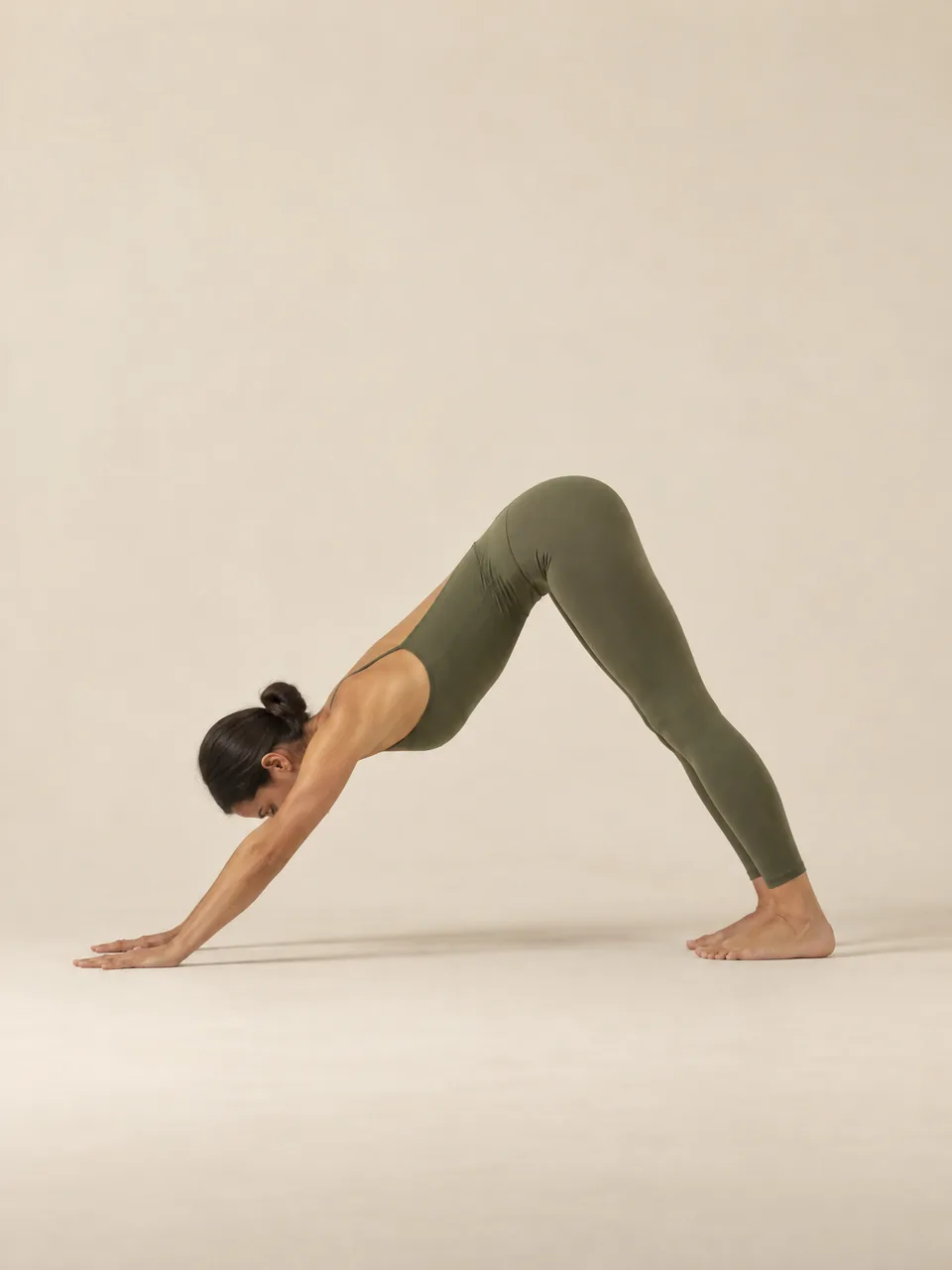
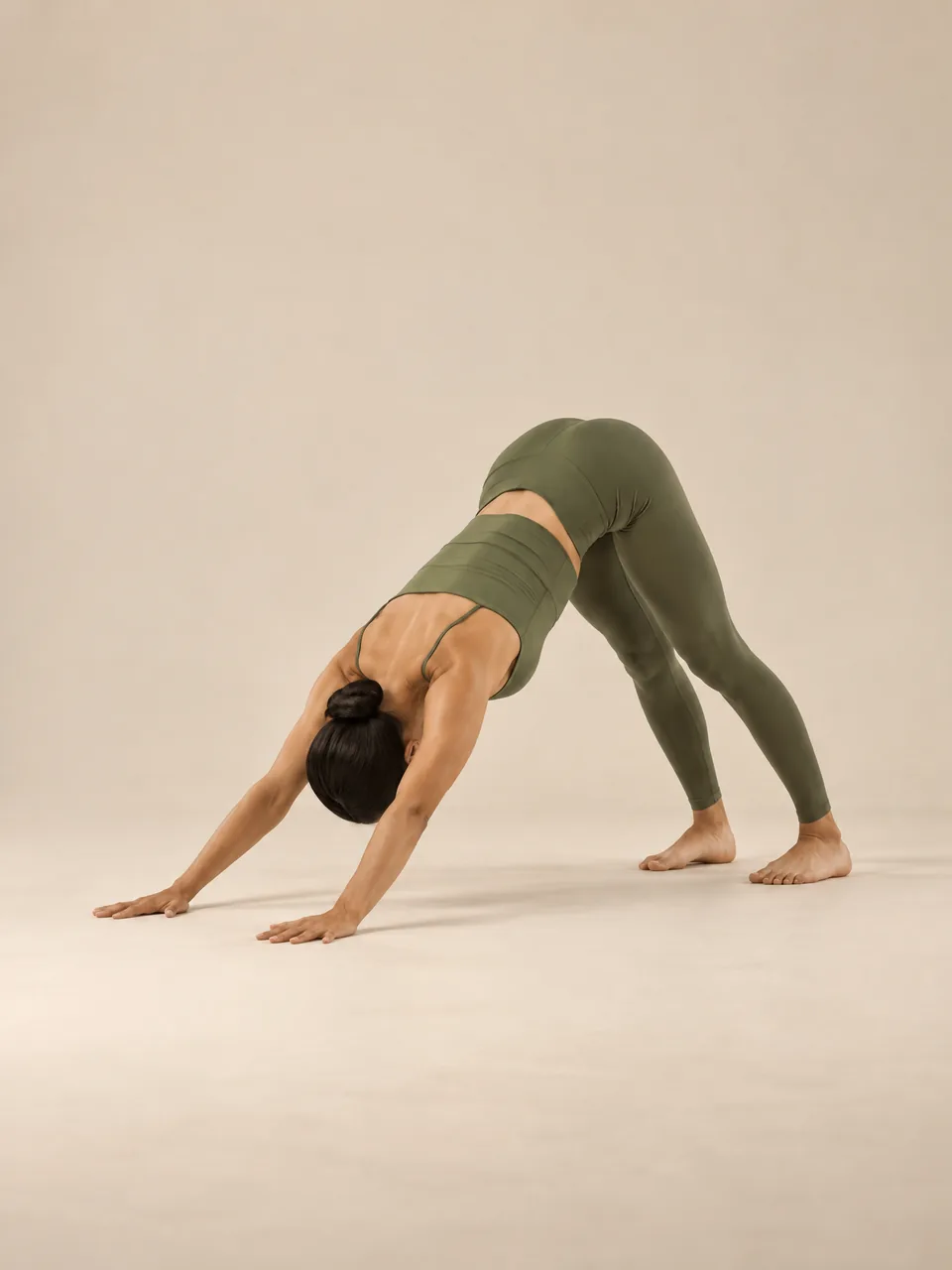
An inverted V with hands and feet on the ground, hips at the apex and the spine forming a long diagonal.
Two contact points on two different levels of the frame, hands forward and feet back, turn the figure into a tent: arms drop from the shoulders, legs angle up from the ankles, and everything meets at the highest point of the hips. Weight is carried partly forward into the hands and partly back into the feet, with the torso hanging between them.
In side view the shape is startlingly simple, two sides of a triangle with a flat ground line, and that is precisely why it is a useful gesture study. There is no head above the shoulders, no upright line, and no familiar silhouette to copy from memory, so you are forced to read the actual proportions of arm and leg length against torso length.
The mistake to guard against is the straight-line tent. In an adult figure the arms are short enough that the shoulders sit well above the hands but not above the feet, and the back must keep the curve of the ribcage rather than becoming a rigid plank. Draw the armpit fold where the arm meets the torso, note how the heels lift or settle, and watch the angle of the head: it hangs between the upper arms, not straight down from the neck.
Drawing notes
- Keep the ribcage curve rather than drawing the back as a straight plank.
- Draw the head hanging between the upper arms instead of dropping from the neck.
- Decide whether the heels are lifted or settled before you finish the ground line.
Pose prompt
The description used to generate this study. Copy it into your own workflow, or hand it to the studio with your photo.
Adult woman in downward-facing dog yoga pose, hands and feet on the floor, hips lifted, full body, side view.
Working notes
- An inverted V with hands and feet on the ground, hips at the apex and the spine forming a long diagonal.
- This study is a visual reference for the shape, not a posture instruction.
Put this pose on your own reference
Take this study to the studio and generate a new image in the same pose, or browse the rest of the floor poses studies first.