Running stride
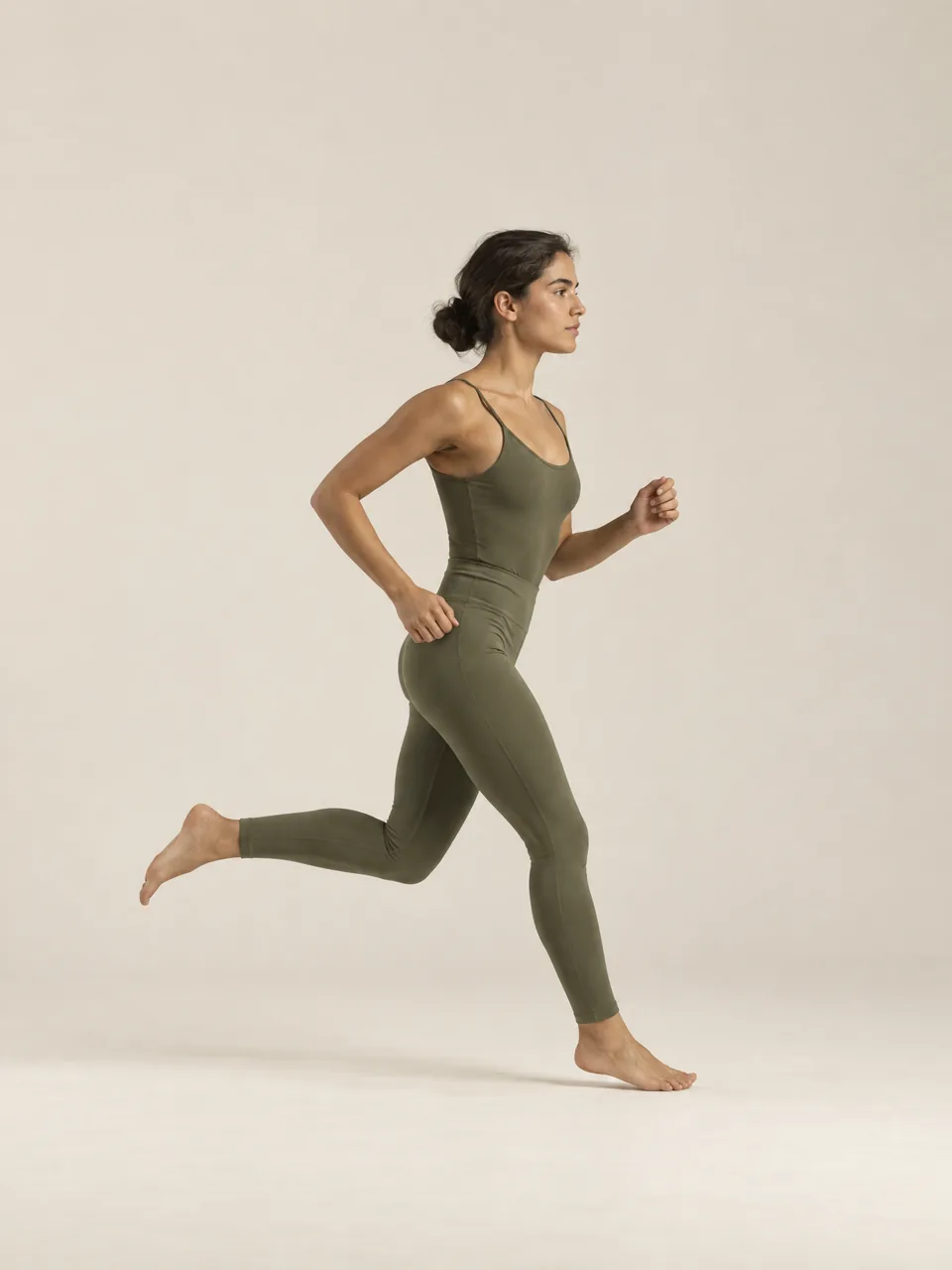
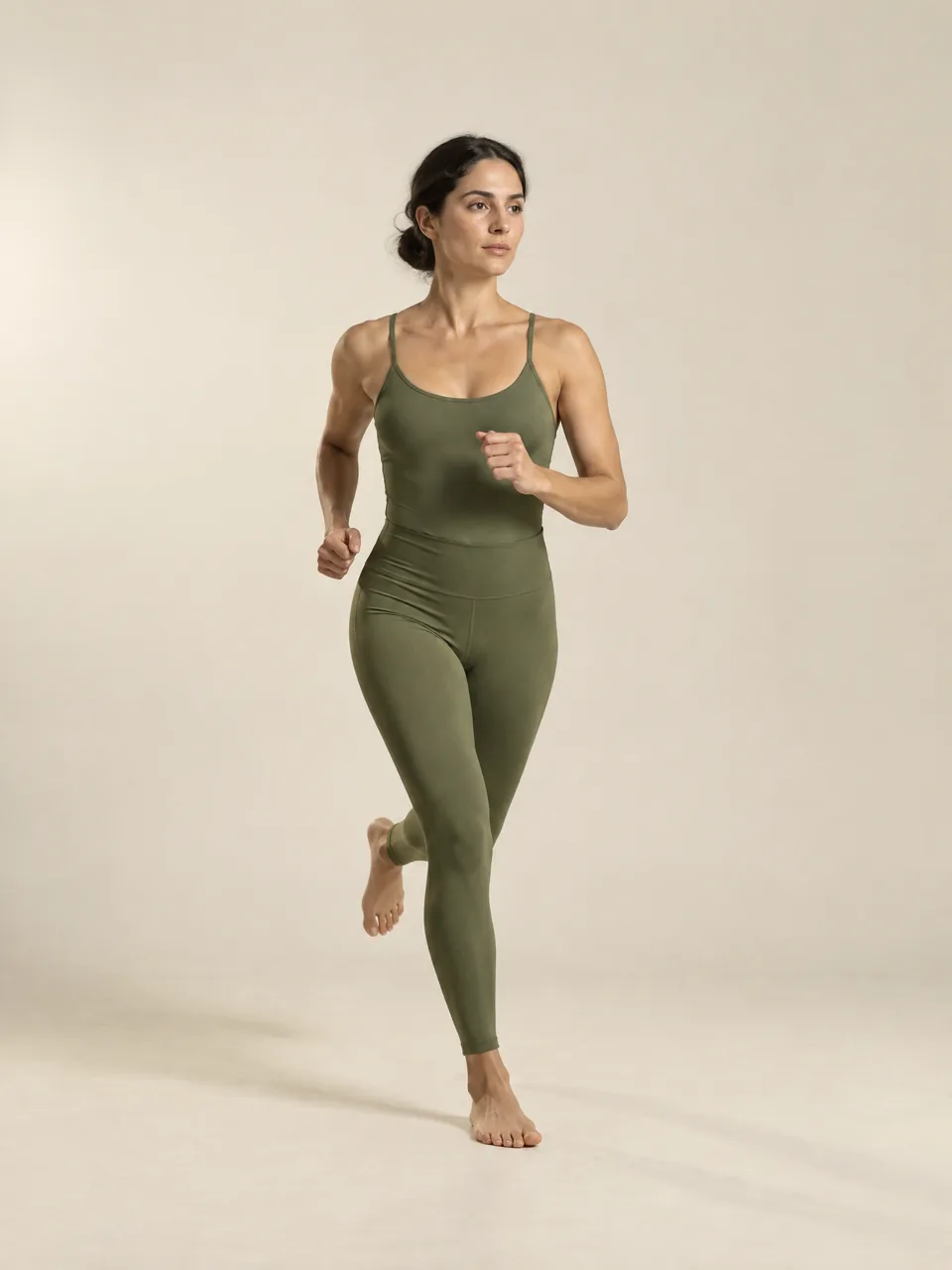
A three-quarter running figure with the elbows held bent and the legs driving in opposition.
Bent elbows change the read of a run. With the forearms held at roughly a right angle, the upper arms stop swinging long and start driving forward and back, which pulls the shoulders into the movement and lifts the chest. In three-quarter view you also see the twist: the forward knee and the opposite elbow come toward the viewer together.
The study is good for characters in motion that still need to read as controlled: pursuit, a sprint across a street, a determined entrance. Because the elbows stay close to the body, the silhouette is compact at the middle and open at the limbs, which holds up when the image is scaled down.
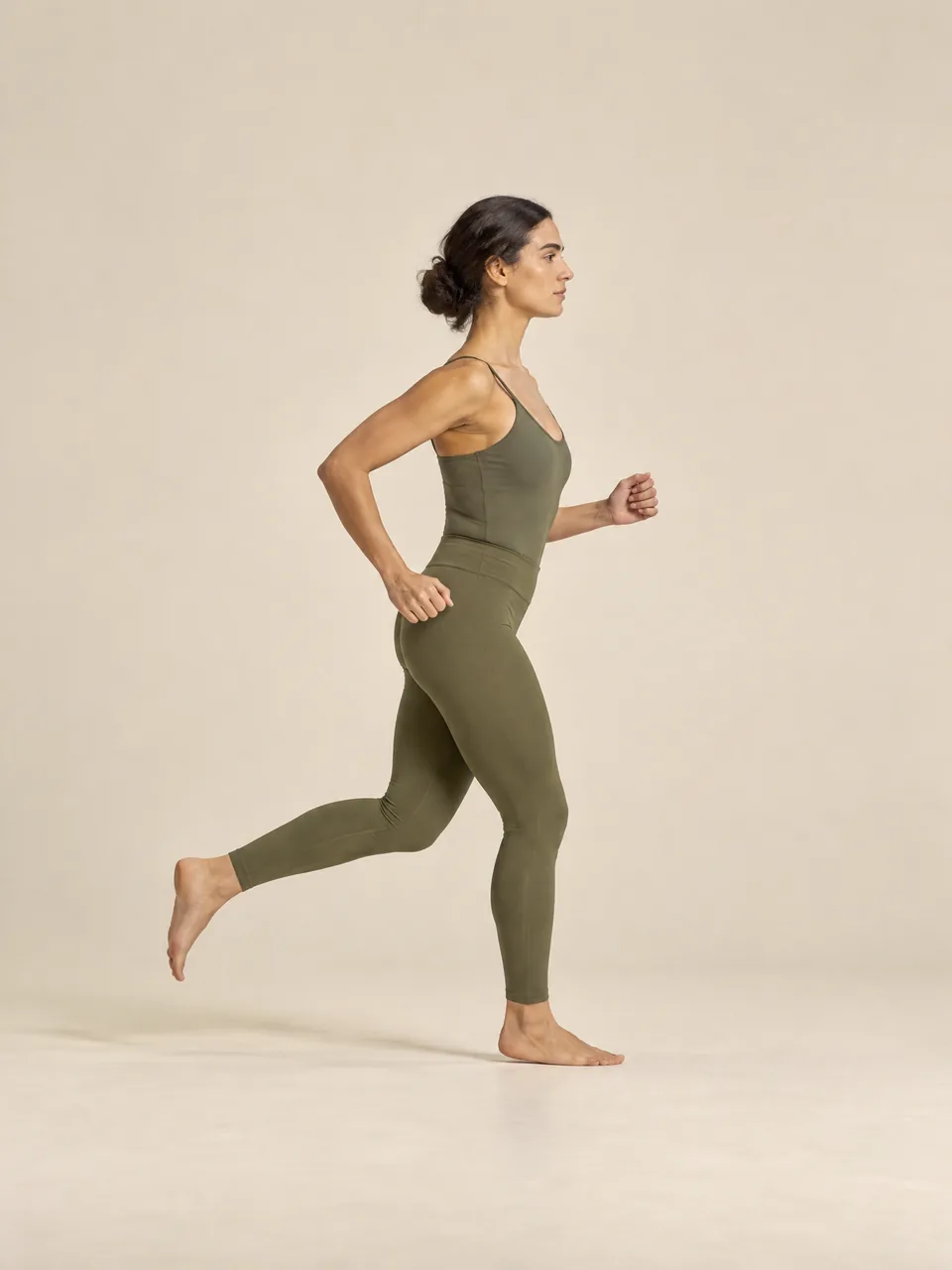
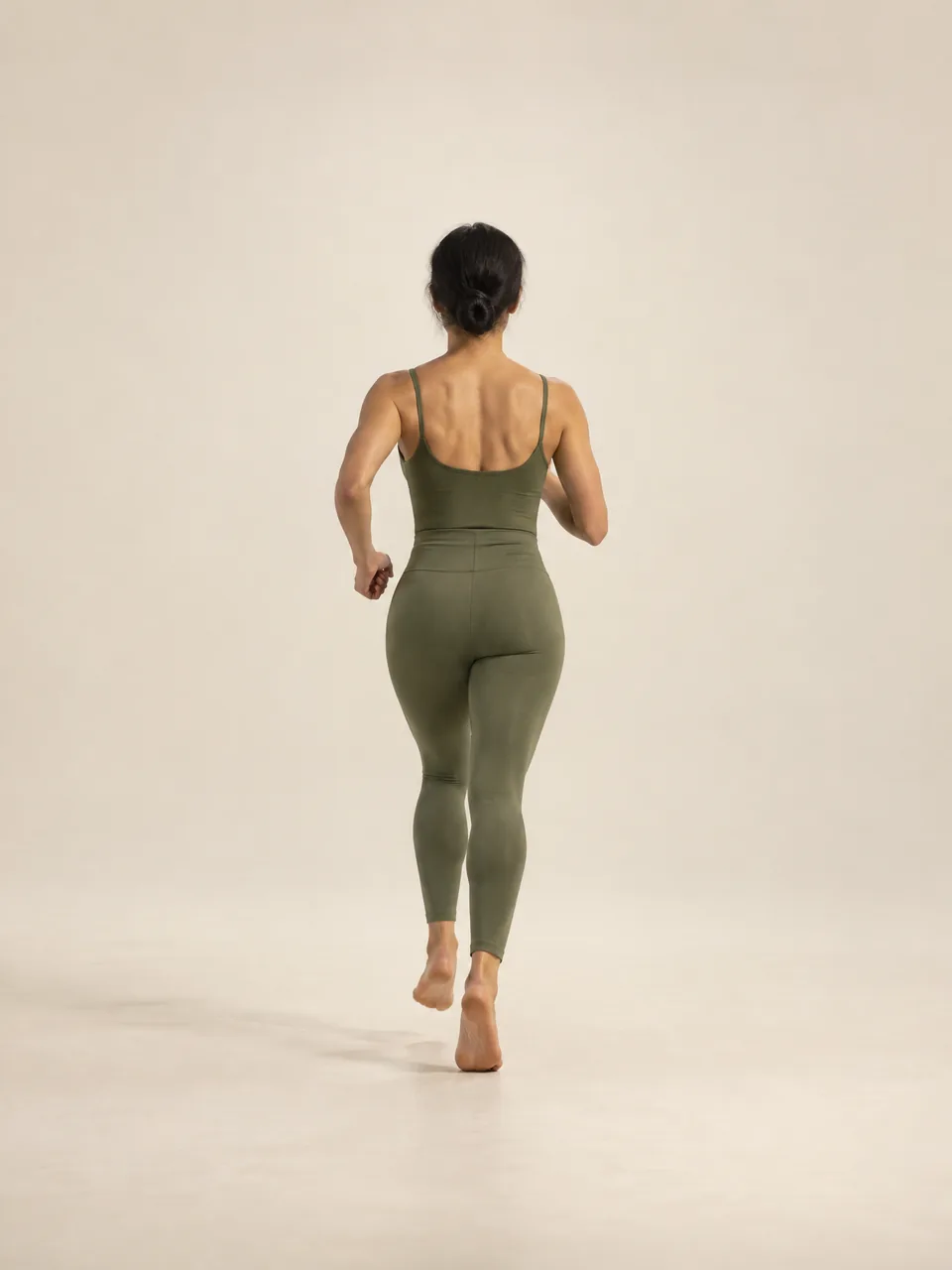
Watch the hips in the drawing. A run is not a fast walk with bent arms; the pelvis rotates more strongly and the trailing leg folds up behind the body rather than extending in a long line. Artists often forget the lift under the standing foot at mid-stride, which flattens the whole pose. Keep the elbows bent and close, not flared out to the sides, and check that the head is stable rather than bobbing.
Drawing notes
- Keep the elbows bent and close to the body instead of flaring them out.
- Fold the trailing leg up behind the hip rather than letting it trail.
- Stabilize the head; a bobbing head kills the sense of speed.
Pose prompt
The description used to generate this study. Copy it into your own workflow, or hand it to the studio with your photo.
Adult woman running with bent arms, full body, three-quarter view.
Working notes
- A three-quarter running figure with the elbows held bent and the legs driving in opposition.
- Compact elbows and an open stride keep the shape readable at small sizes.
Put this pose on your own reference
Take this study to the studio and generate a new image in the same pose, or browse the rest of the action studies first.