Running
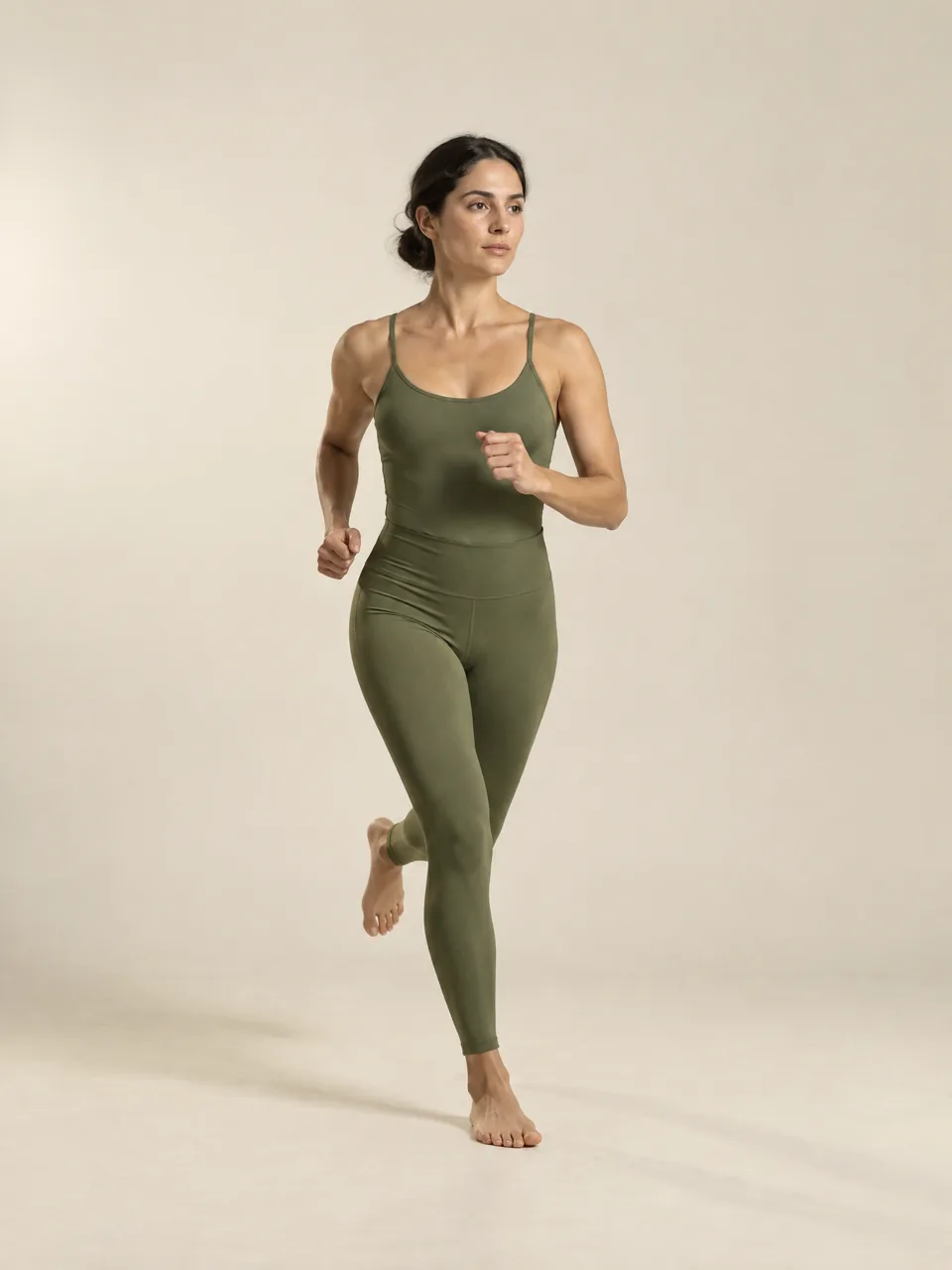
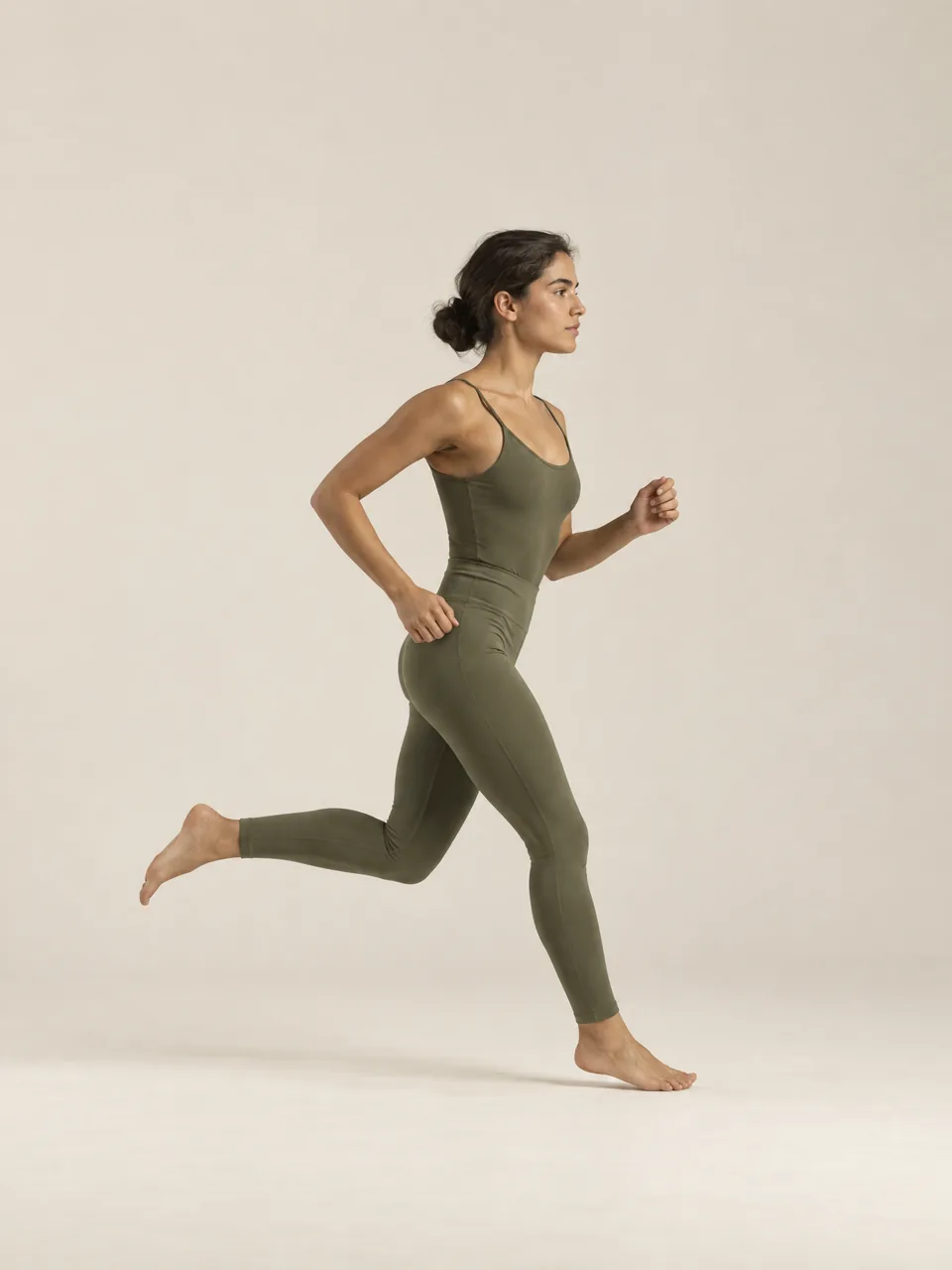
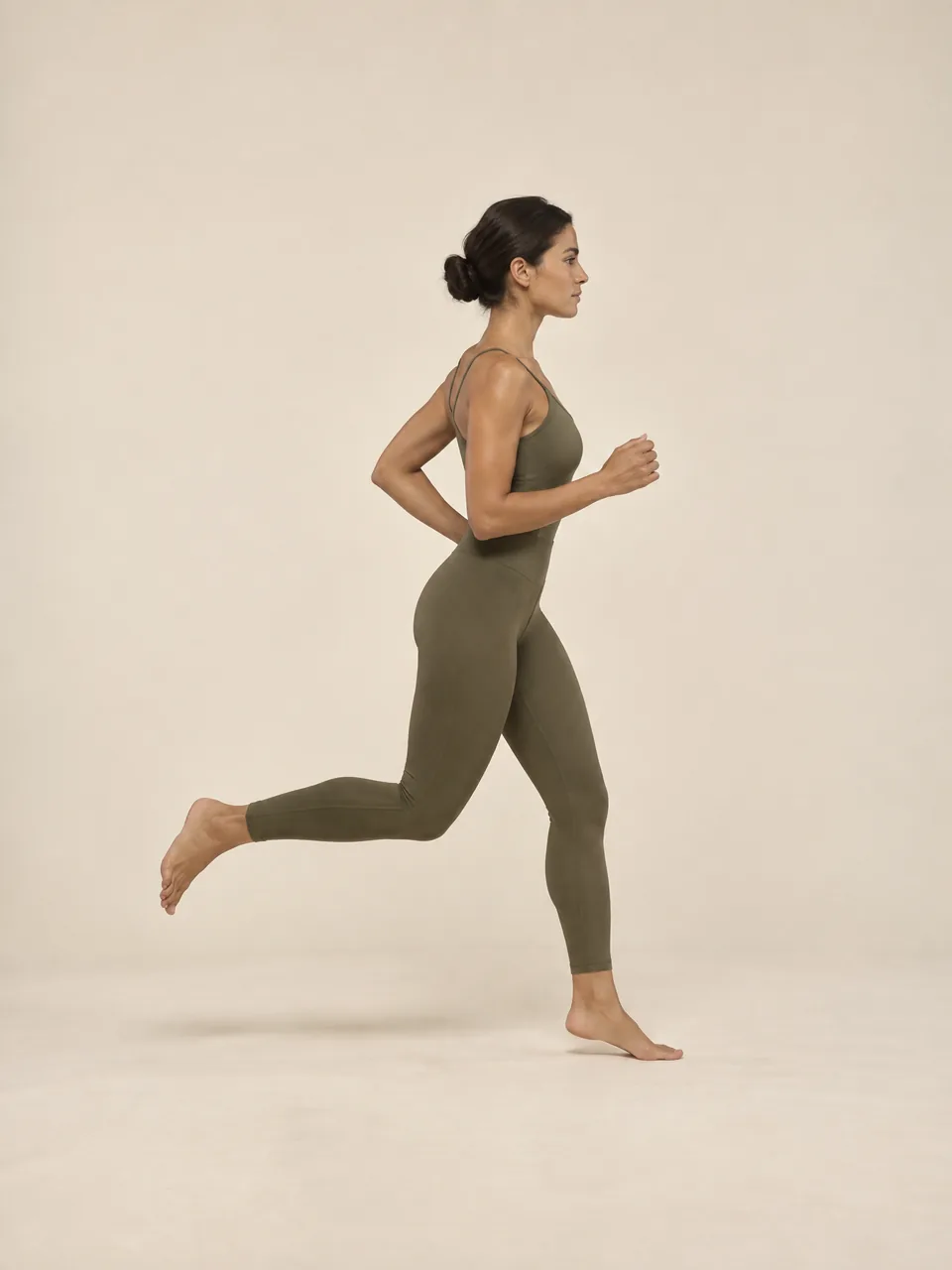
A side-view running figure in full stride, legs opposed and the torso pitched forward over the lead foot.
Side view is the clearest way to see a run, because the stride length is fully visible and one leg cannot hide behind the other. The lead leg reaches forward, the trailing leg kicks back and up, and the torso leans forward from the ankles so the chest stays over the support foot. There is a moment in every stride when both feet are off the ground, and drawing that lift is what makes the pose read as speed rather than as walking quickly.
The silhouette is long and low, and the diagonal from the trailing heel up through the hips to the head is the line of action. Everything in a run answers to that diagonal: the angle of the arms, the tilt of the head, the forward sweep of the shoulders.
The classic error is an upright torso. A runner whose spine is vertical looks like a person jogging in place. Also check the hips, which stay under the shoulders rather than dropping behind them, and make sure the trailing leg has a clear bend at the knee, with the heel coming toward the seat rather than trailing in a long straight line. Feet in a run land under the body, so the lead foot should not be thrown far ahead of the knee.
Drawing notes
- Pitch the torso forward from the ankles so the chest sits over the support foot.
- Bend the trailing knee and bring the heel toward the seat.
- Land the lead foot under the knee, not far ahead of it.
Pose prompt
The description used to generate this study. Copy it into your own workflow, or hand it to the studio with your photo.
Full-body mannequin running, side view.
Working notes
- A side-view running figure in full stride, legs opposed and the torso pitched forward over the lead foot.
- Speed comes from the airborne moment; ask for a flight phase if the result looks like a fast walk.
Put this pose on your own reference
Take this study to the studio and generate a new image in the same pose, or browse the rest of the action studies first.