Side recline
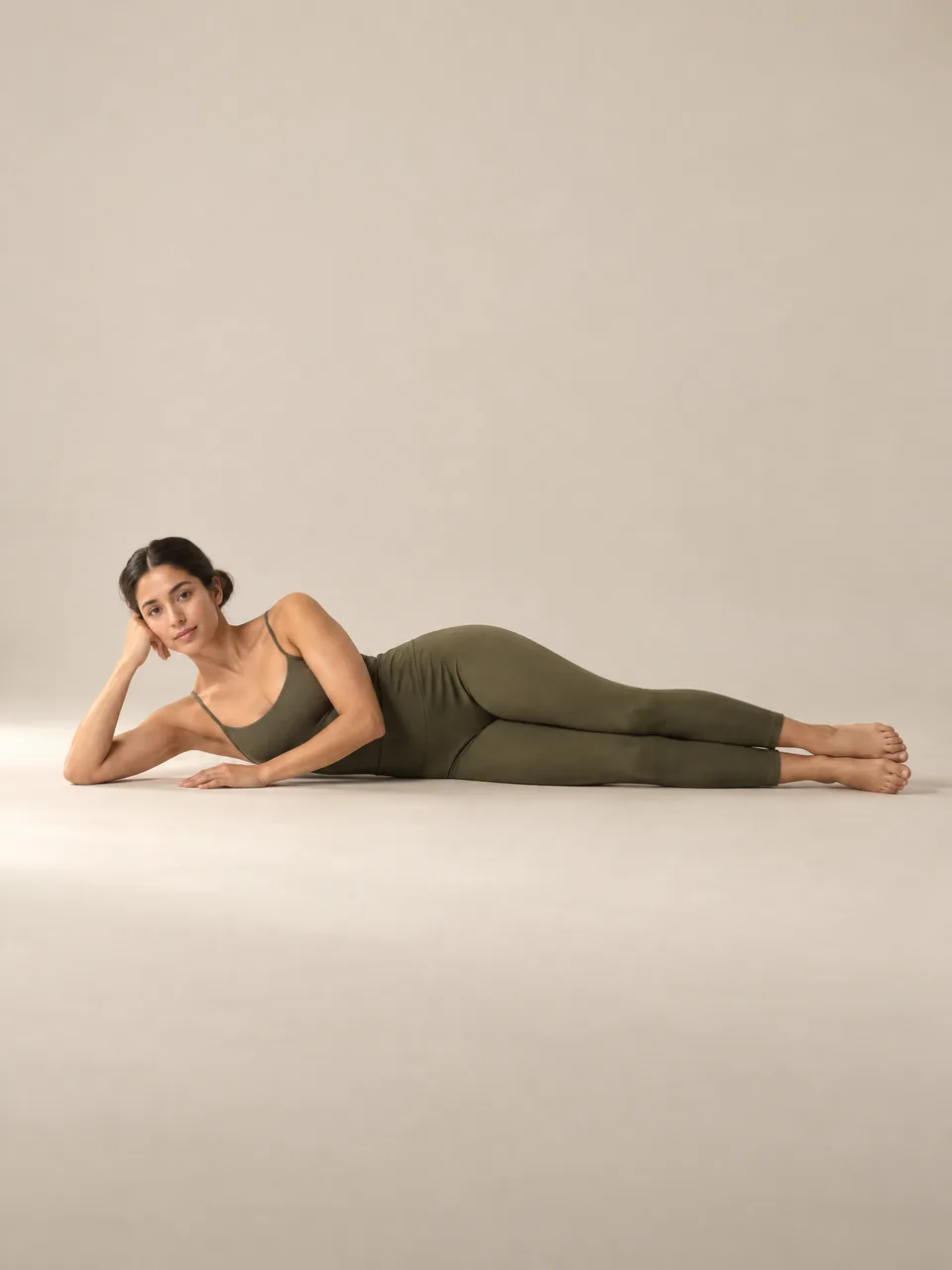
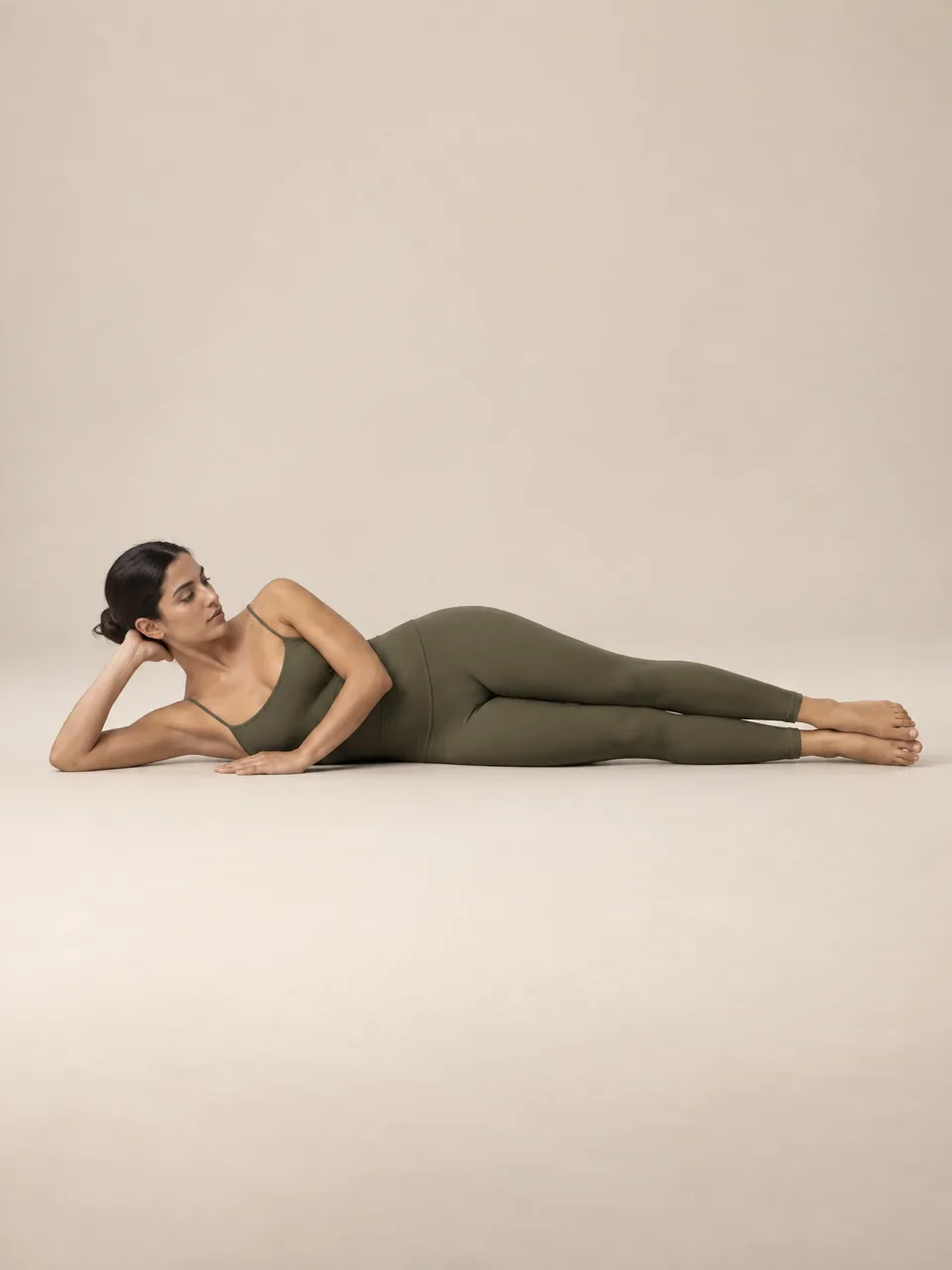
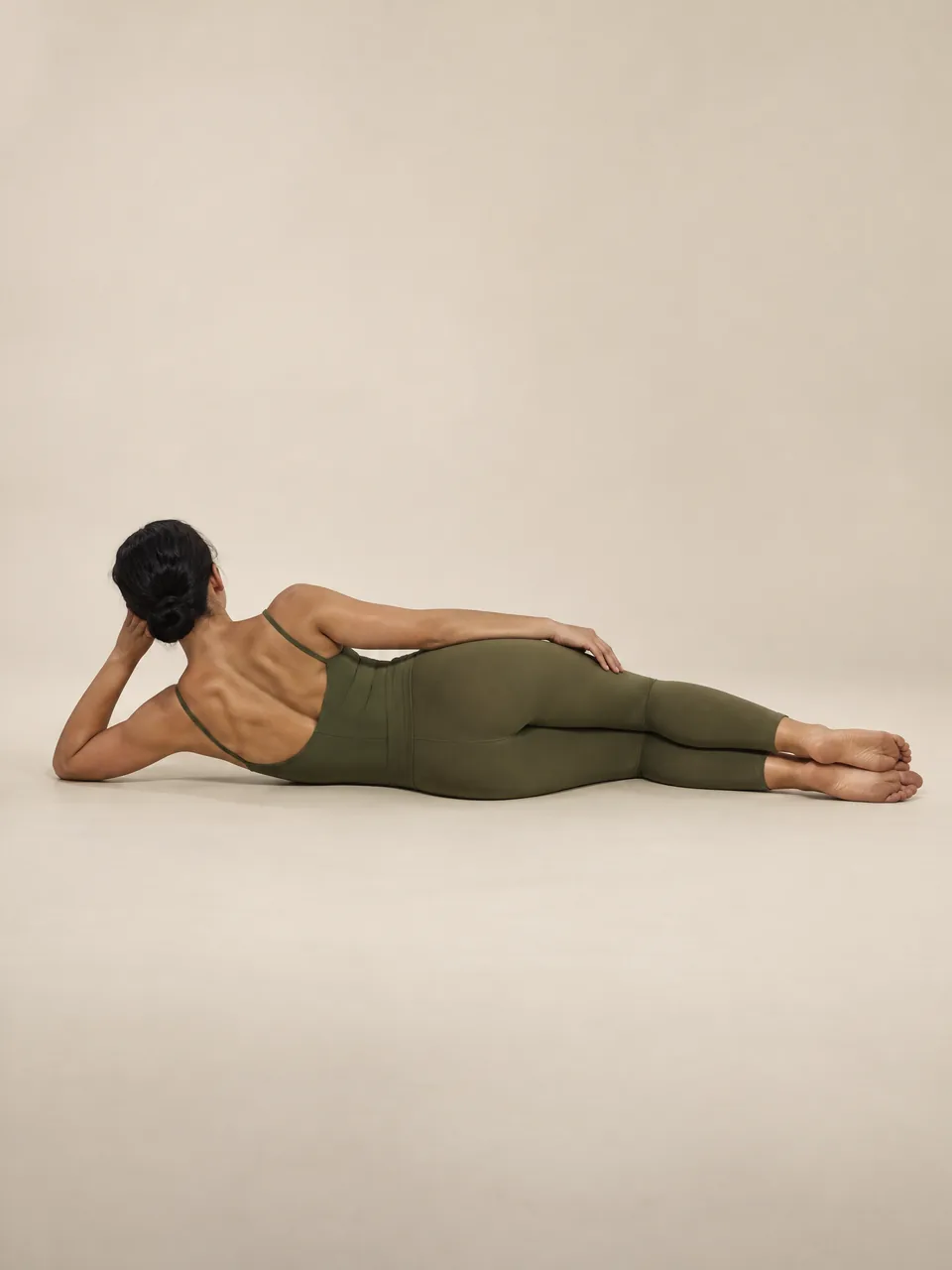
A long horizontal figure resting on one hip, head supported by a hand and the free arm falling forward.
Everything in a side recline runs along the ground. One hip and one shoulder take the weight, the legs stack one on top of the other with the top knee slightly forward for stability, and the upper arm folds so the hand can support the head. The whole figure becomes a long horizontal with one raised triangle at the top end.
That horizontal is the main drawing value: it teaches you how a standing body reorganizes when gravity changes direction. The waist narrows visibly because the upper hip rides higher, the ribs flatten on the lower side, and clothing bunches at the ground contact along the entire length.
The most common failure is drawing a standing figure tipped over. The support shoulder must compress and the shoulder joint must travel up toward the ear, while the pelvis settles onto the hip. Look carefully at the neck: the head is supported, so the neck on the underside shortens almost to nothing. Keep the top leg forward enough that the knees do not sit exactly on top of each other, and let the free arm rest along the ribs rather than float in the air.
Drawing notes
- Compress the support shoulder so the neck on the underside shortens.
- Draw the top hip higher than the bottom one; the waist literally narrows.
- Bring the top knee forward so it does not sit exactly on the other knee.
Pose prompt
The description used to generate this study. Copy it into your own workflow, or hand it to the studio with your photo.
Adult woman lying on her side, head supported by one hand, full body.
Working notes
- A long horizontal figure resting on one hip, head supported by a hand and the free arm falling forward.
- Lying figures need an explicit pose reference; improvisation usually ends up looking tipped over.
Put this pose on your own reference
Take this study to the studio and generate a new image in the same pose, or browse the rest of the floor poses studies first.