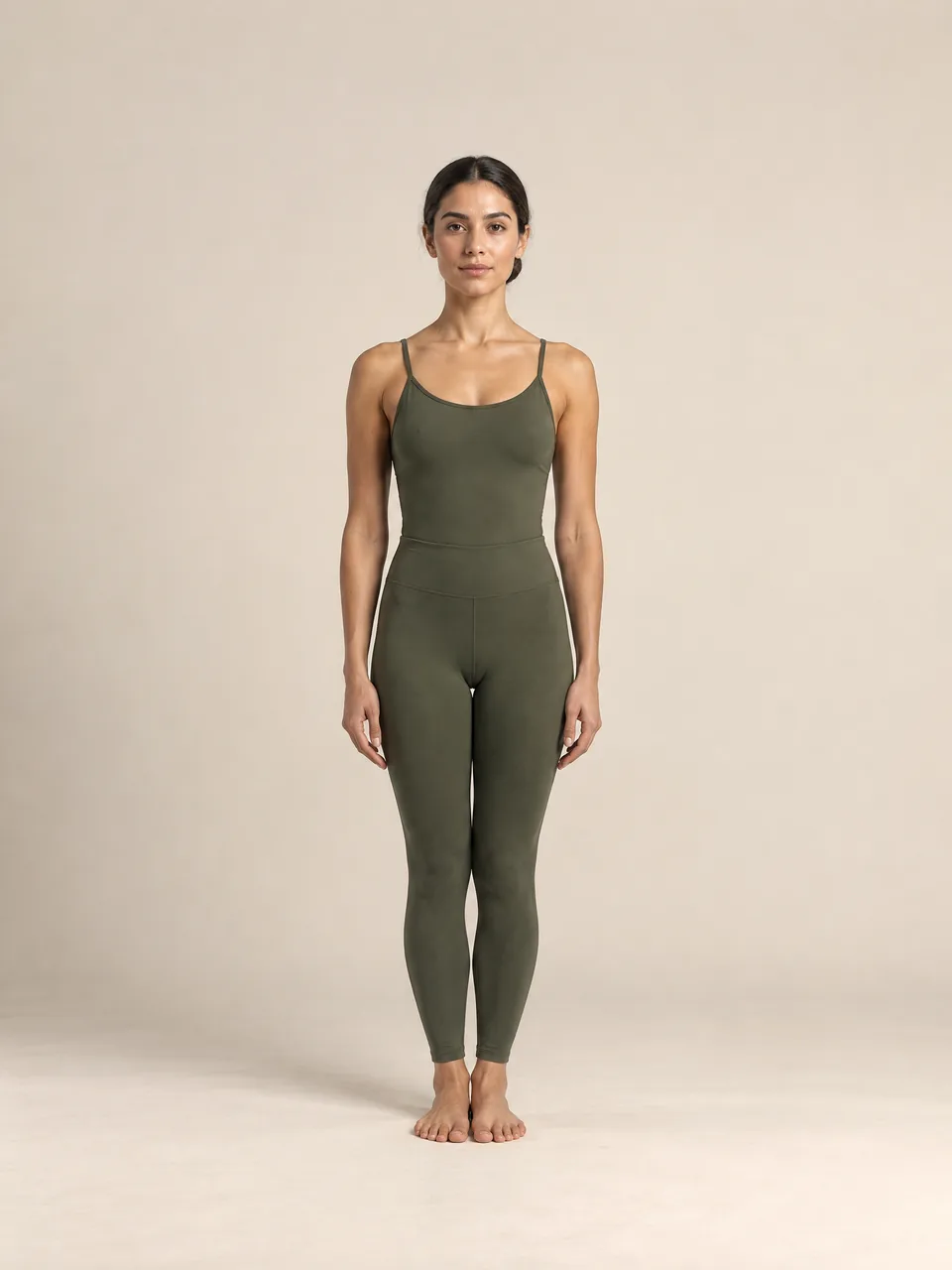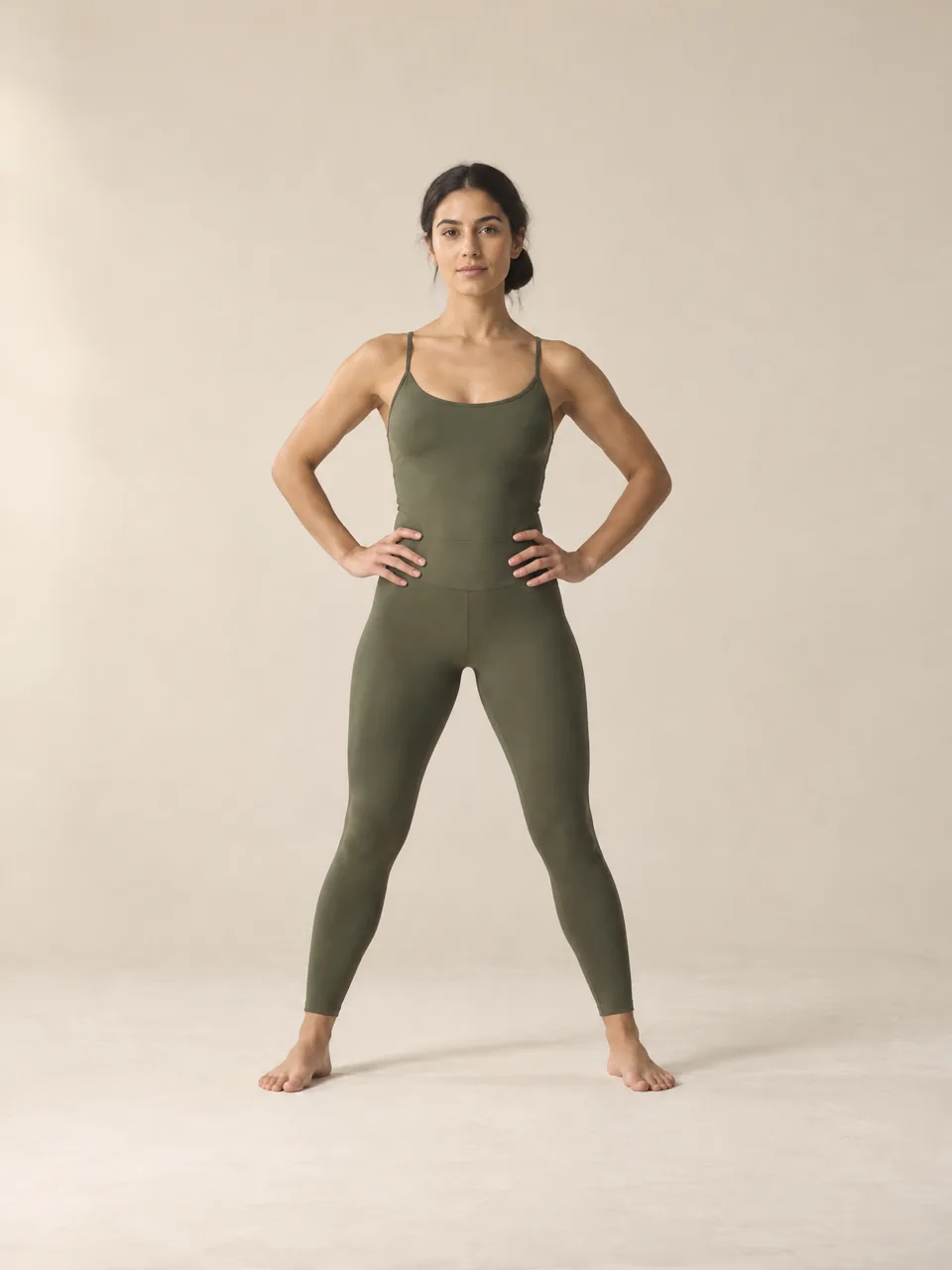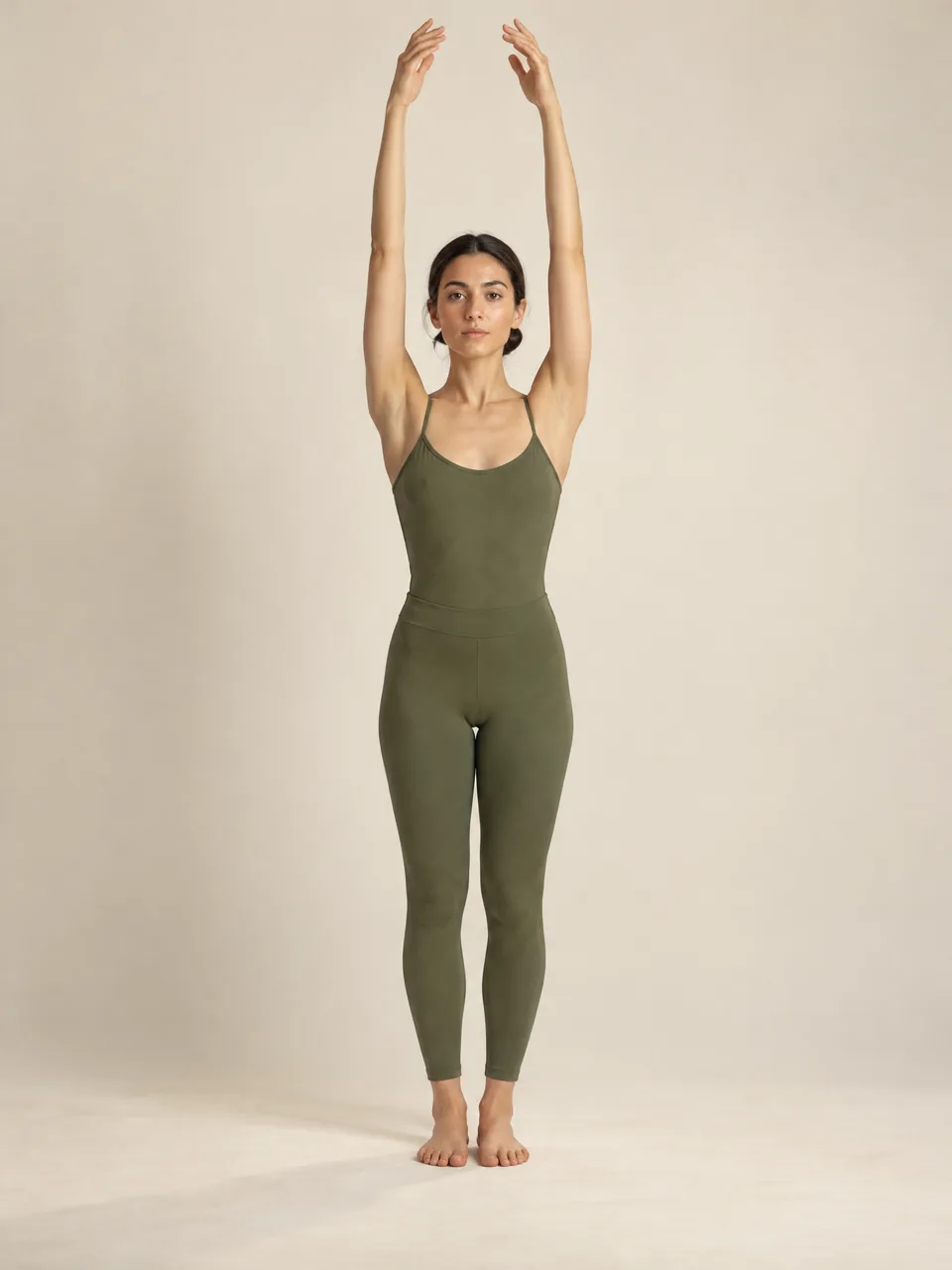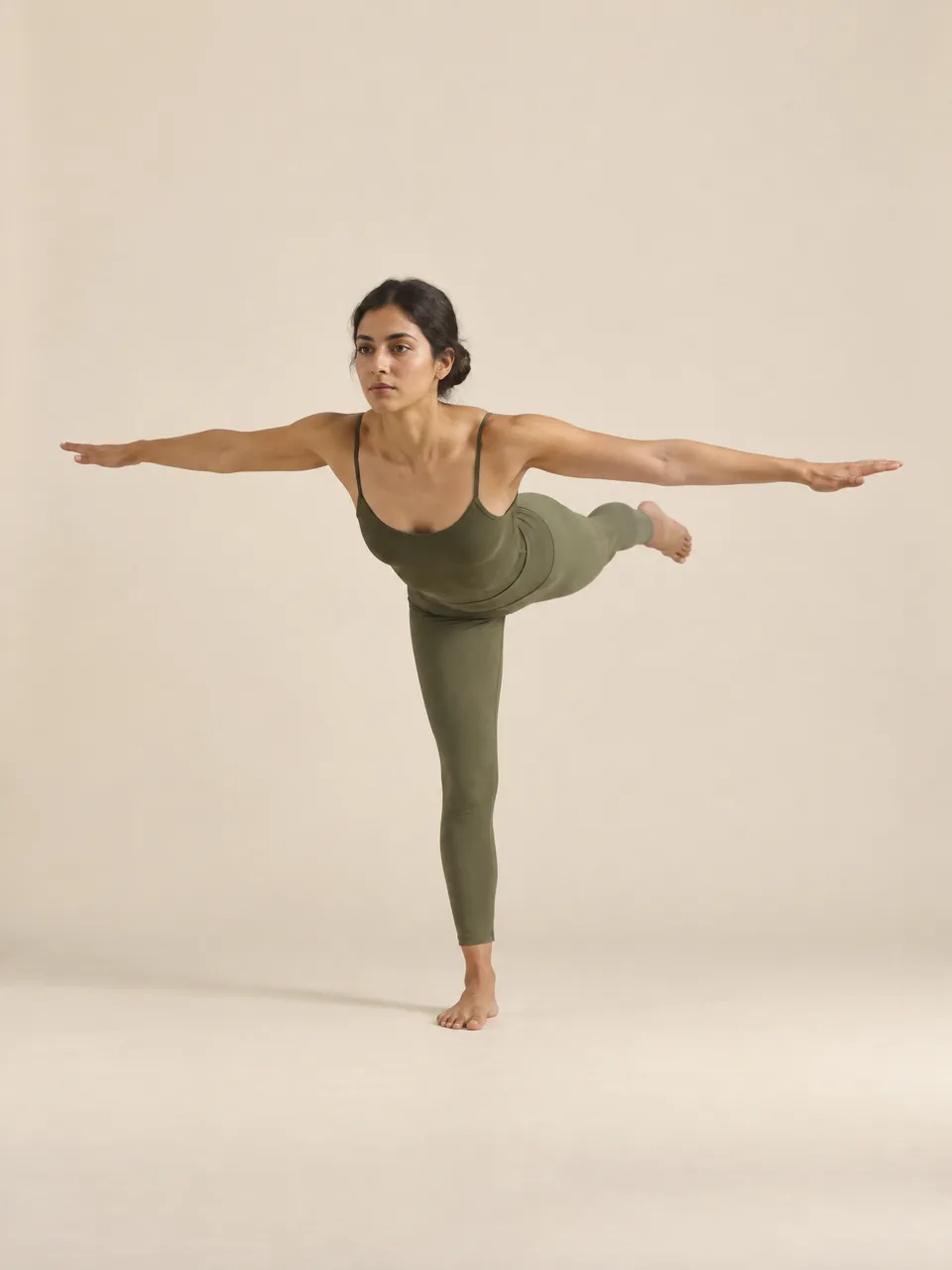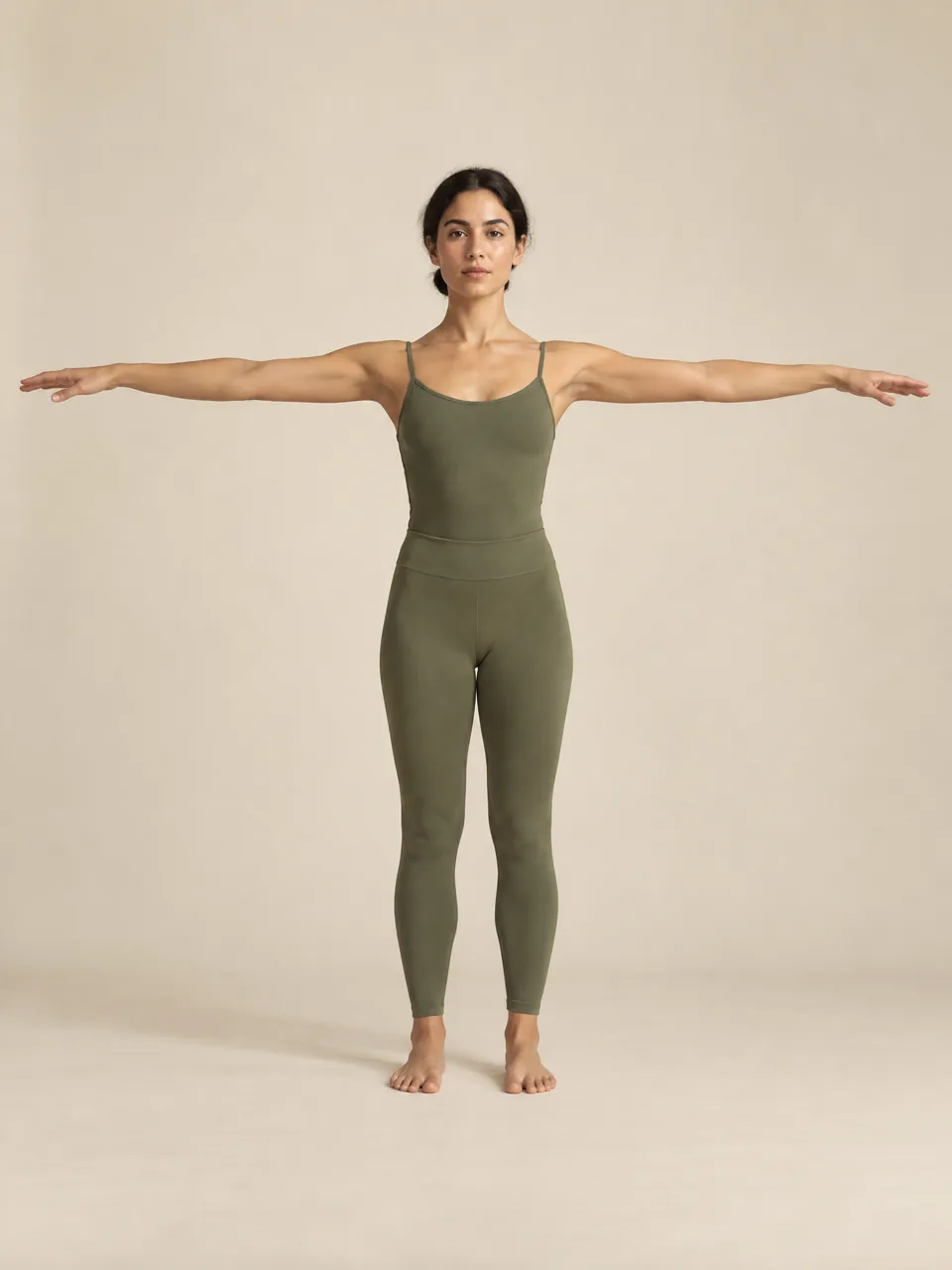
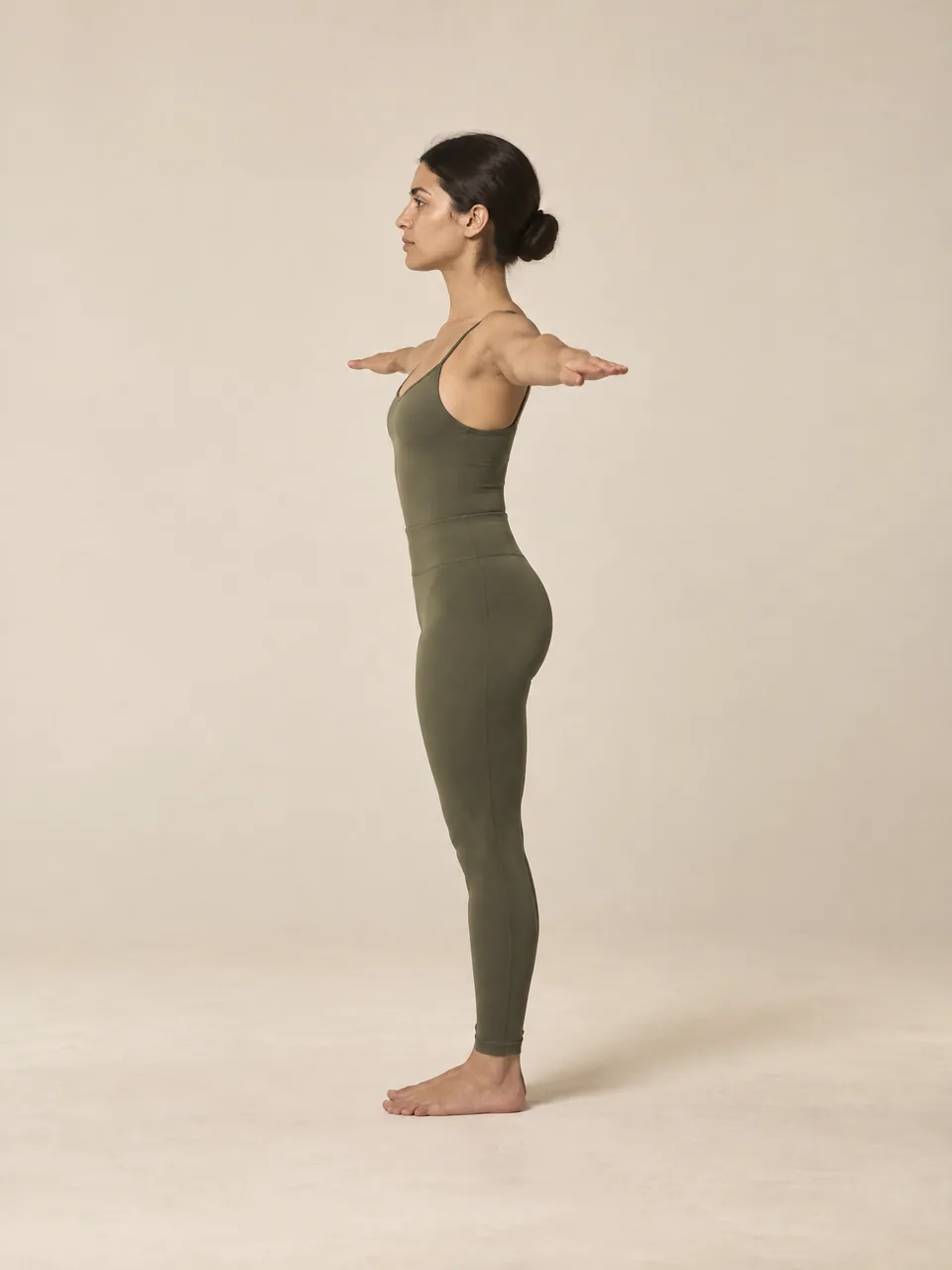
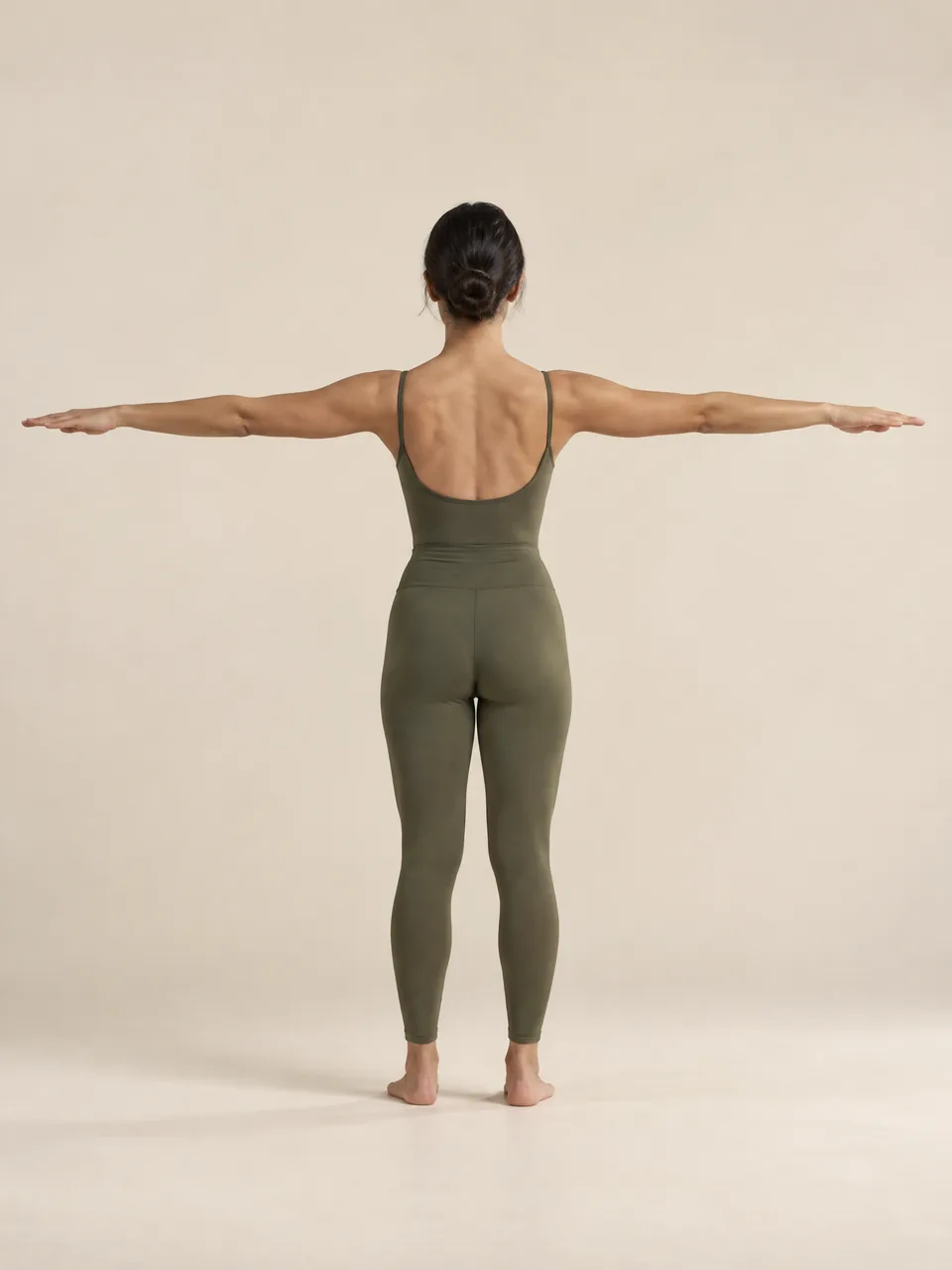
Arms extended
A symmetrical front view with both arms held out horizontally, giving an open cross shape.
Held out at shoulder height, both arms turn the figure into a cross. The feet are together or nearly so, the torso is vertical, and the arms run along one horizontal line through the shoulders. Nothing overlaps, so widths at the neck, chest, waist and hips are all fully visible.
This is an openly schematic pose, and that is its use: it isolates the shoulder girdle and the length of the arm against the torso. You can measure how far the fingertips sit below the hip line when the arm hangs, then rotate the same arm up ninety degrees and see the shoulder joint move in relation to the ribs. For costume work it also shows how a garment falls from an open arm line.
The drawing error is a horizontal line that ignores the body. Arms do not travel perfectly level; they drop a little from the shoulder, the elbow has a soft angle, and the hands are slightly below the shoulder in most relaxed versions. Draw the trapezius rising from the neck to the shoulder before you draw the arm, so the deltoid has somewhere to attach. Keep the head facing forward, and check that both hands are the same size, since perspective distortion is not available in a flat front view.
Drawing notes
- Draw the trapezius slope first so the deltoid has an attachment.
- Let the arms drop very slightly from the shoulder instead of a dead level line.
- Give the elbow a soft angle and keep both hands the same size.
Pose prompt
The description used to generate this study. Copy it into your own workflow, or hand it to the studio with your photo.
Adult woman standing with both arms extended sideways, full body, front view.
Working notes
- A symmetrical front view with both arms held out horizontally, giving an open cross shape.
- A measurement pose: useful for comparing arm length against torso landmarks.
Put this pose on your own reference
Take this study to the studio and generate a new image in the same pose, or browse the rest of the standing studies first.