Mountain pose
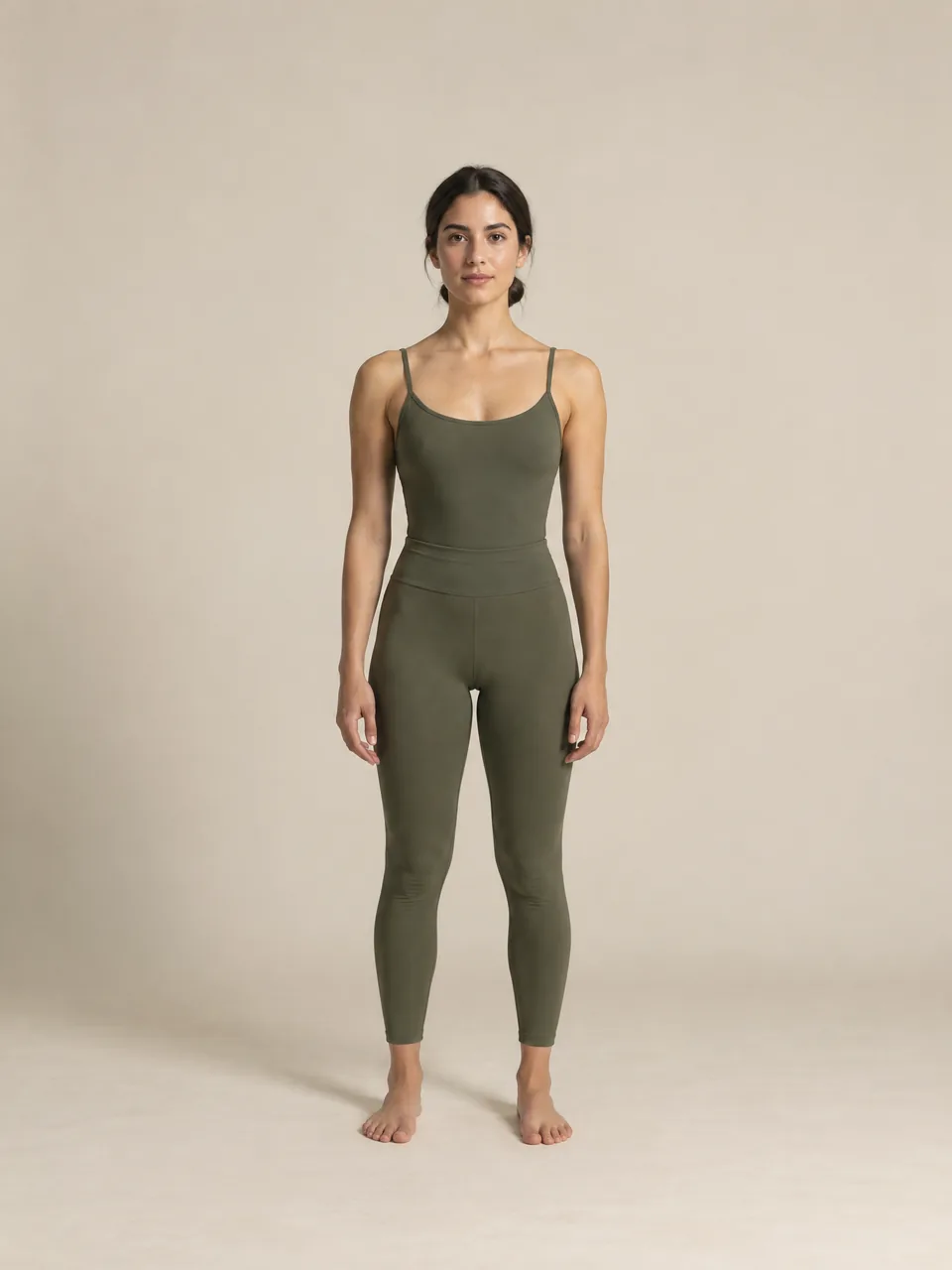
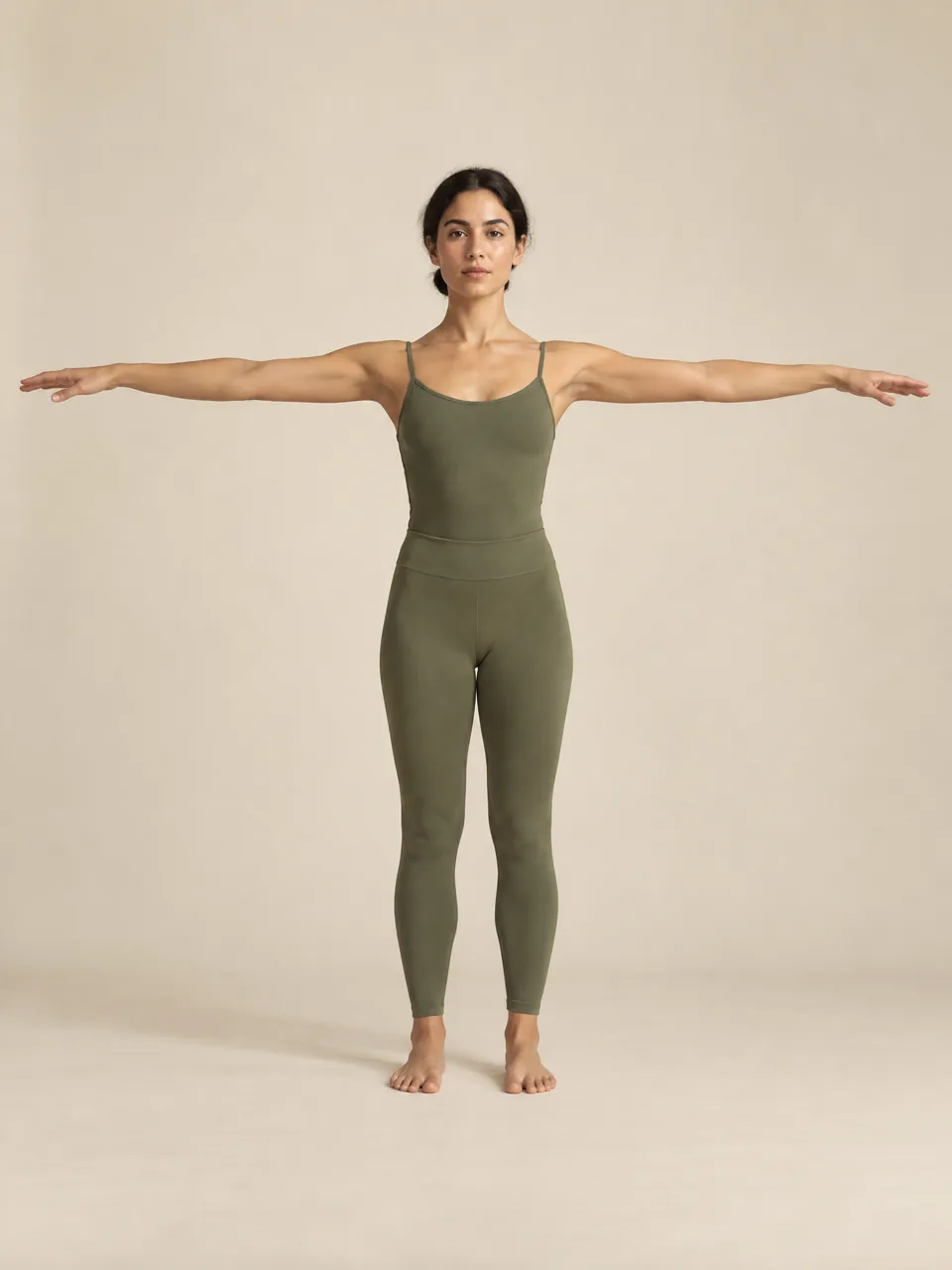
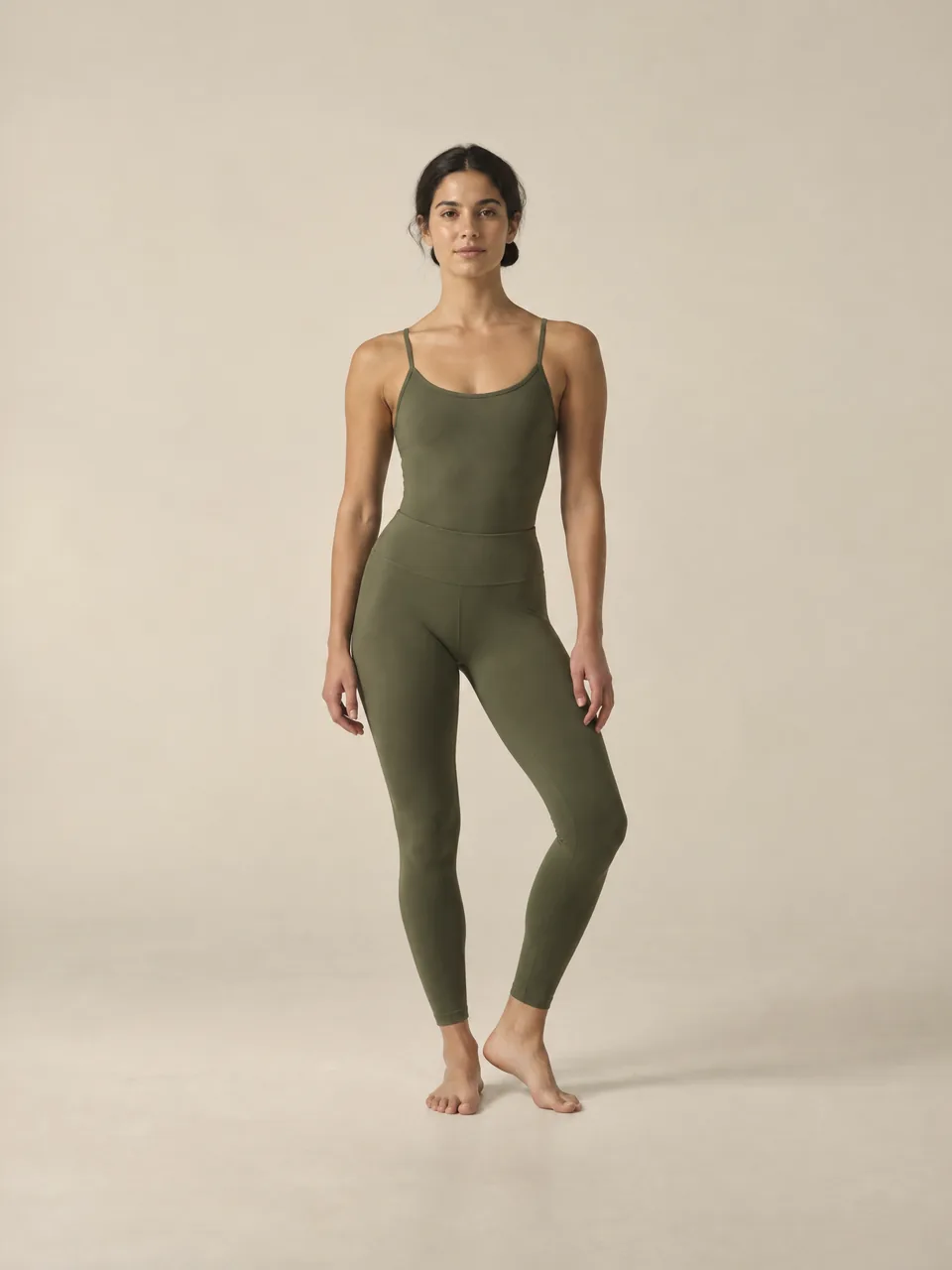
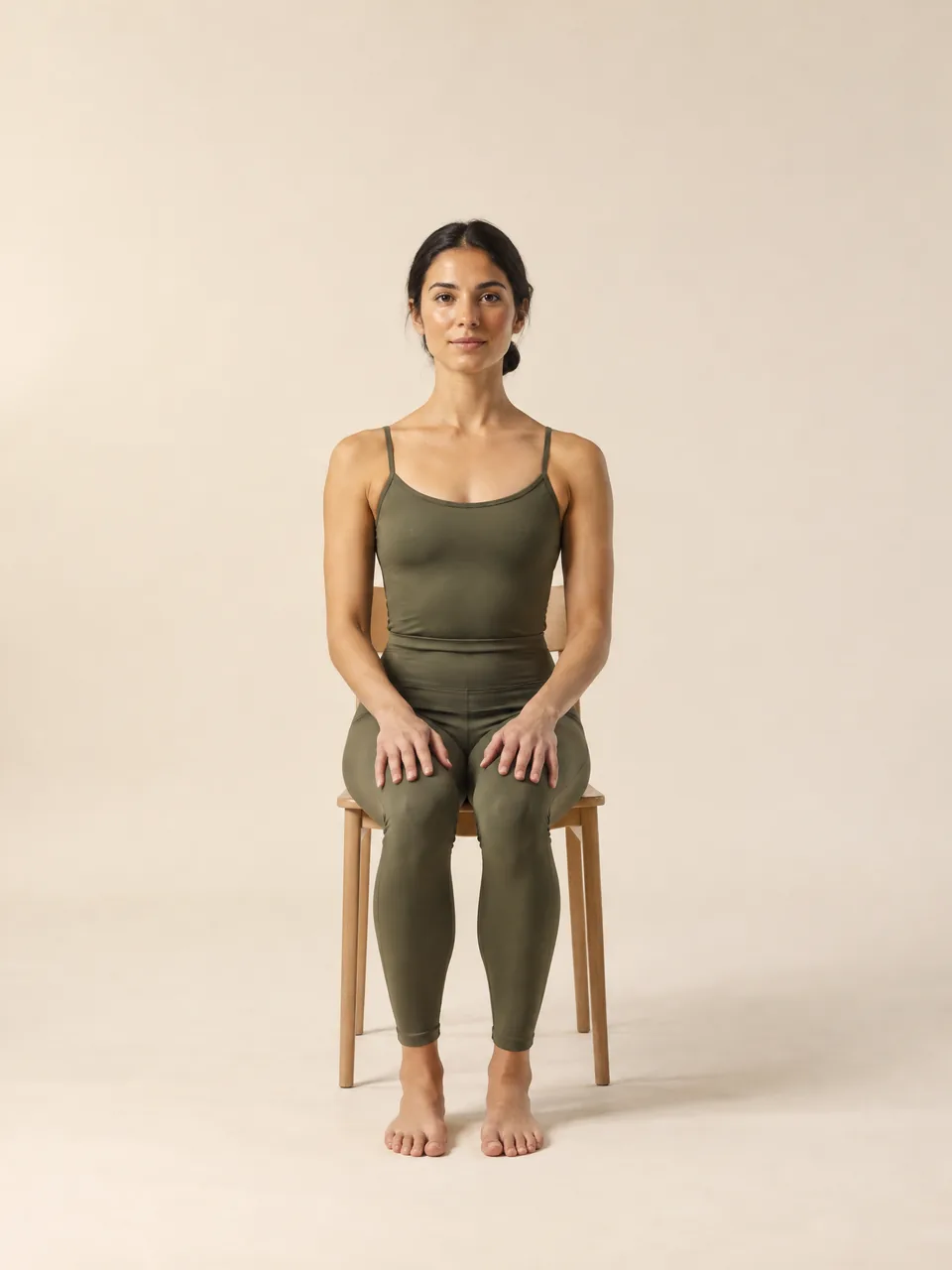
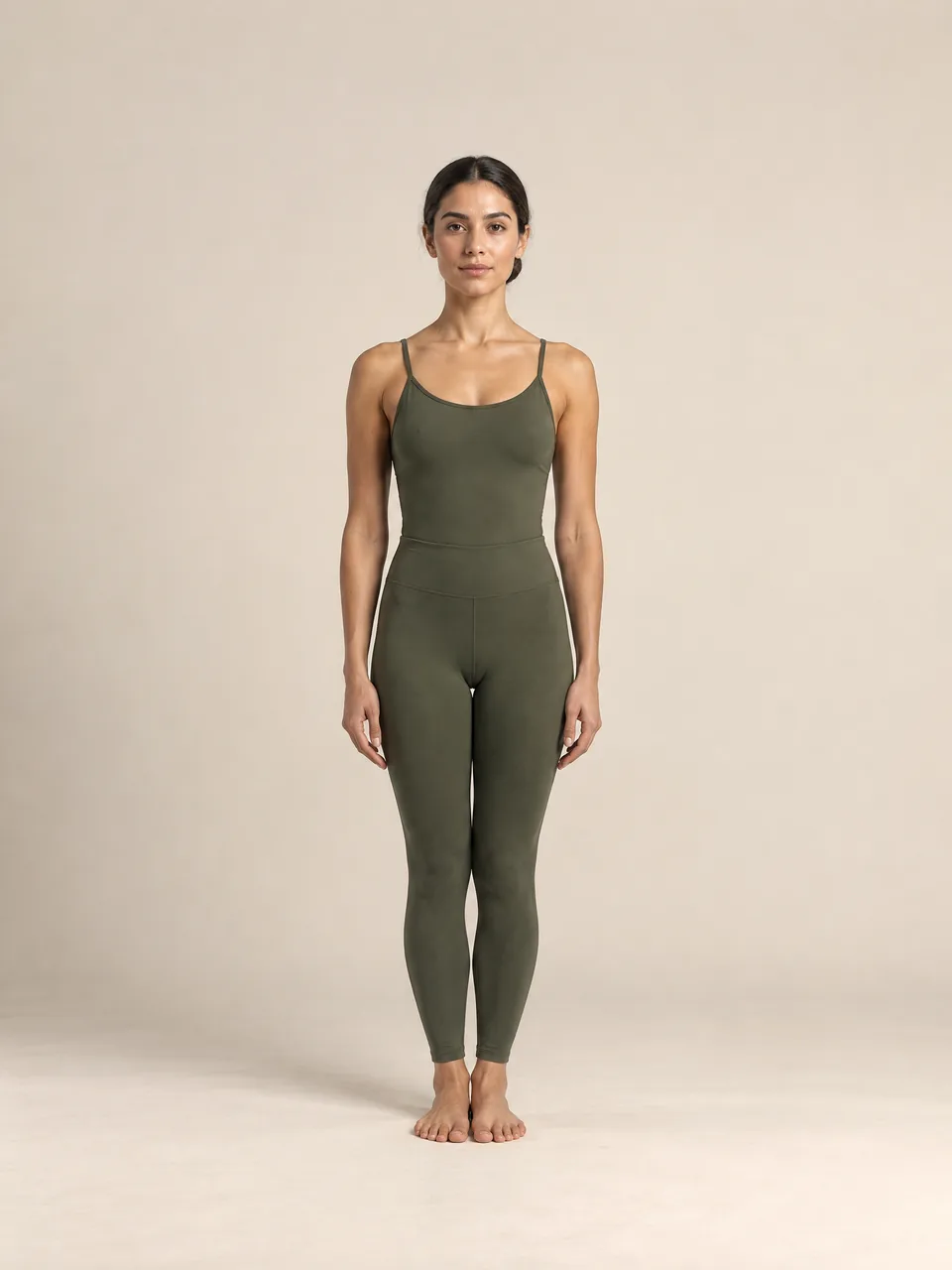
A symmetrical, front-facing standing study with the feet together and the arms hanging quietly at the sides.
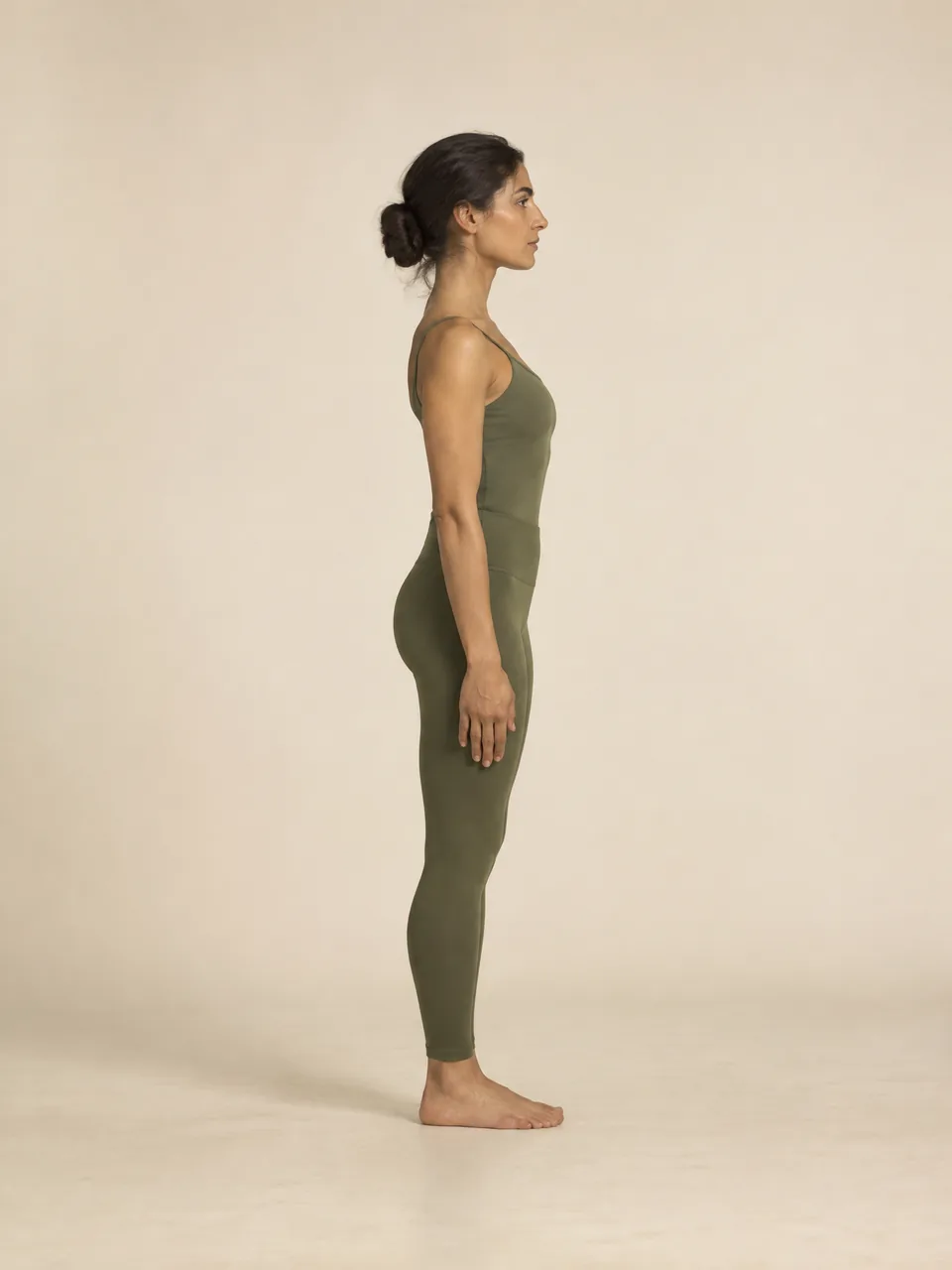
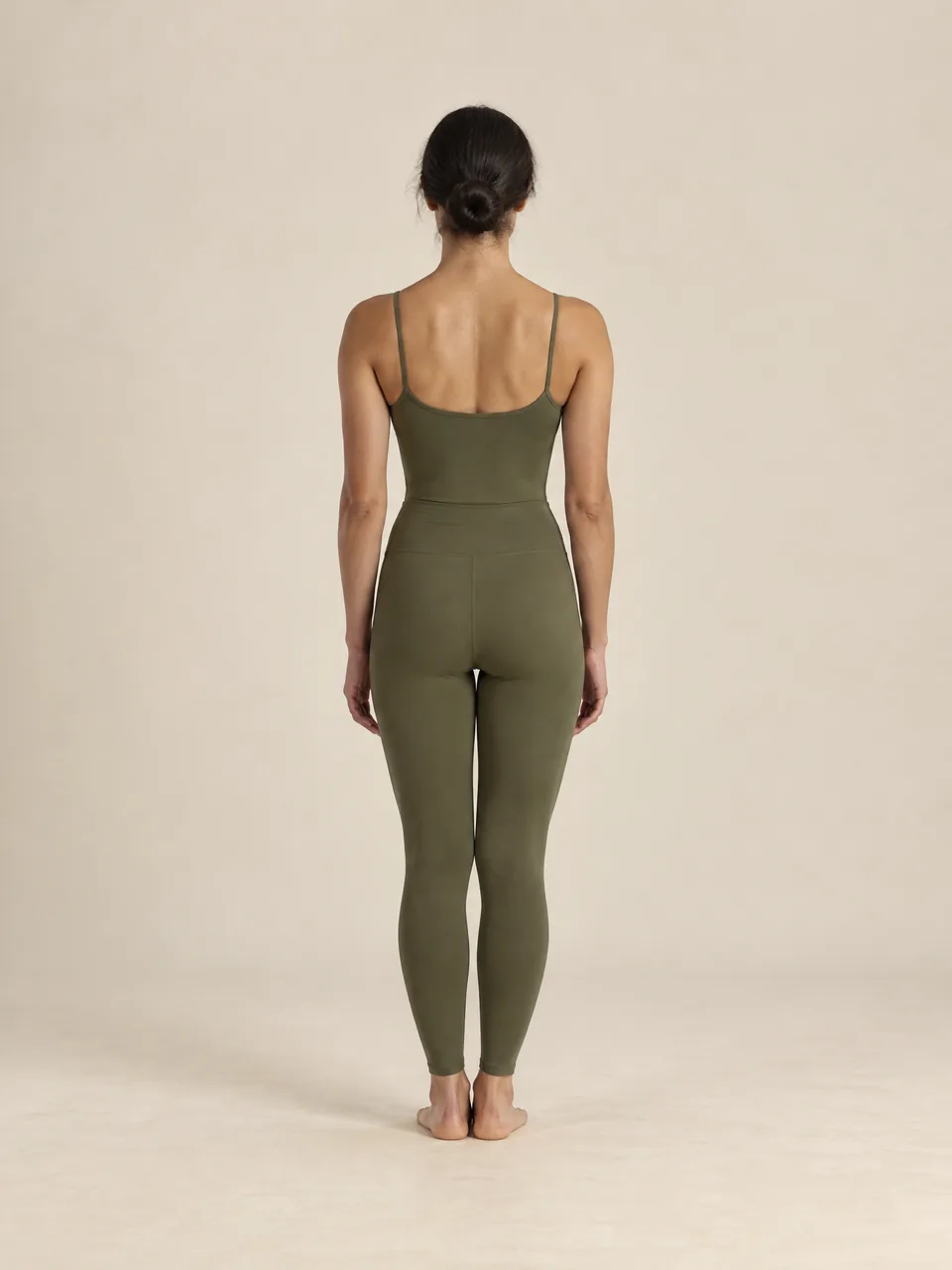
This is the flattest, most symmetrical pose in the library, which is exactly what makes it a good baseline. The figure faces the camera squarely, the feet touch along the inner edge, the arms hang beside the hips and only the hands break the outline slightly. Load is split evenly between both legs, so both hips sit at the same height.
What the silhouette gives you is pure vertical structure: a column with visible widths at shoulders, ribs, waist and hip. It reads as stillness and self-containment, so it suits a character introduction, a costume front view, or a reference plate where you want to compare proportions without any foreshortening.
The drawing risk is that symmetry turns into stiffness. In a real standing body the arms are not parallel to the torso; there is a gap that widens at the elbow and narrows at the wrist, and the shoulders are never completely level. Give one shoulder a few degrees of drop, keep the collarbones slightly curved, and taper the forearms so the hands read as weight rather than decoration. This is also a good study for the notch where the neck meets the shoulders, since nothing hides it.
Drawing notes
- Leave a widening gap between arm and torso from shoulder to wrist; parallel arms read as stiff.
- Curve the collarbones slightly and shorten one shoulder by a few degrees.
- Draw the neck-to-shoulder notch first, since nothing in this pose conceals it.
Pose prompt
The description used to generate this study. Copy it into your own workflow, or hand it to the studio with your photo.
Adult woman in mountain pose, standing upright with feet together and arms at her sides, full body, front view.
Working notes
- A symmetrical, front-facing standing study with the feet together and the arms hanging quietly at the sides.
- This study is a visual reference for proportions, not a posture instruction.
Put this pose on your own reference
Take this study to the studio and generate a new image in the same pose, or browse the rest of the standing studies first.