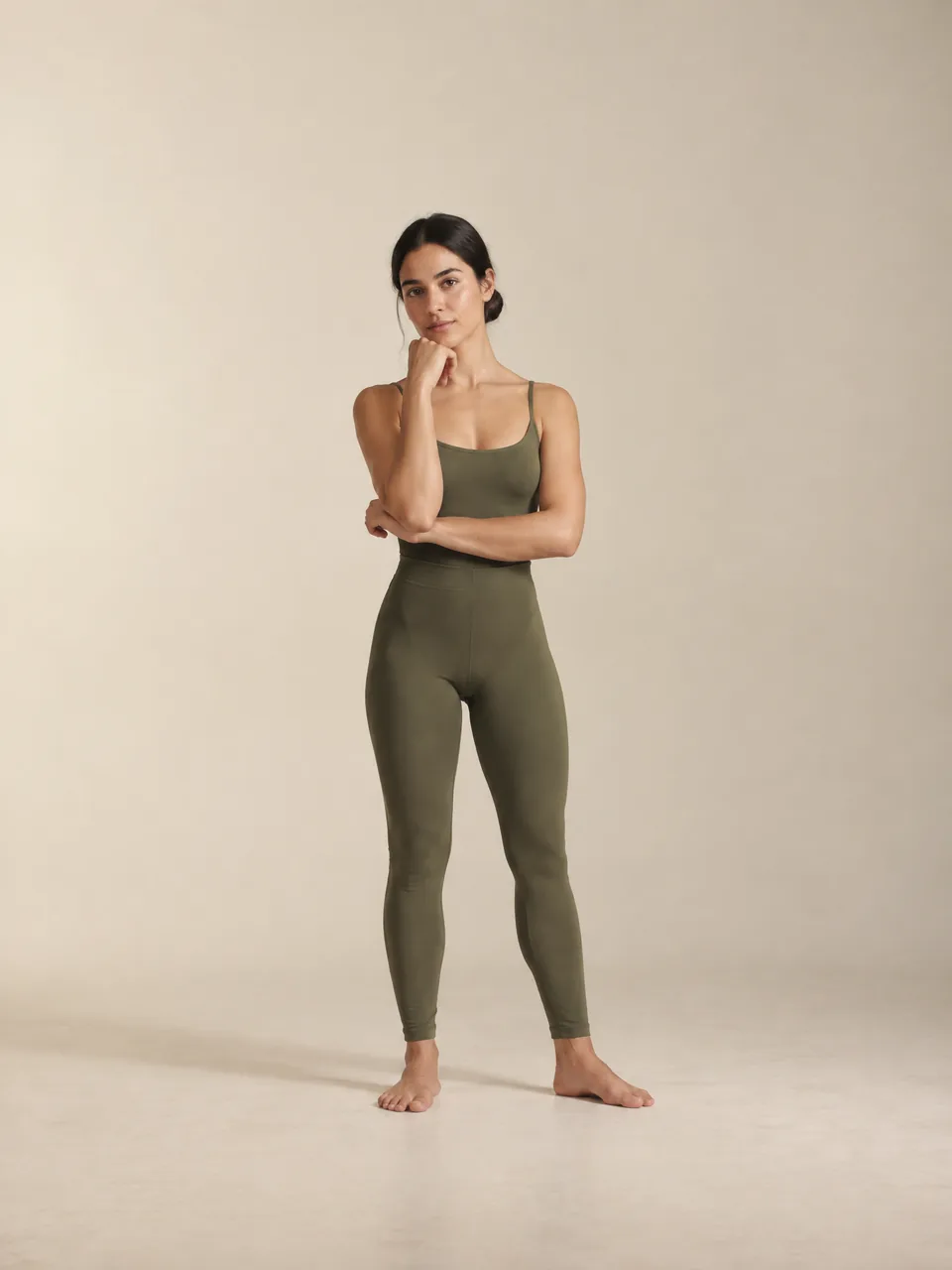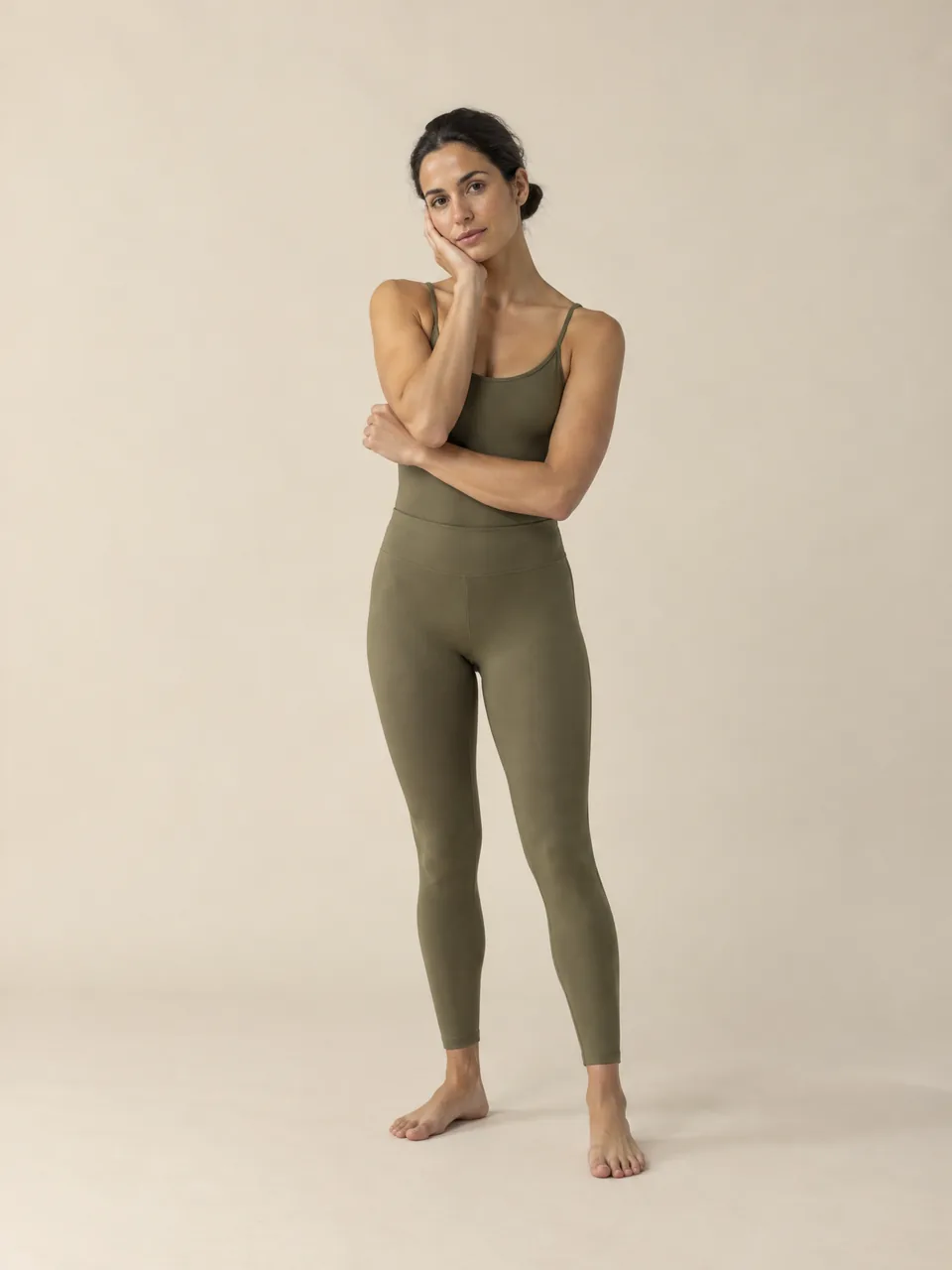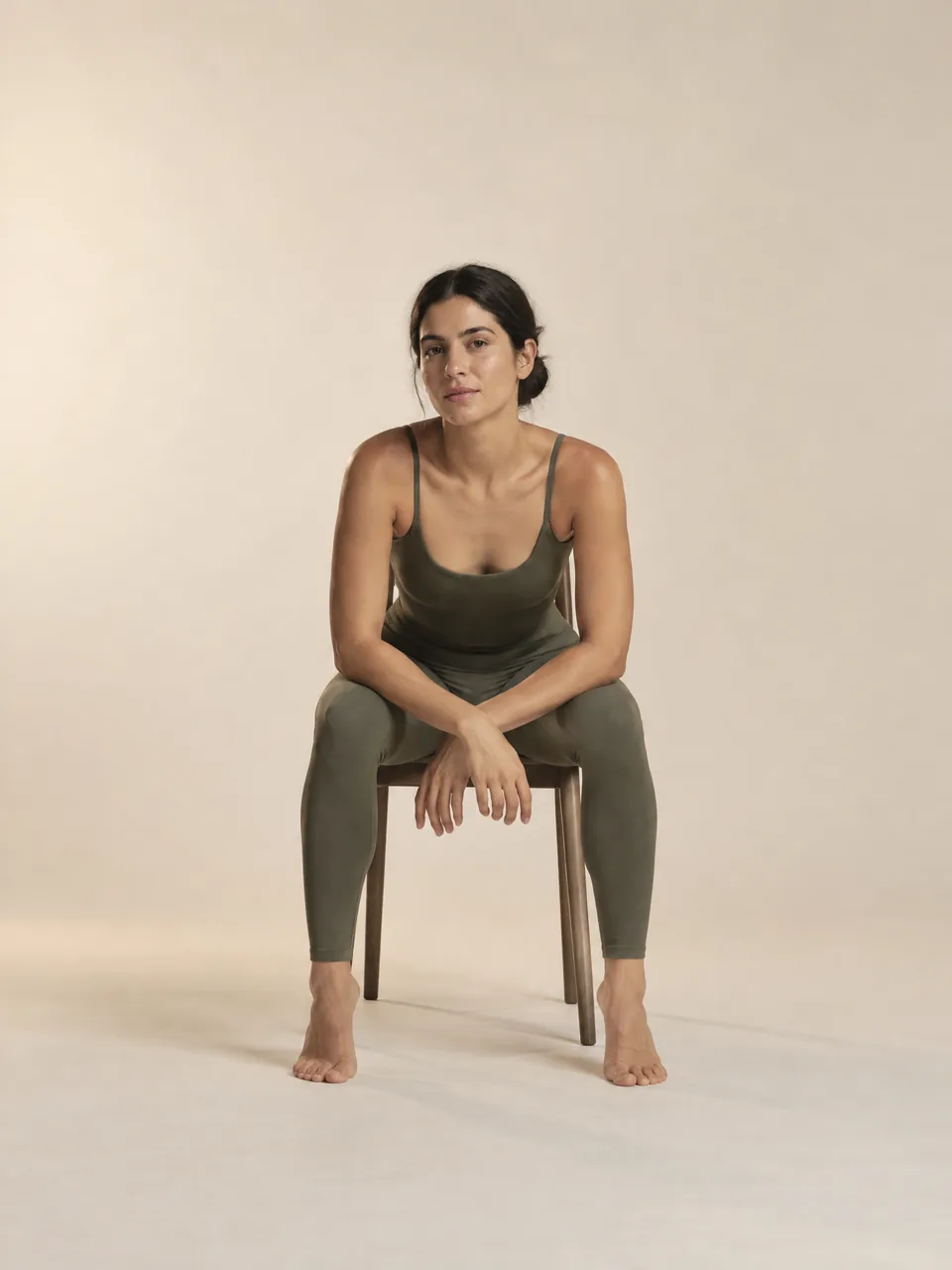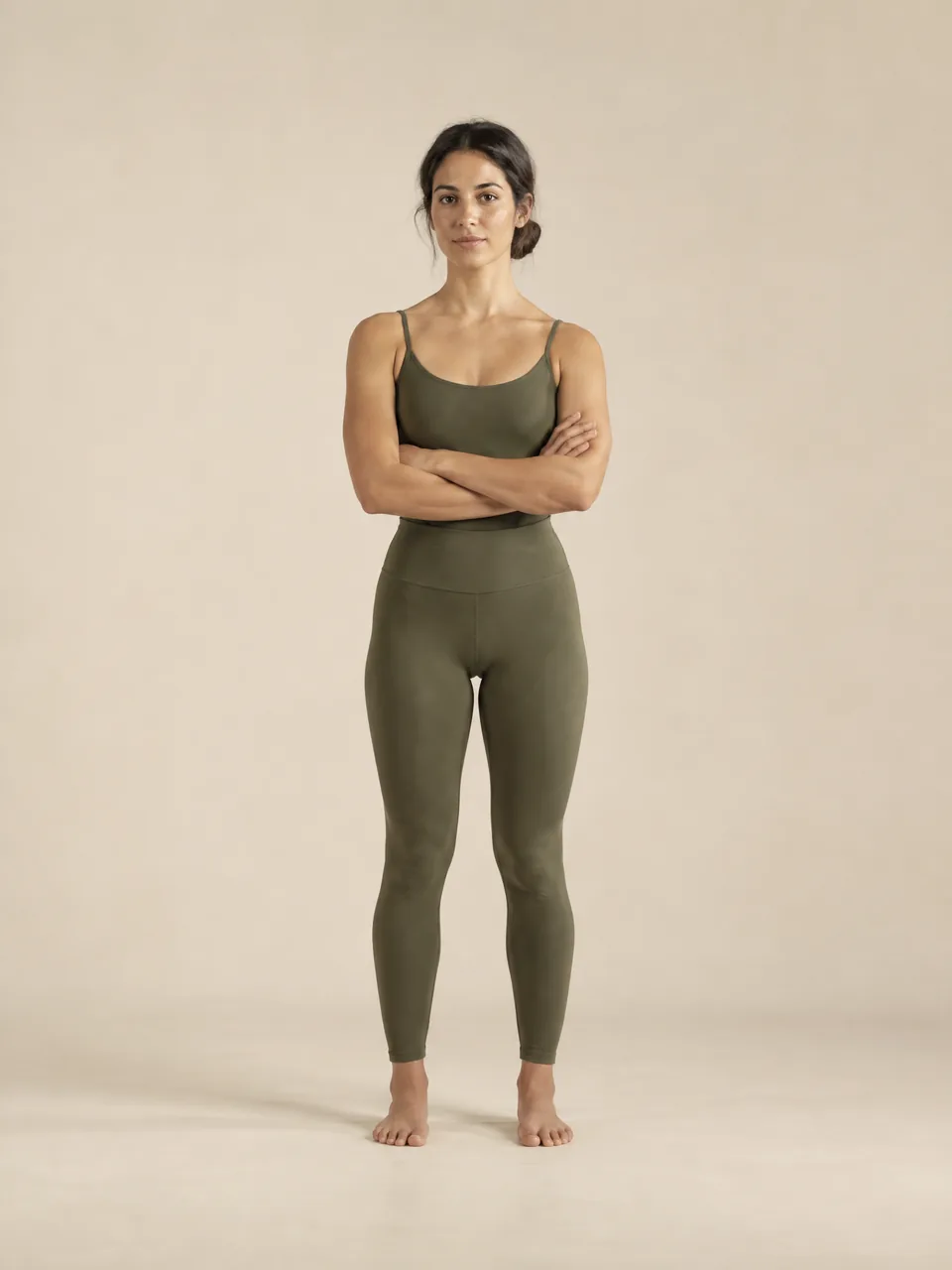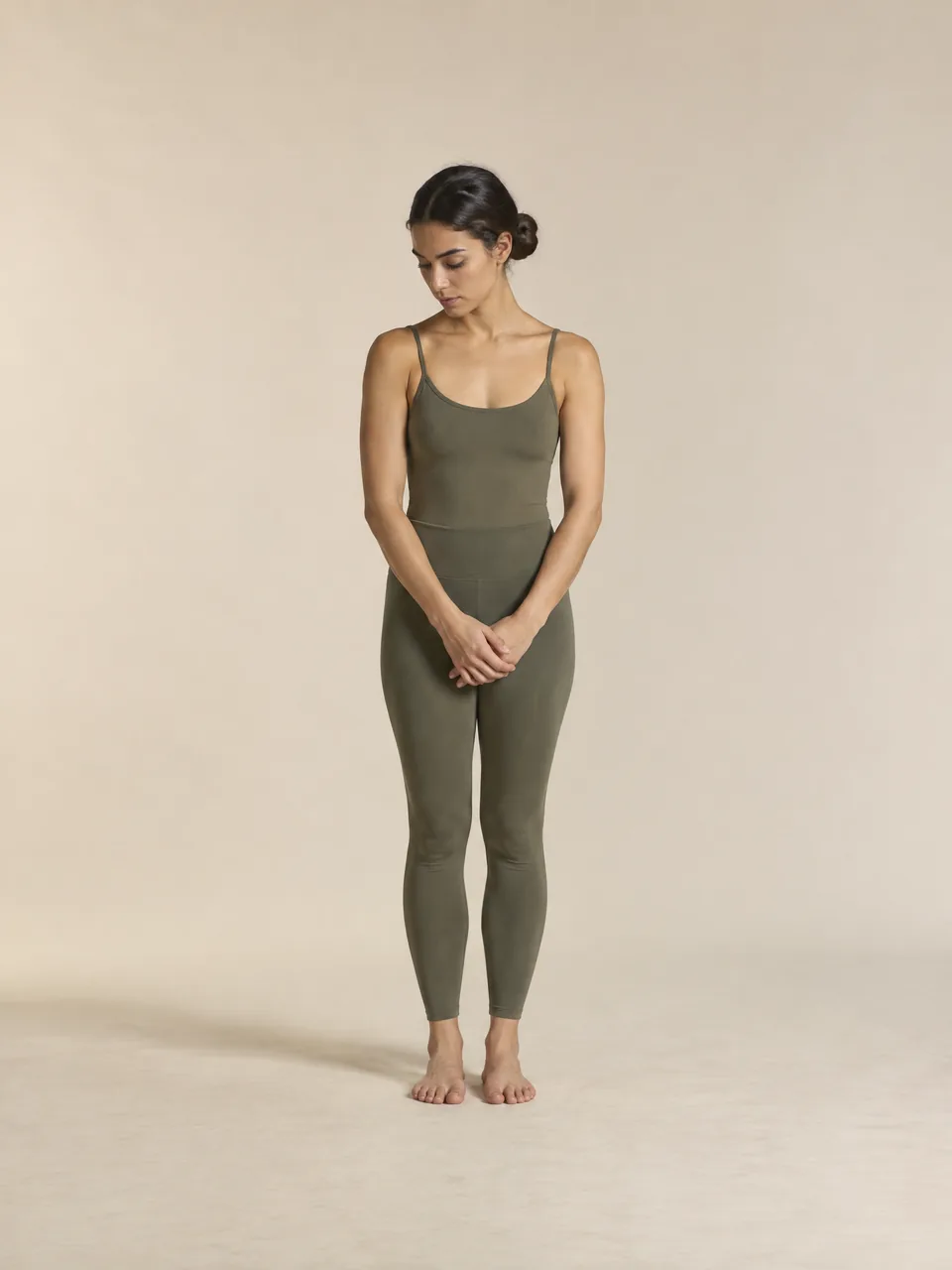
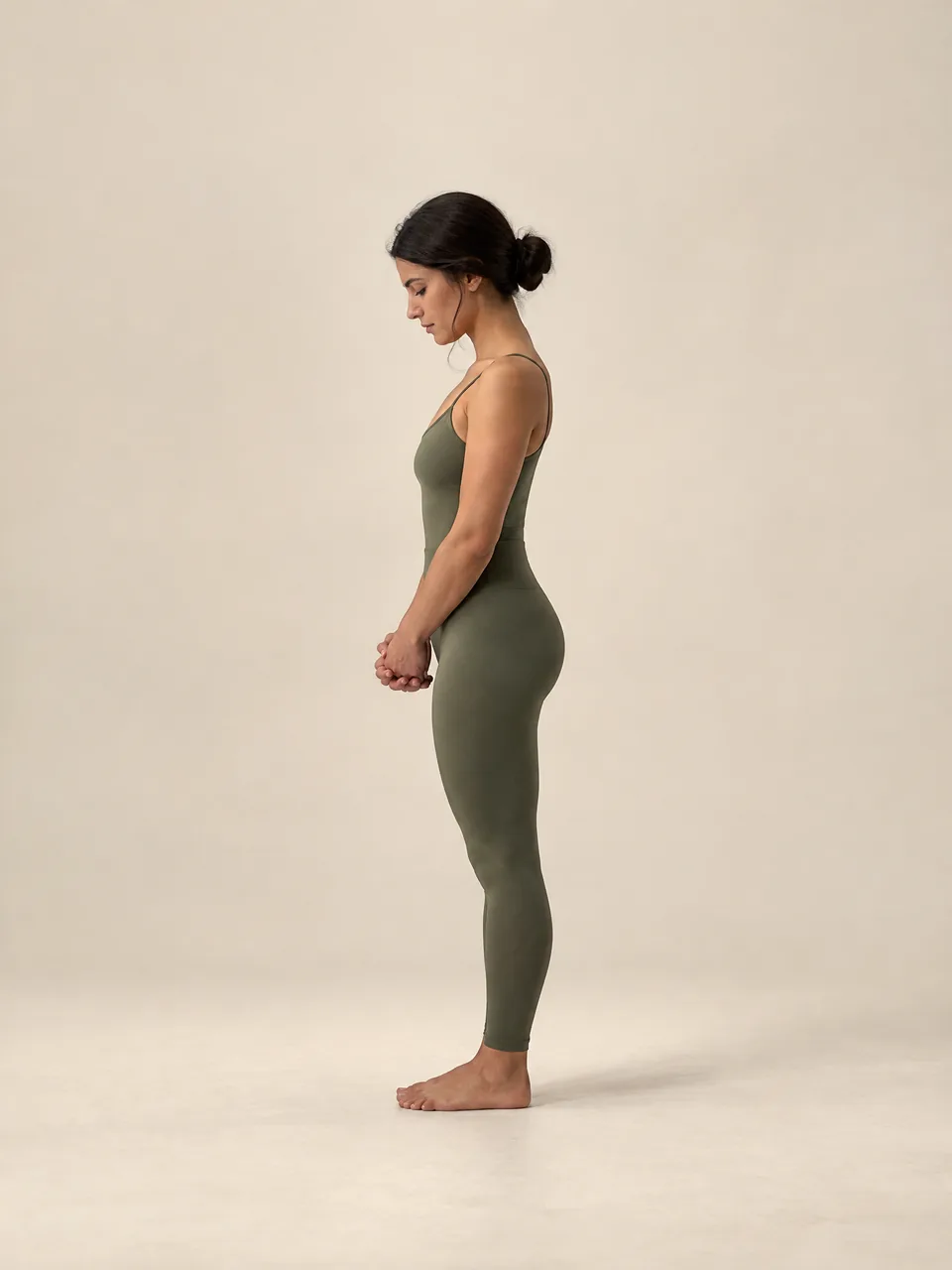
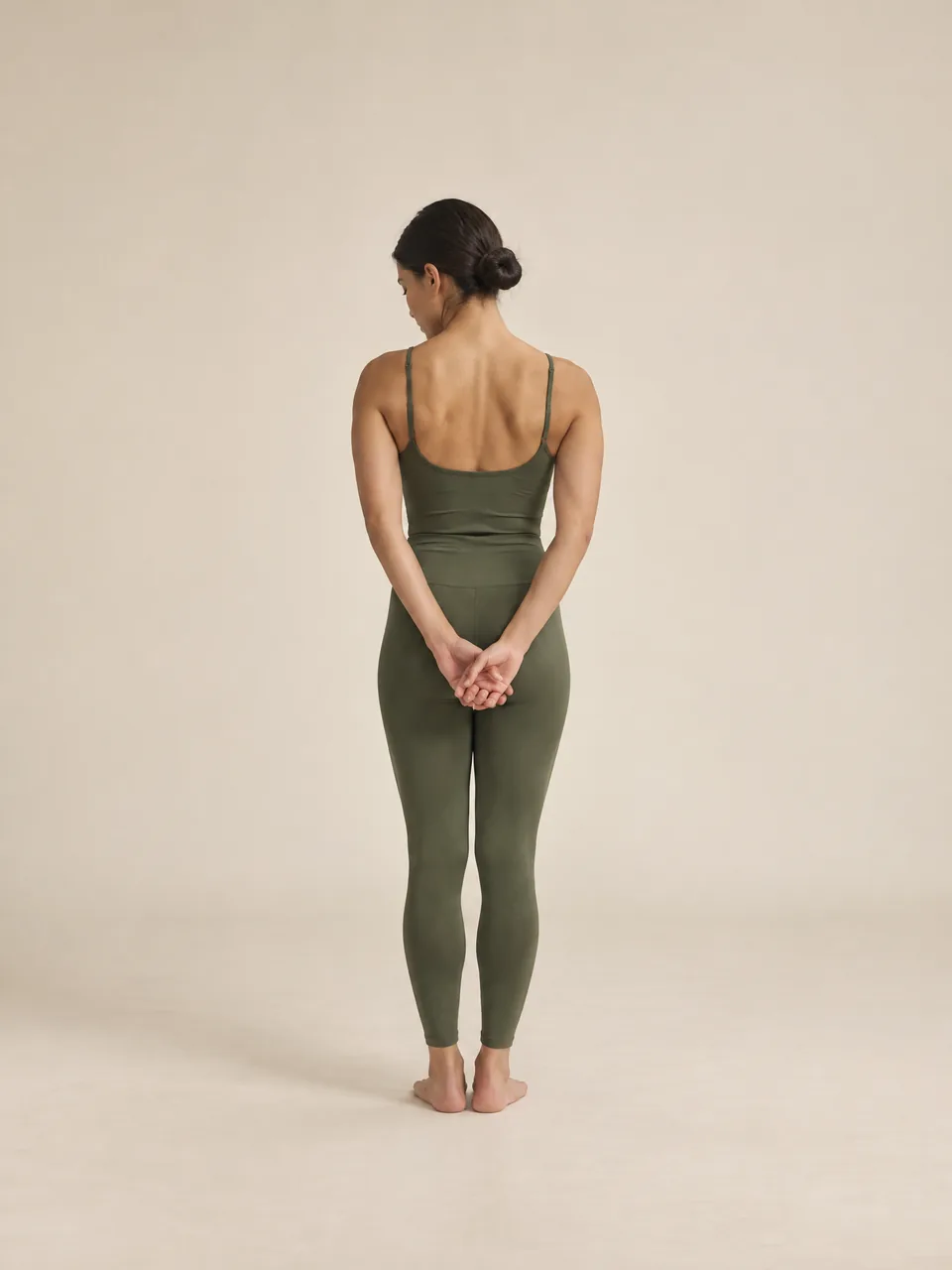
Hands clasped
A downward-tilted portrait with both hands joined in front of the chest and the shoulders rounded.
Looking down changes the whole construction of a portrait. The forehead comes toward the viewer, the eyes sit under a heavier brow, and the face foreshortens from cranium to chin. Joined hands below complete the loop: the arms meet at the center, the elbows pull together, and the shoulders round inward.
This is a quieter, inward pose than the frontal portraits in the set, and it is valuable for the head-down angle, which is hard to fake because the features compress differently from a level view. It works well for contemplative or solemn characters and for any crop where the top and bottom of the figure close toward the middle.
Watch the foreshortening. The distance from brow to chin shortens, the nose projects less, and the top of the head becomes visible. Many drawings keep level-view feature spacing and simply drop the eyes, which produces a face that looks flattened rather than tilted. In the hands, remember that clasping means the fingers interlace or the palms face each other, so there is a visible overlap of knuckles rather than two flat palms pressed together.
Drawing notes
- Compress the brow-to-chin distance and show the top of the head.
- Round the shoulders inward so the arms meet at the center.
- Overlap the knuckles in the clasp instead of flattening two palms together.
Pose prompt
The description used to generate this study. Copy it into your own workflow, or hand it to the studio with your photo.
Adult woman, upper-body portrait, looking down with hands clasped.
Working notes
- A downward-tilted portrait with both hands joined in front of the chest and the shoulders rounded.
- Head-down angles need real foreshortening between brow and chin.
Put this pose on your own reference
Take this study to the studio and generate a new image in the same pose, or browse the rest of the upper body studies first.