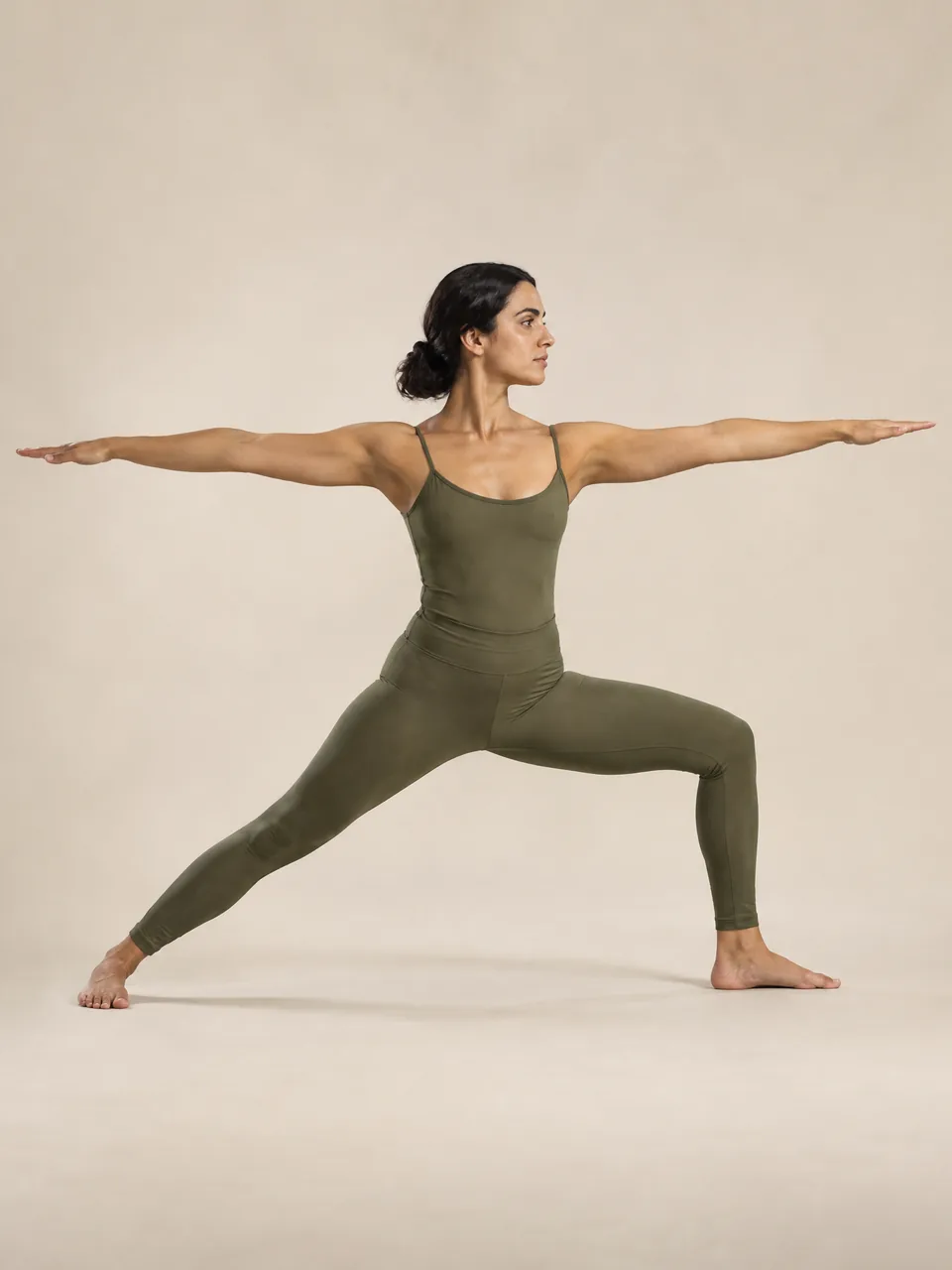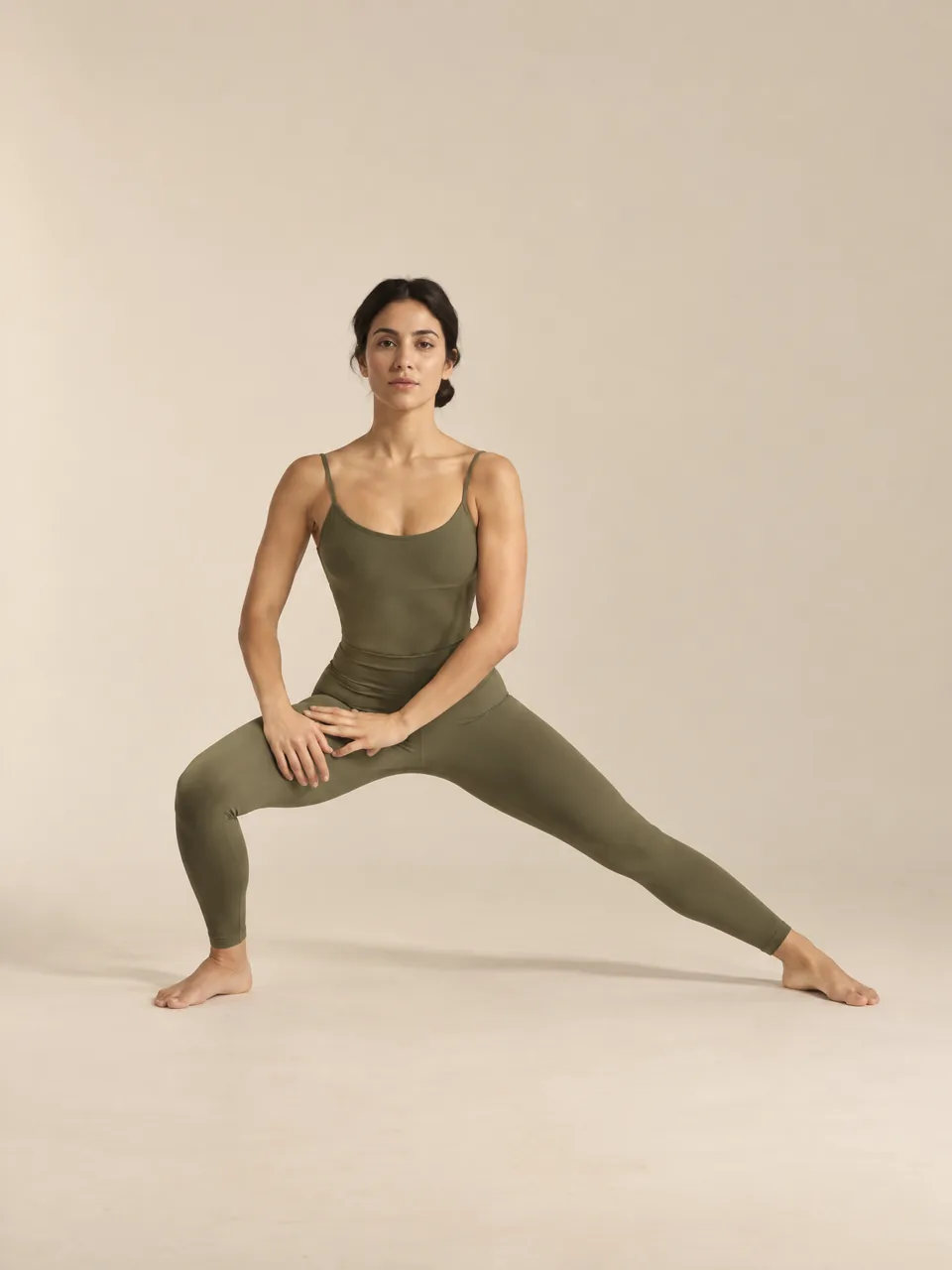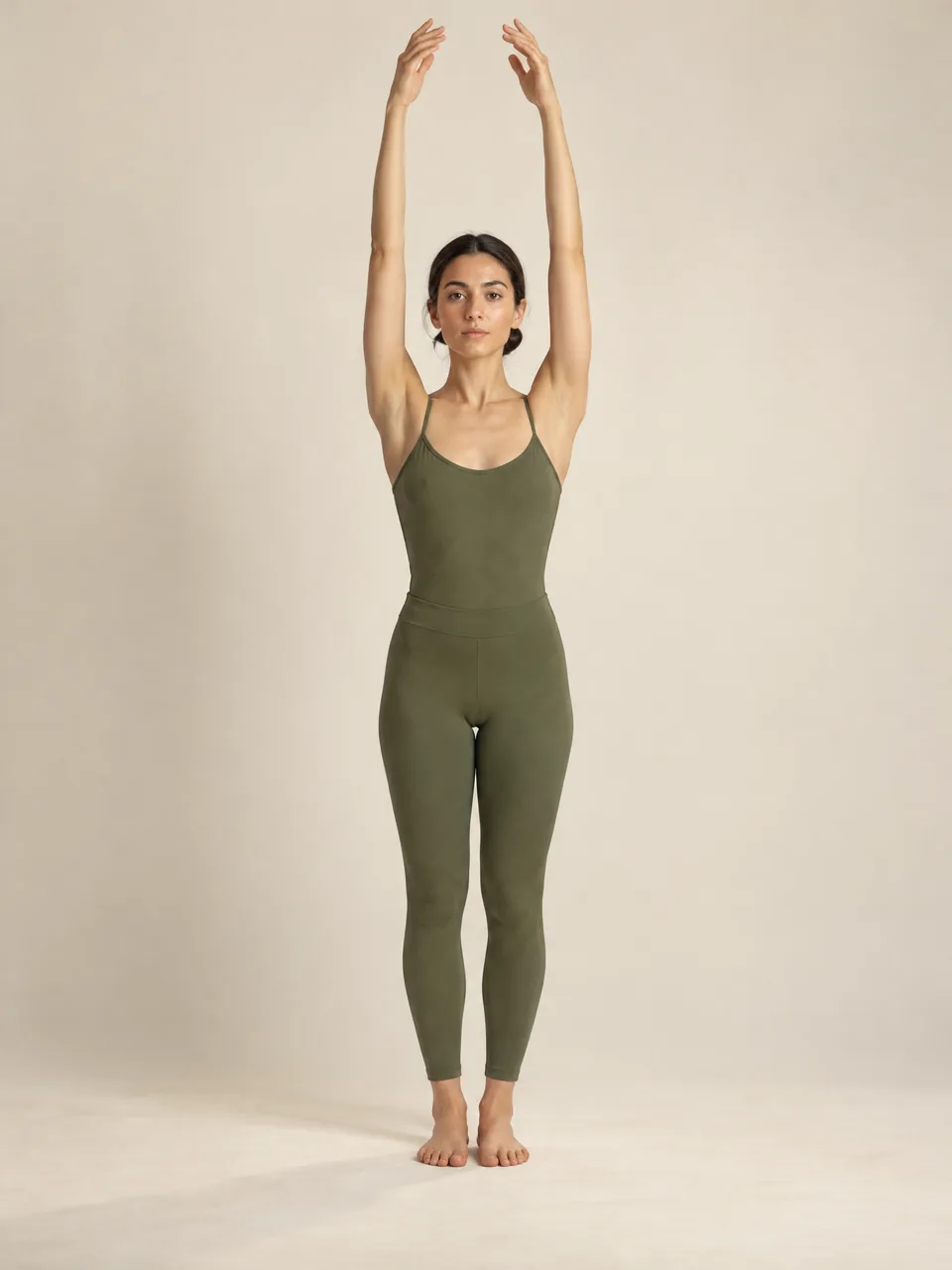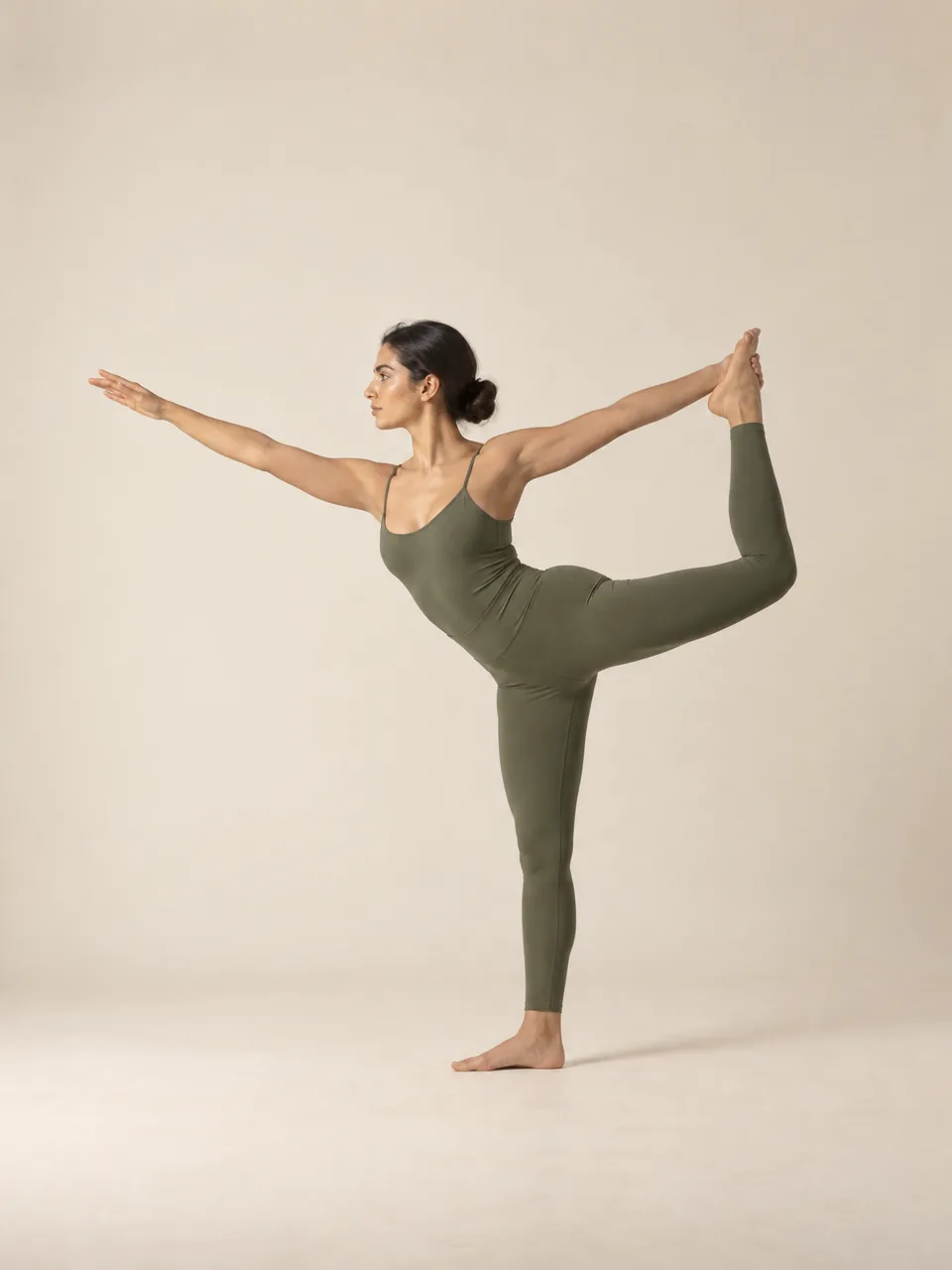
Triangle pose
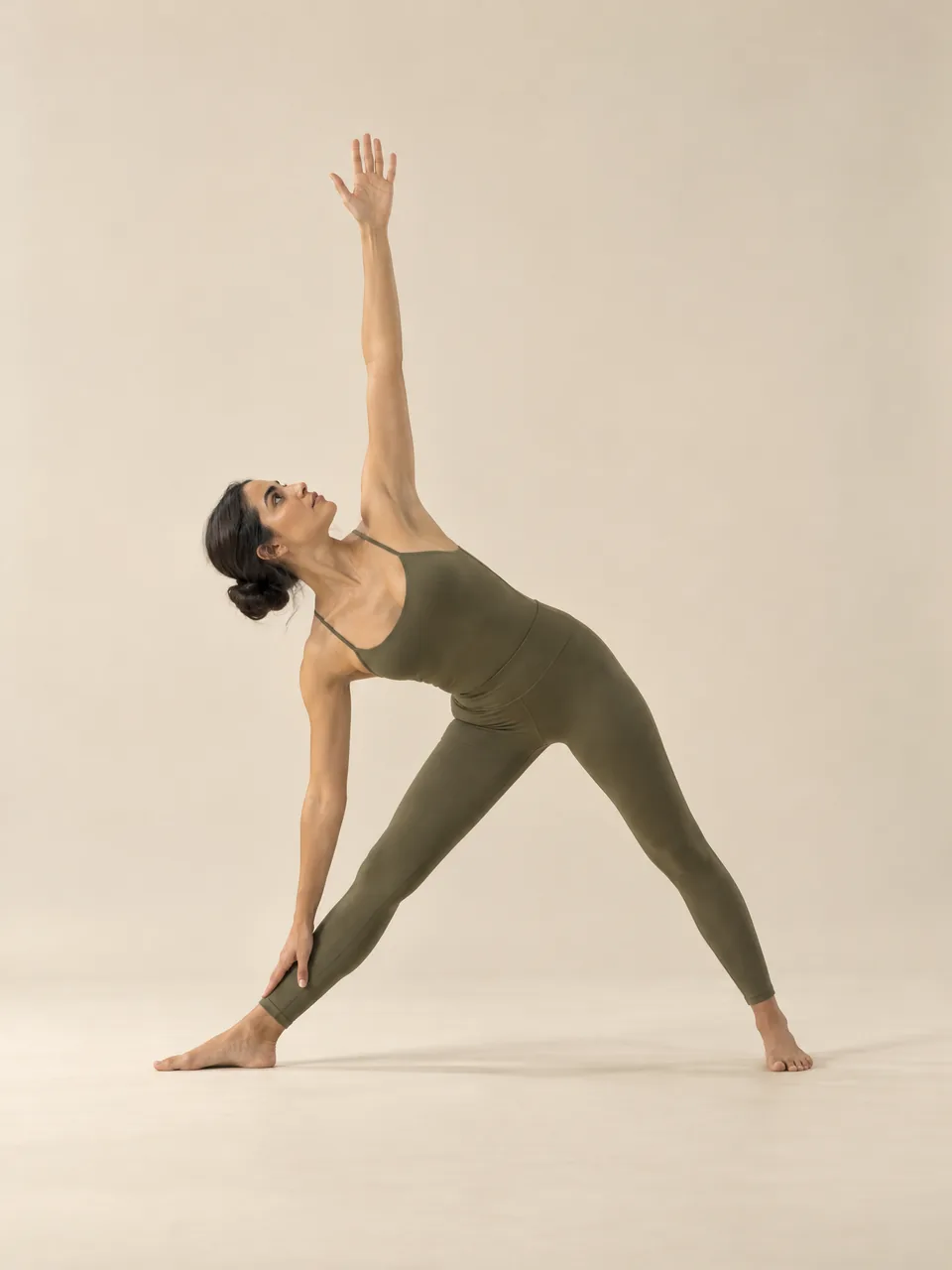
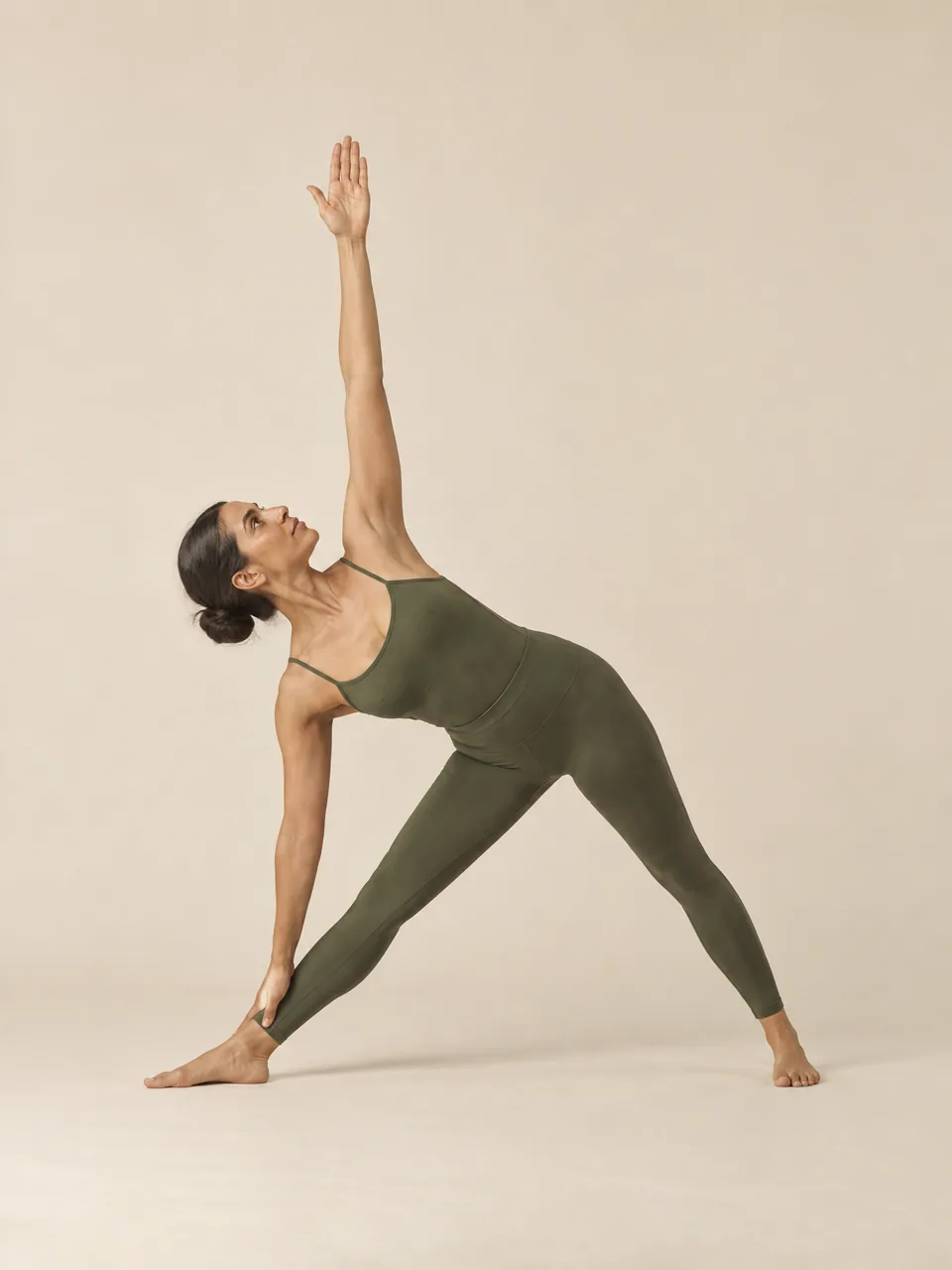
A wide stance with the torso folded to one side, one arm reaching up and the other pointing down.
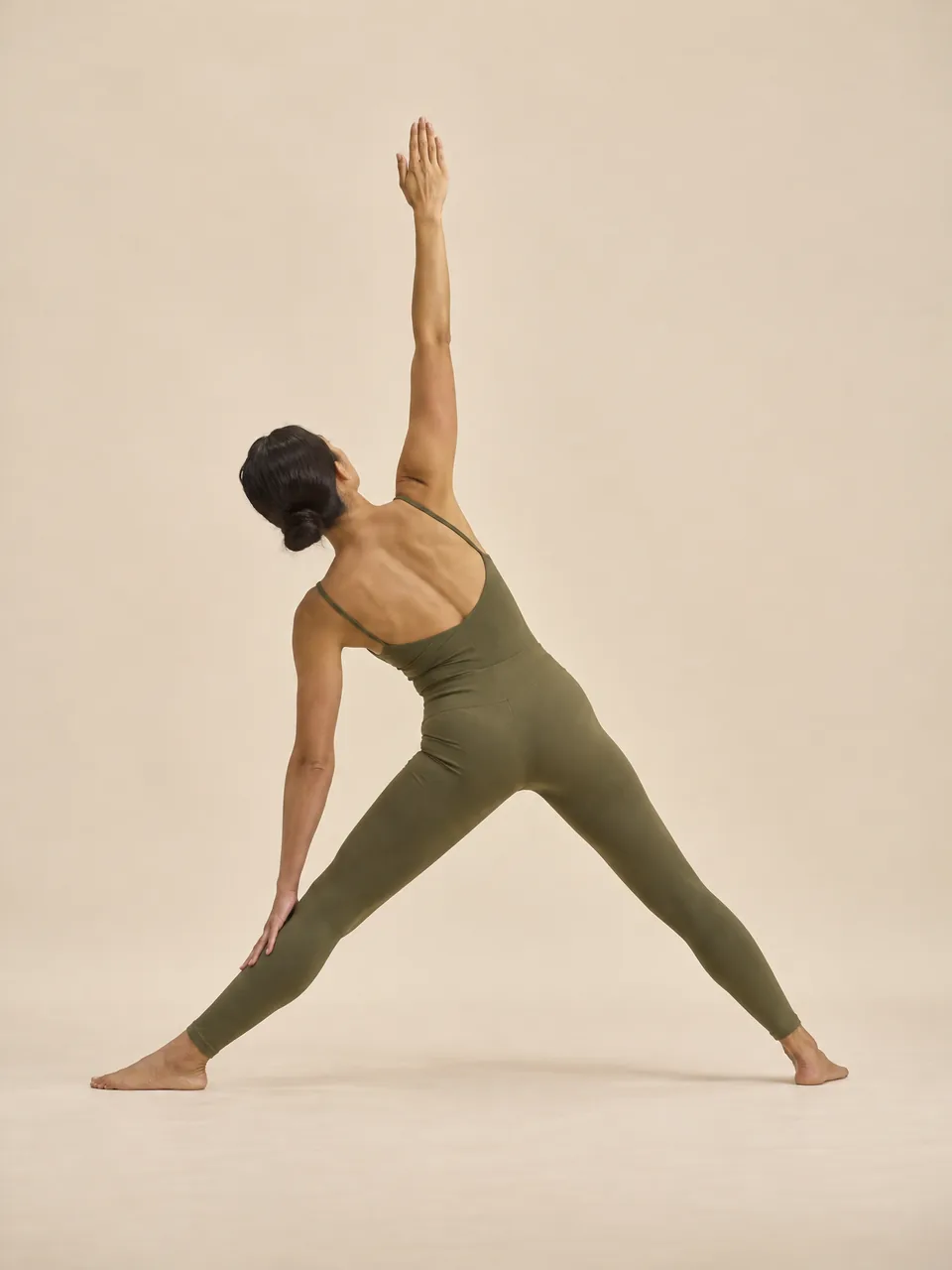
A wide base supports a torso that hinges sideways over the front leg, so the body forms two long edges that converge at the pelvis. One arm continues the line of the leaning torso upward and the other points straight down, which gives the figure a single unbroken diagonal from fingertip to fingertip.
Weight collects over the front leg and hip, and the back hip turns under, which flattens the seat and lengthens the back of the body. The head follows the top arm, so the face is turned toward the ceiling rather than the viewer. The result is a lightweight, open silhouette that fills a tall format well and stays readable at thumbnail size.
What artists get wrong is the fold itself. The spine does not bend sideways like a bow; the pelvis stays relatively level and the torso rotates and hinges at the hip joint, so the ribcage shifts sideways rather than compressing. Draw the hip crease on the folded side, keep both legs long and straight, and check that the top arm is a true continuation of the spine rather than sticking out at an angle. The arch of the lower back in the drawing usually means the pelvis was rotated incorrectly.
Drawing notes
- Hinge at the hip rather than bowing the spine, so the ribcage shifts sideways.
- Run the top arm as a continuation of the spine, not at a separate angle.
- Mark the hip crease on the folded side to prove the torso has rotated.
Pose prompt
The description used to generate this study. Copy it into your own workflow, or hand it to the studio with your photo.
Adult woman in triangle yoga pose, wide stance, torso angled sideways, one arm reaching upward, full body.
Working notes
- A wide stance with the torso folded to one side, one arm reaching up and the other pointing down.
- This study is a visual reference for the line of action, not a posture instruction.
Put this pose on your own reference
Take this study to the studio and generate a new image in the same pose, or browse the rest of the standing studies first.