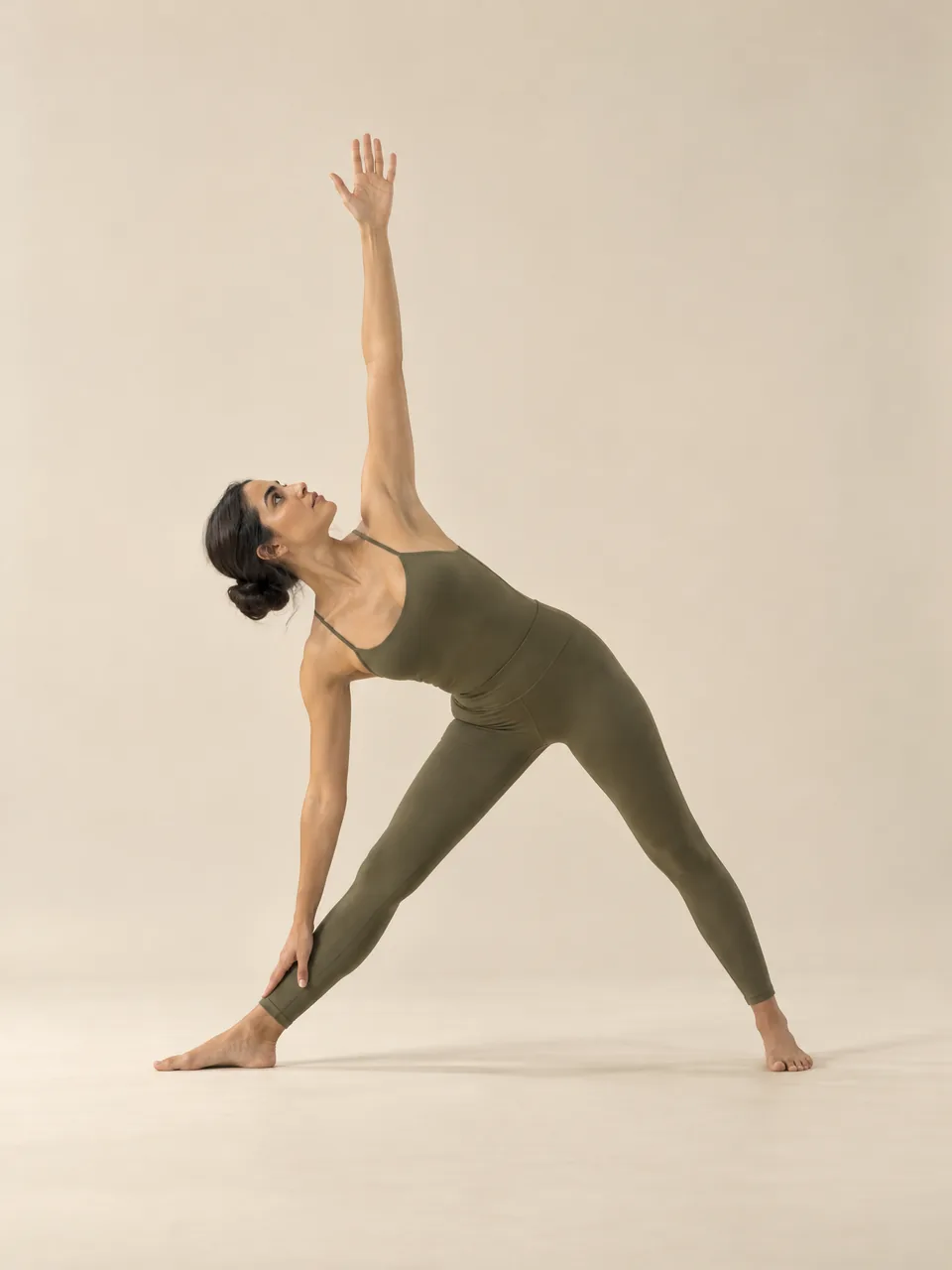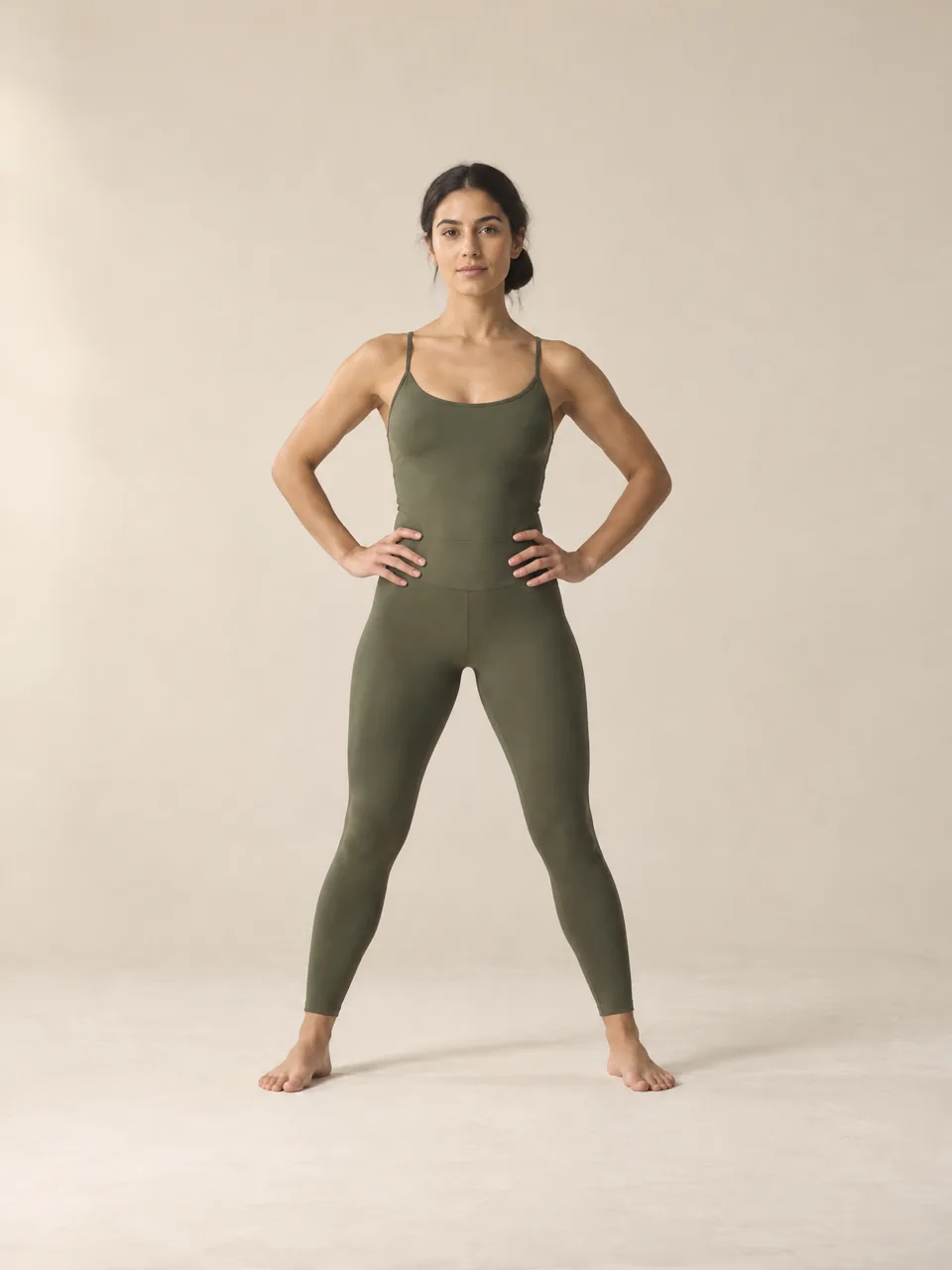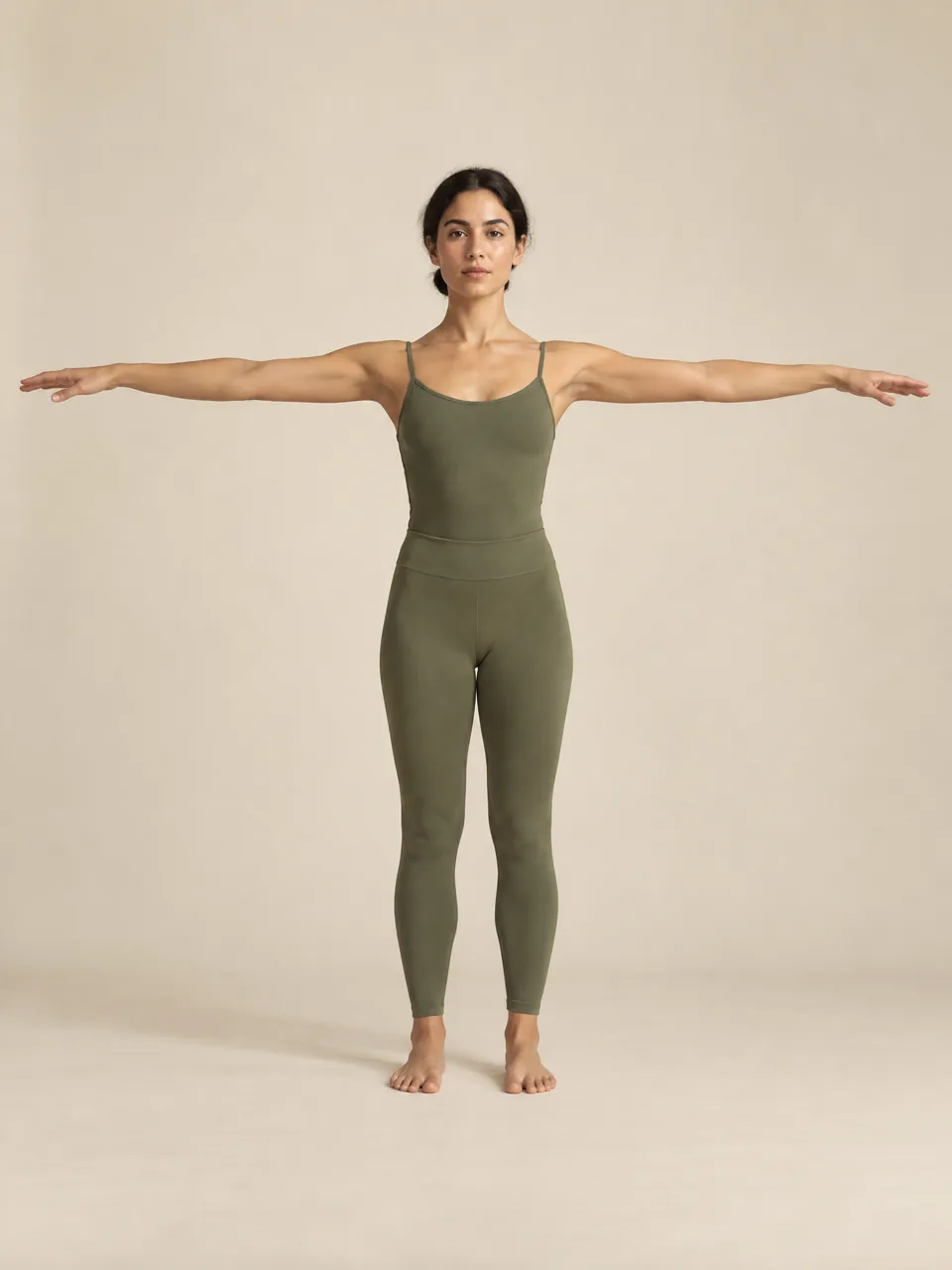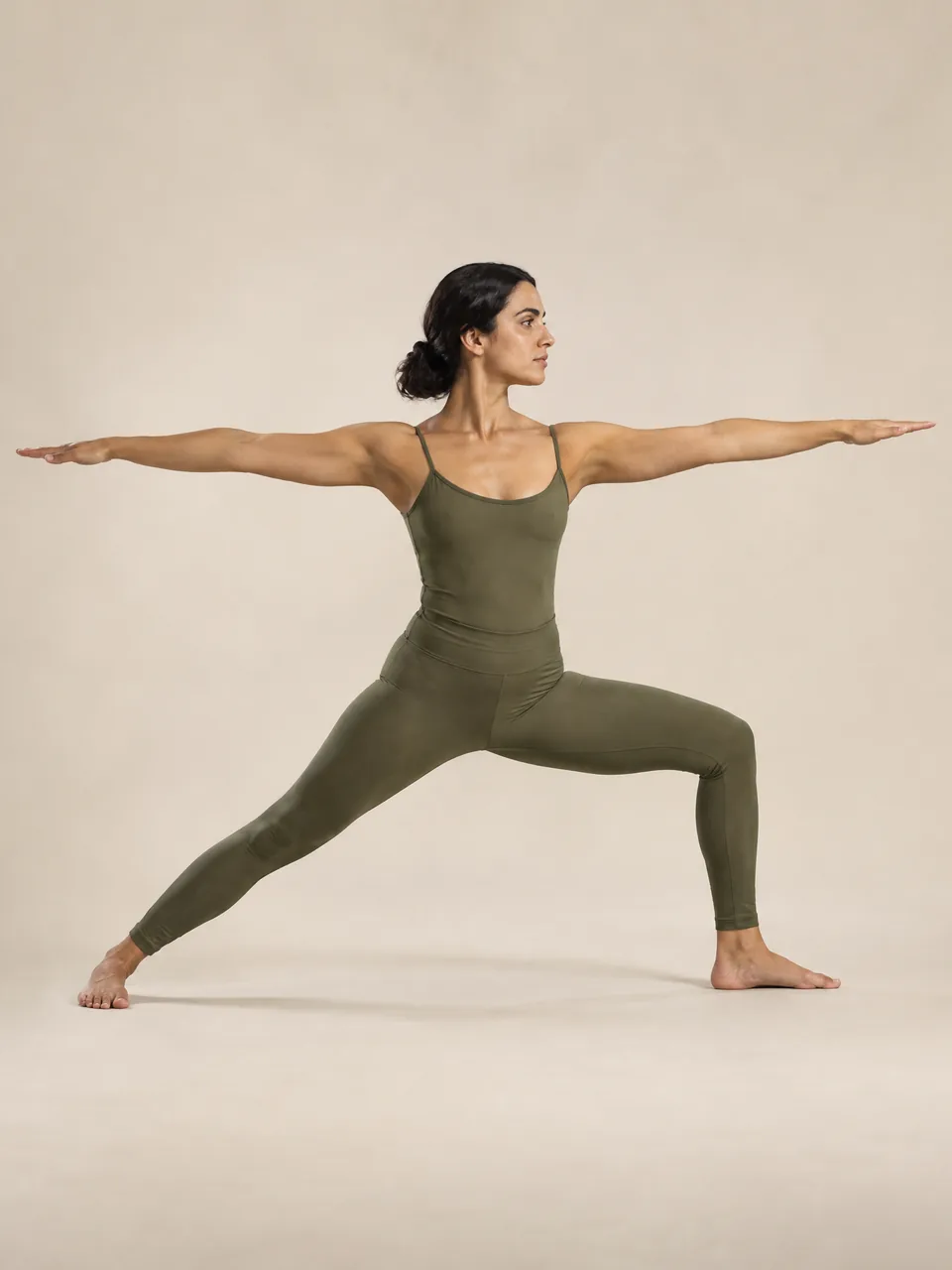
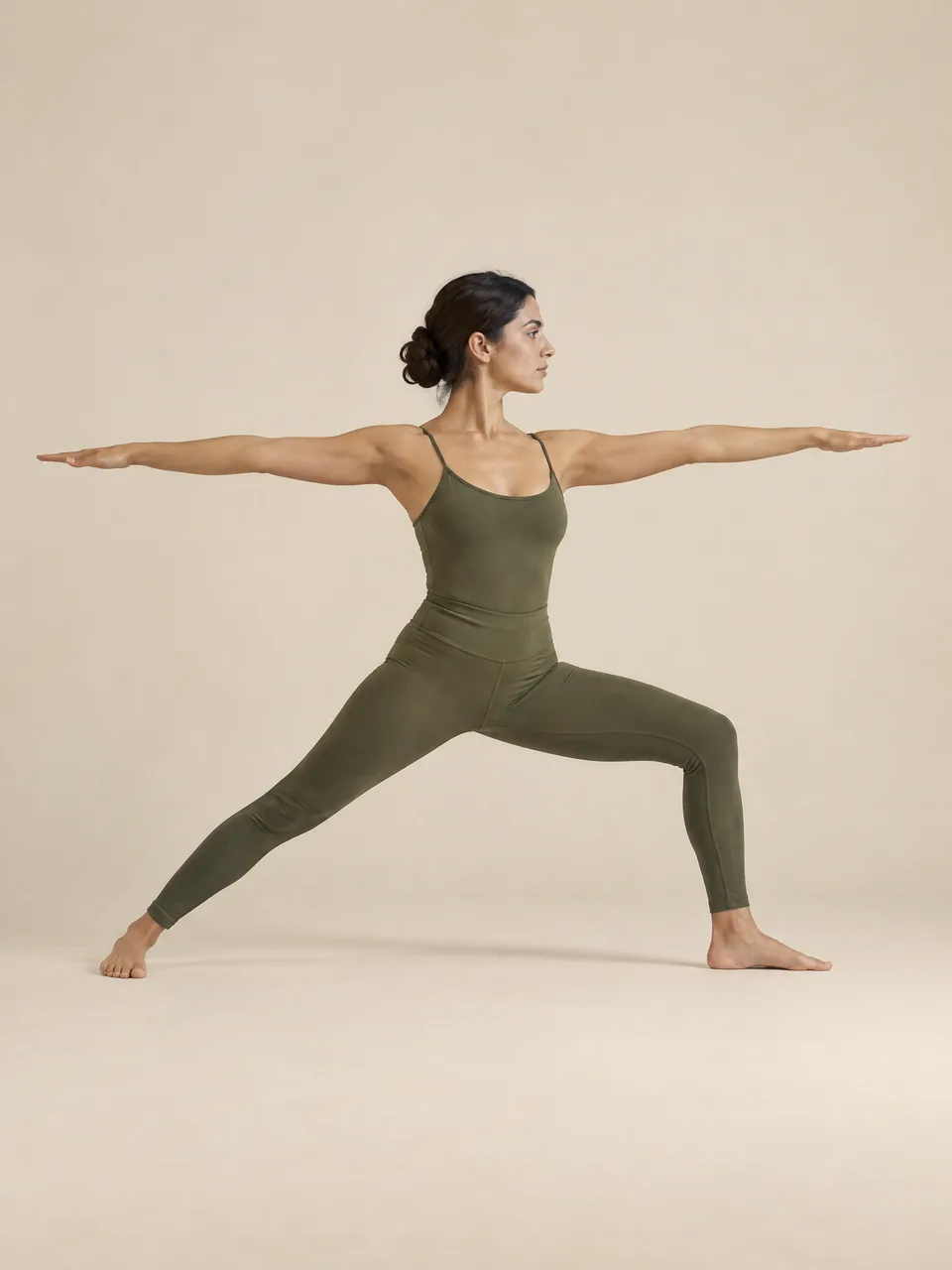
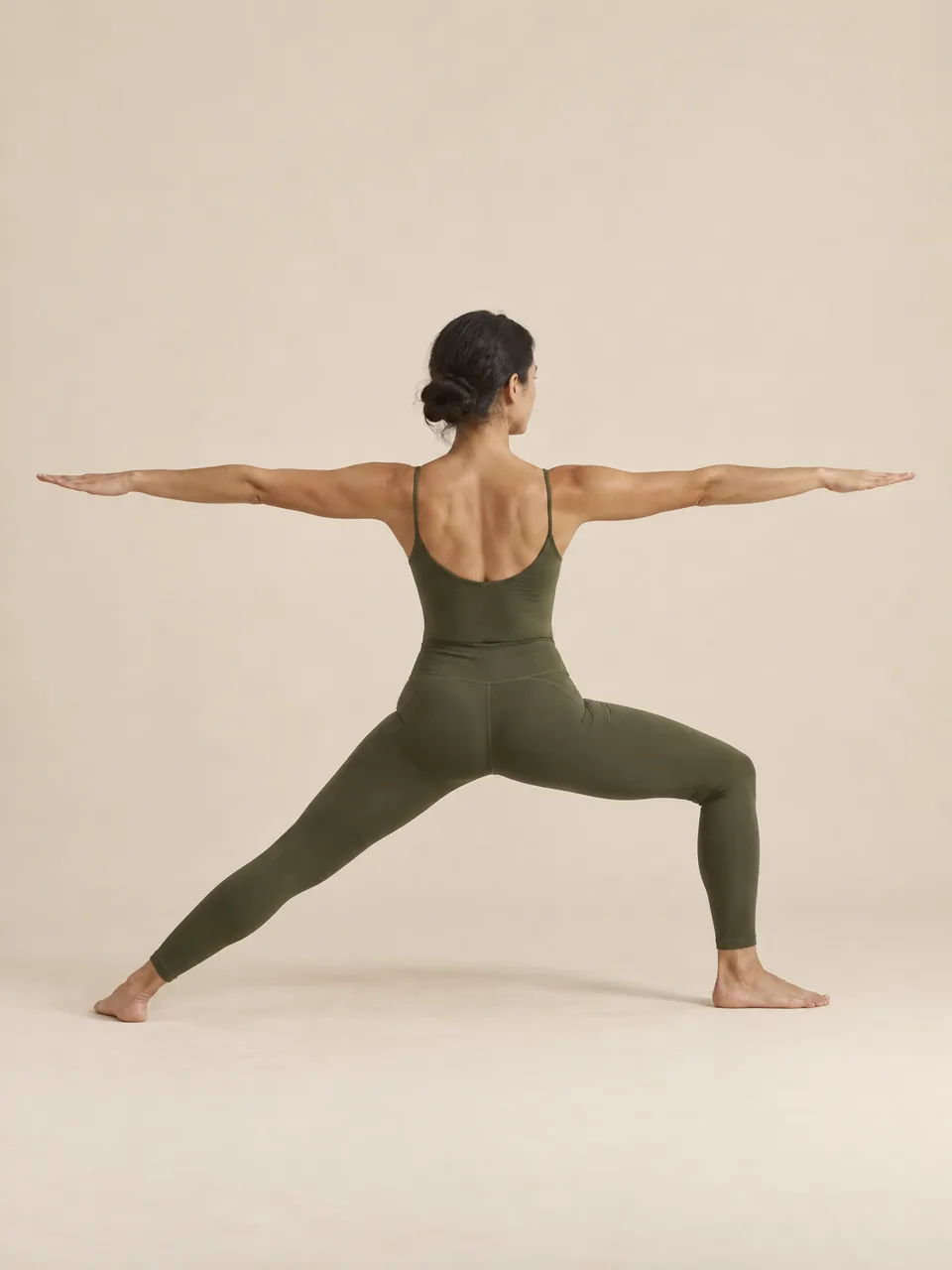
Warrior II
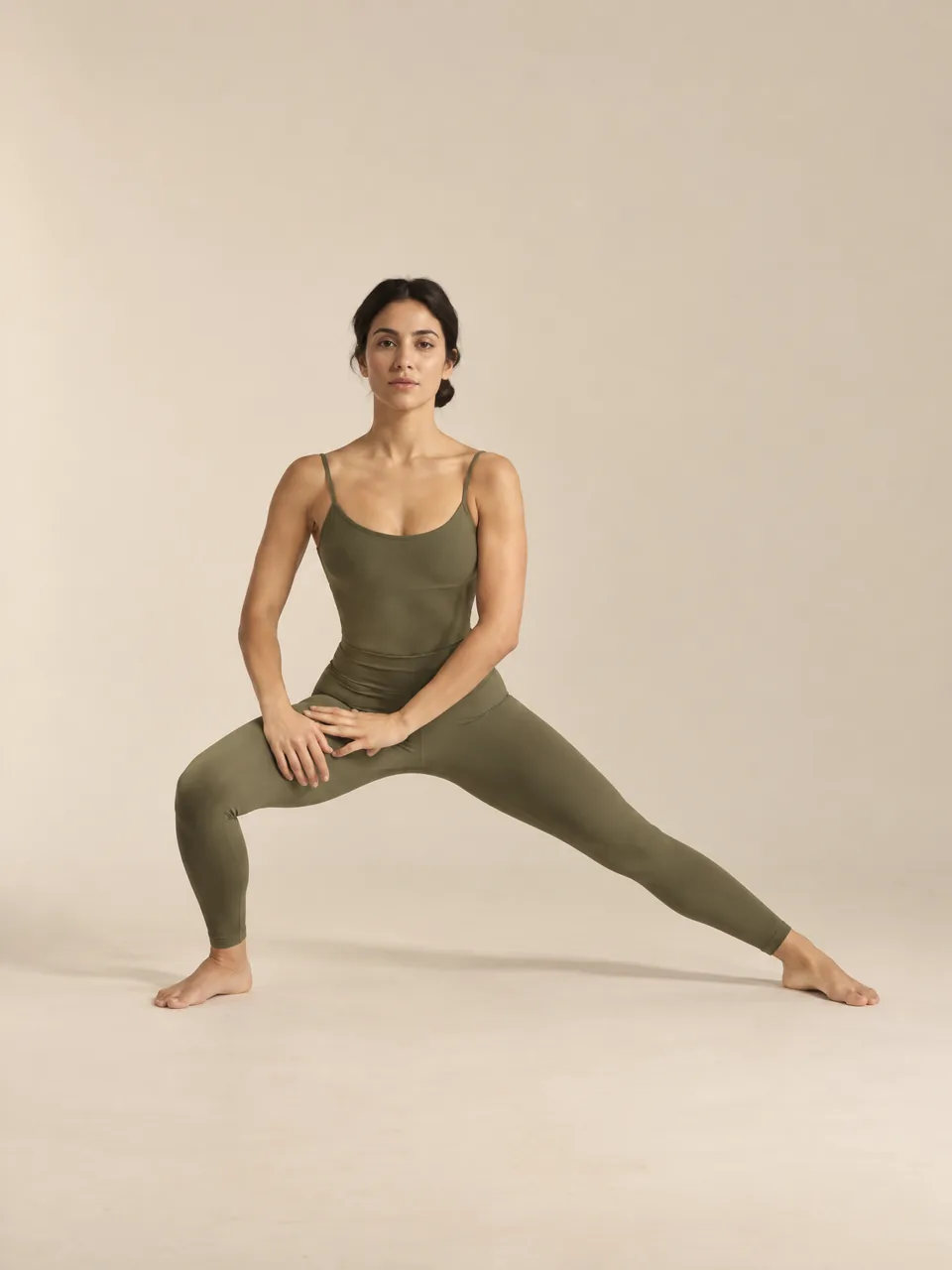
A wide lunge with both arms stretched horizontally, one arm forward and one back, giving a long cross-body line.
Both arms stretch out along one horizontal axis, so the shoulders and the ground form a cross. The front knee is bent over its ankle and the back leg stays long, which puts more weight over the front foot and turns the hips open to the side. The chest faces one direction and the head can turn to face the other.
That split between shoulder axis and hip axis is the useful part of the study. From the side the figure reads as a broad, stable triangle resting on a wide base, with a single horizontal bar through the shoulders. It is a strong shape for a wide page, for a group composition that needs one figure to hold the horizontal rhythm, and for costume work on garments that open at the chest and swing at the hem.
The recurring drawing error is flattening the pelvis. If you draw both hips level and square to the camera, the bent knee no longer belongs to the body and the stance collapses into a fencer’s lunge facing forward. Mark the two hip points on different depth planes first, draw the bent thigh as a tube that angles forward and out, and check the back heel: in this study it stays planted, which forces the back thigh to rotate and shortens the visible line.
Drawing notes
- Place the two hip points on different depth planes before drawing the thighs.
- Keep the back heel planted; that is what shortens the back leg line.
- Run the arms along one horizontal axis and let the head turn separately.
Pose prompt
The description used to generate this study. Copy it into your own workflow, or hand it to the studio with your photo.
Adult woman in warrior II yoga pose, wide stance, front knee bent and both arms extended, full body, side view.
Working notes
- A wide lunge with both arms stretched horizontally, one arm forward and one back, giving a long cross-body line.
- This study is a visual reference for the shape, not a posture instruction.
Put this pose on your own reference
Take this study to the studio and generate a new image in the same pose, or browse the rest of the standing studies first.